


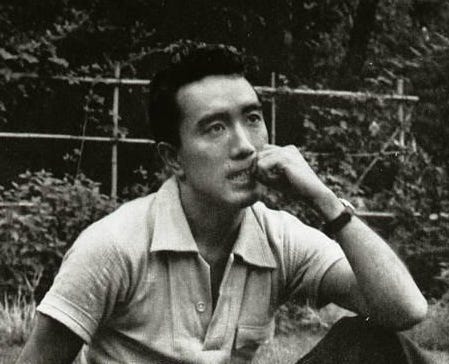
Yukio Mishima, born Kimitake Hiraoka on January 14, 1925, is a significant and controversial figure in 20th-century Japanese literature, known for his exploration of beauty, death, and the human condition. His life and works emerged against the backdrop of post-World War II Japan, where he critiqued the growing detachment from traditional values and spiritual depth in favor of superficial aesthetics.
Mishima’s literature delves into existential themes and the psychological struggles of characters grappling with identity and societal expectations, reflecting his broader concerns about the loss of cultural integrity in modernity.
Mishima’s ideological convictions culminated in his dramatic ritual suicide in 1970, which he viewed as a means of asserting his beliefs in the necessity of preserving Japan’s cultural heritage and the emperor system. This act not only symbolized his personal ethos but also served as a chilling prophecy regarding a society that prioritizes beautiful surfaces over deeper, more meaningful values. His philosophy posits that the pursuit of aesthetic beauty, when divorced from substantive engagement with the human soul, leads to existential disillusionment and alienation.
In his writings, Mishima expressed a deep-seated nihilism, characterizing modern existence as devoid of the divine essence he attributed to pre-modern Japan. He articulated a longing for an authentic life that embraces the complexities of the soul rather than succumbing to the allure of ephemeral beauty. Through his critique of contemporary culture, he warned against the dangers of superficiality and the neglect of profound truths, urging a reclamation of depth in a society increasingly enamored with appearances.
Mishima’s legacy endures as a thought-provoking reflection on the intersection of aesthetics, identity, and societal values, inviting continued dialogue on the relevance of his chilling insights in contemporary discussions about beauty, art, and the human experience.
Yukio Mishima’s Life
Yukio Mishima, born Kimitake Hiraoka on January 14, 1925, in Tokyo, Japan, is regarded as one of the most enigmatic figures in 20th-century Japanese literature. His life was marked by a strict upbringing under his paternal grandmother, Natsuko, which isolated him from other children and fostered a rich inner world, nurturing his early inclination towards literature and the arts. Despite his delicate constitution in youth, Mishima distinguished himself academically at the prestigious Gakushuin (Peers’ School) and began exploring his literary talents.
Mishima’s writing career unfolded during a pivotal era in Japanese history, marked by the aftermath of World War II. His works often grappled with themes of existentialism and the clash between traditional values and modernity. Novels such as Confessions of a Mask and The Temple of the Golden Pavilion delve into the psyches of characters wrestling with alienation, societal pressures, and a yearning for purpose. These themes reflect Mishima’s broader critique of contemporary Japanese society, where he perceived a degradation of national identity and ideals.
A prominent advocate for the restoration of Japan’s traditional values and the emperor system, Mishima was deeply troubled by what he saw as the loss of cultural integrity in postwar Japan. He believed in the necessity of preserving traditional ideals, viewing the clash between modernity and tradition as a central concern of his time. This ideological conflict culminated in his dramatic ritual suicide by harakiri in 1970, at the age of 45, symbolizing his belief that there was no boundary between art and life. His death was not only an act of personal conviction but also a chilling prophecy regarding a society that prioritizes superficial beauty over profound values.
Mishima’s complex life and work invite readers to explore the intersections of beauty, death, and the human experience, establishing him as a lasting icon in Japanese literature. His exploration of the human condition, marked by a unique blend of greatness and controversy, continues to resonate in contemporary discussions of art, identity, and societal values.
The Prophecy
Yukio Mishima’s literary and philosophical contributions reflect a profound concern for the trajectory of modern society, which he viewed as increasingly detached from spiritual and aesthetic values. Central to his prophecy is the idea that contemporary efforts to reconnect with tradition and
