

Your 7-Step Detox From the Reality TV Machine That’s Programming Your Worldview

The living room flickers with the familiar blue wash of the screen, but no one is watching. They are scrolling. On Instagram, a friend posts a teary apology in a ring light, captioned “my truth.” A senator’s meltdown from the morning hearing gets recut with sound effects and a laugh track. Two silent seconds later, a real housewife throws a cocktail in slow motion while a caption reads mood. The brain isn’t distinguishing genres anymore—it bathes in a single electric stream where congressional hearings, family reunions, and elimination rounds all share the same rhythm, the same manufactured stakes, the same rapid-cut grammar of conflict and confession.
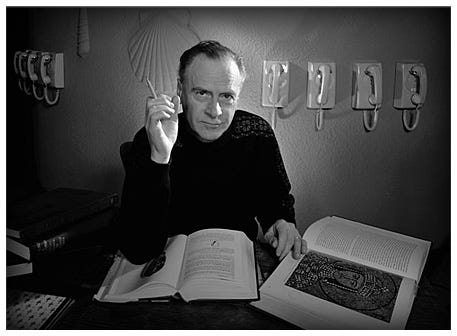
The man on the couch is not a passive consumer. He is rehearsing. By morning, he will frame his workplace grievance like a “coming to camera” monologue. He will narrate his commute as if a producer might splice in a reaction shot. He isn’t crazy. He has simply been thoroughly, invisibly, and permanently formatted by a medium that has been training him his whole life to mistake performance for presence.
The Ghost in the Tube
Marshall McLuhan never saw Survivor, but he saw the script before it was typewritten. In 1964, in Understanding Media, he delivered the warning that would ricochet through the next six decades and land, undetonated, in your pocket: “The medium is the message.” It is the most quoted and least understood sentence in media theory, and its true meaning is a bomb. McLuhan meant that the form of a medium, not the content it carries, alters human sensory ratios, social structures, and inner life at a depth far below opinion or ideology. A flickering electric screen trains the nervous system. A hot, high-definition medium that pours data into the eye leaves the brain numb. A cold, low-definition one forces the viewer to participate, to fill gaps, to complete meaning. TV, McLuhan said, is a cool medium because of its low-resolution image, but it demands a different kind of participation: mosaic, simultaneous, deeply involving. That was network television with its three channels and its single screen. What McLuhan could not have foreseen—but which his framework predicted with terrifying precision—is what happens when a medium’s grammar escapes the box and becomes the operating system for everything.
Reality television is not a genre. It is a set of formal properties: non-stop confessional narration, constant surveillance, manufactured scarcity, the ritual humiliation of elimination, the editing trick that turns a neutral glance into a villain’s sneer. These properties are now the native language of TikTok, Instagram Stories, LinkedIn “authenticity,” and cable news panels. We do not watch reality TV. We breathe it. The medium has become the atmospheric condition of public life.
The Colony Inside Your Skull
McLuhan described every medium as an extension of some human faculty—the wheel extends the foot, the book extends the eye, electric circuitry extends the central nervous system itself. The danger, he warned, is that extensions amputate what they extend. The car gives you speed but numbs the pedestrian body. The phone extends the voice but makes the eardrum dependent on a speaker. Reality TV extends the social instinct for gossip and group monitoring, and in doing so it amputates the capacity to be unobserved, to exist outside a narrative frame, to be simply a person rather than a character.
The evidence is not in the Nielsen ratings but in the architecture of the brain. A medium that structures all experience as a sequence of confrontations, cliffhangers, and elimination votes rewires what you notice. You start scanning for betrayals where none exist. You treat your life as a pitch meeting for a version of yourself that might get “greenlit.” You hear voiceover where there is silence. This is not metaphor. Neuroplasticity ensures that repeated patterns of attention become permanent structures. The reality TV machine is a gymnasium for a specific kind of perception: high drama, low nuance, binary outcomes, constant judgment. The muscles it builds—rapid moral assessment, emotional reactivity, performative vulnerability—are exactly the muscles you need to survive on social media and to mistake for citizenship.
Consider the institutional byproducts. Congressional hearings now feature opening statements filmed vertically for TikTok. Job interviews require you to display “authenticity” on command, as if the most authentic thing imaginable is a practiced spontaneity. Dating apps operate on the logic of the audition tape. Every space becomes a backlot. McLuhan saw that electronic media would retribalize the world, dissolving the linear, private individual of print culture into a global village of simultaneous, participatory myth. What he didn’t say was that the new tribe would run on the logic of a casting call.
The Script We Can’t Stop Performing
Why is this pattern inevitable? Because the human nervous system, once extended into a medium, cannot simply retract. McLuhan borrowed from Teilhard de Chardin the idea of a technological noosphere—a layer of collective consciousness built from our own extensions—and recognized that once you are inside it, you cannot perceive the outside, any more than a fish perceives water. The medium becomes total by becoming invisible.
Reality TV’s form appeared in the late 20th century for concrete economic reasons: it was cheap to produce after deregulation, it didn’t require union writers, it generated merchandisable stars. But its formal logic—surveillance as entertainment, intimacy as currency, identity as a storyline that can be cancelled or renewed—happened to align with a deeper structural shift. As institutions of meaning (religion, long-term employment, stable communities) eroded, the self became the only remaining product, and every interaction became a marketplace for its valuation. The medium of reality TV provided the grammar for this new self-as-asset. It offered the templates: you can be a hero, a villain, an underdog, a hot mess, a redemption arc. Choose, or the edit will choose for you.
The trap is closed. You believe you are watching a show. In fact, the show is teaching you how to watch yourself—and everyone else. You believe you are consuming a product. In fact, the product is consuming the unpixelated remainder of your life. Every time you scroll past a person who has turned their divorce into content, their illness into a thread, their moral awakening into a reel, you are not simply observing. You are taking notes on how to perform your own interiority when it’s your turn.
The Price of a Fully Edited Life
If we remain unaware, we lose the capacity for what the unmediated world once gave us without our asking: opacity, silence, the slow passage of time in which a thought can form without being packaged, the dignity of being unobserved, the forgiveness of being forgotten. McLuhan warned that electric speed would abolish distance, and with it, the private inner space that distance protected. Reality TV’s revenge is the complete colonization of that inner space by the logic of the episode. You now experience your own memory as a highlight reel. You narrate your setbacks as character development. You wait for the music to swell.
The political stakes are not about who wins an election. They are about whether anything can be true that has not first been narrativized. A disaster becomes real only when it has a hashtag and a confessional clip. A politician’s policy matters less than their “story arc.” Public deliberation gets replaced by Tribal Council votes where reasons are emotional, alliances are tactical, and the only unforgivable sin is being boring. This is not a collapse into irrationality; it is a rational adaptation to a medium that punishes linear argument and rewards affective performance. The medium has programmed the parameters of truth, and the content—whether left or right, elite or populist—cannot escape them. The poison is not in what you believe but in how you perceive.
The Detox: Recovering the Unmediated World
You cannot smash the screens. You cannot retreat to a cabin without electricity—that is just another storyline, the “off-grid” arc. The only way out is through a deliberate, ongoing recalibration of your sensory ratios, a kind of media hygiene that treats the environment as something whose temperature you constantly measure.
Here are seven practices, none of which require you to renounce modernity, all of which demand you reclaim the parts of yourself the medium has colonized.
1. Spot the grammar, not the content. For one day, consume no explicit reality TV, but watch everything else—news, social feeds, workplace communication—and ask: where is the confessional camera rolling? Where is the threat of elimination? Where is the manufactured scarcity? This trains you to see the medium, not the message.
2. Engage a cold medium daily. Read a dense poem, listen to a radio play, study a painting without a caption, have a conversation with no agenda and no recording device. McLuhan said cold media demand high participation; they leave gaps you must fill with your own imagination. Hot media like high-definition video porn pour completion into your senses and leave you passive. A regular dose of the incomplete rebuilds the muscle of interiority.

3. Practice opacity. Refuse to narrate a strong emotion on social media or in the group chat. Let something significant happen to you without turning it into a story for an audience, even an audience of one. The goal is to experience the emotion without immediately editing it into a shareable package. This is deeply uncomfortable. That discomfort is the feeling of a dormant faculty waking up.
4. Withdraw from the currency of “authenticity.” Notice when you are performing vulnerability to gain social credit. Authenticity, once demanded,
