


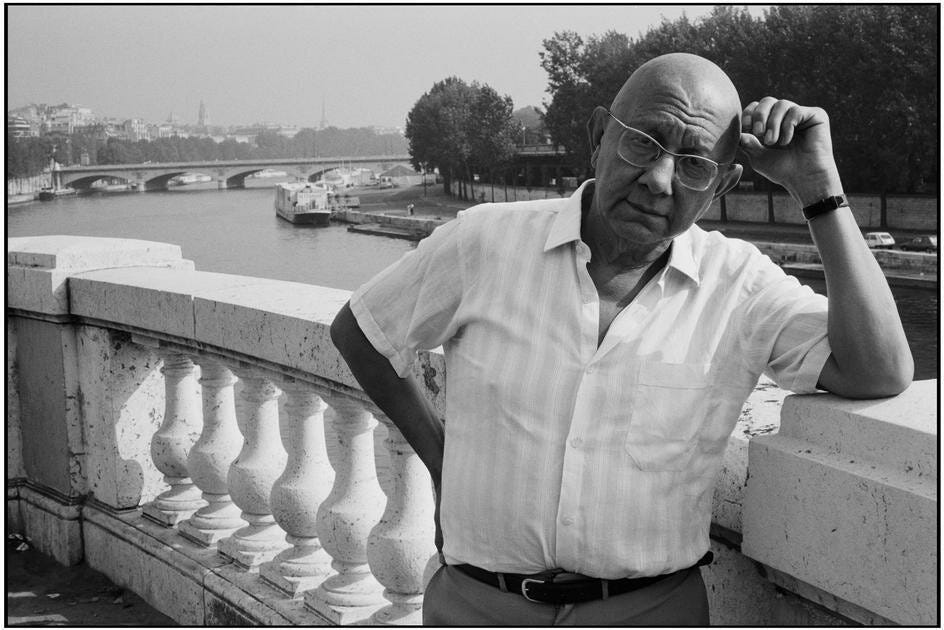
Have you ever felt like society is losing its mind, piece by piece? Cornelius Castoriadis believed that our collective sense of reality – what he called the ‘social imaginary’ – is dissolving before our eyes. This piece dives into his chilling insights, showing how the loss of our common stories and values is not just a political problem, but a deeply personal and existential one that affects all of us. Join me as we explore why our world feels so fragmented and what we might do about it.
Feeling the Cracks: What’s Happening to Our Shared World?
Lately, it feels like we’re all watching the same movie, but seeing completely different things. You see the headlines, you scroll through social media, and you can’t help but feel a pervasive sense of unraveling. Trust is eroding, conversations devolve into shouting matches, and finding common ground seems like a distant memory. It’s not just politics; it’s the very air we breathe, the fabric of our shared existence that seems to be tearing apart. For years, I’ve grappled with this feeling, trying to put a name to the invisible force that seems to be pulling us all in different directions. And then I found Cornelius Castoriadis.
Castoriadis, a brilliant but often overlooked Greek-French philosopher, gave us a powerful concept for understanding this chaos: the ‘social imaginary.’ It’s not just a fancy academic term; it’s the bedrock of everything we believe, the unspoken assumptions, values, and symbols that allow a society to function. It’s our collective story, our shared dream that tells us who we are, what’s important, and what’s possible. And Castoriadis argued, quite chillingly, that our social imaginary is dissolving. He saw it happening decades ago, and his insights feel more urgent than ever today. What happens when a society loses its shared story? What happens when the very ground beneath our collective feet gives way? That’s what we’re going to explore.
The Invisible Rules We Live By: What Castoriadis Called the Social Imaginary
Think about it: from the moment we’re born, we’re immersed in a world of meanings. We learn what’s right and wrong, what’s beautiful and ugly, what’s worth striving for. These aren’t just personal opinions; they’re deeply ingrained societal understandings. That’s the social imaginary at work. It’s what makes a group of individuals a ‘society’ in the first place, giving rise to our laws, our customs, our art, even our sense of humor. It’s the spontaneous creation of society itself, a living, breathing set of shared significations that operates mostly unconsciously, yet profoundly shapes our every interaction.
The most important creation of society is the creation of itself as a society, that is, the creation of its own institutions, values, meanings, and ways of living.
– Cornelius Castoriadis
Without this shared framework, we’d be lost, unable to even communicate effectively because the very words we use would lack common resonance. Imagine a world where the idea of ‘justice’ or ‘freedom’ meant something radically different to every single person. How could we ever build anything together? Historically, strong social imaginaries have been the engine of human progress, allowing us to build great civilizations, launch ambitious projects, and even collectively reimagine our own future. It’s the essential glue that holds us together, giving purpose to our individual lives by embedding them within a larger, meaningful collective.
Why Our Collective Story is Falling Apart: The Forces Against Us
So, if the social imaginary is so vital, why is it crumbling? Castoriadis pointed to several insidious forces. Firstly, he saw the relentless march of consumerism and hyper-individualism as a corrosive agent. When our primary identity becomes that of a ‘consumer’ rather than a ‘citizen,’ and when personal gratification trumps collective well-being, the shared values that bind us inevitably weaken. We’re constantly told to look inward, to prioritize our own desires, to define success purely in material terms. This reduces complex human beings to economic units, stripping away the richer layers of meaning that community provides.
Then there’s the creeping technocracy – the idea that society can and should be managed by experts and algorithms, rather than by active citizens. This managerial mindset stifles creativity, squashes genuine political participation, and turns us into passive recipients of decisions made by others. Our digital landscape, too, plays a complex role. While connecting us globally, it also fragments us into echo chambers, making it harder than ever to encounter differing viewpoints or to forge a common understanding of reality. We lose the shared experiences, the collective rituals, and the common discourse that once allowed us to weave our stories together. When we lose our ability to collectively dream, we lose our capacity to collectively act.
When Everything Falls Apart: The Unsettling Consequences of a Broken Society
The consequences of this erosion are not merely academic; they are profoundly felt in our daily lives. Castoriadis, echoing earlier thinkers, warned of ‘anomie’ – a state of normlessness, a feeling of being adrift without meaning or purpose. When the shared narrative disintegrates, individuals are left feeling isolated and disoriented. We see this in the rising rates of anxiety and depression, in the widespread sense of cynicism and apathy towards political processes. If nothing truly matters beyond individual desire, then what’s the point of collective effort?
Politically, this breakdown is devastating. A society that can’t agree on fundamental values can’t genuinely govern itself. Decisions become reactive, short-sighted, and often serve narrow interests rather than the common good. Democracy, in its truest sense – the self-institution of society – becomes almost impossible. We become a ‘managed’ society, rather than a self-creating one. We lose the ability to ask profound questions, to challenge the status quo, and to envision radically different futures because the very language and frameworks for doing so have been diminished. We simply accept what is, because we can no longer imagine what could be.
The contemporary individual is less and less capable of acting as an autonomous subject, and more and more as a passive recipient of external impulses and directives.
– Cornelius Castoriadis
Can We Build Something New? The Hard Work of Reimagining Our Future
So, is there any hope? Castoriadis was no pessimist; he believed fiercely in humanity’s capacity for creativity and self-transformation. He argued that the answer isn’t to yearn for a return to some idealized past, but to actively, consciously, and collectively create a new social imaginary – one based on genuine autonomy. This isn’t about imposing a new dogma, but about fostering a society where individuals are empowered to participate in shaping their own institutions and meanings. It means moving beyond a purely procedural democracy, where we just vote for representatives, to a substantive democracy where we actively deliberate and decide on the fundamental questions of our common life.
This is hard work. It demands that we challenge the forces that seek to depoliticize us, that we question the dominant narratives of consumerism and technocracy. It requires us to engage in genuine dialogue, to rebuild trust, and to cultivate spaces where new ideas and values can emerge. It means investing in education that fosters critical thought and active citizenship, not just job skills. It means creating cultural forms that bring us together, rather than further isolating us. We have to rediscover our power to create, to be the authors of our own collective story, rather than just passive readers of a script written by others. It’s a profound responsibility, but it’s the only way to escape the current malaise.
Go Deeper
Step beyond the surface. Unlock The Third Citizen’s full library of deep guides and frameworks — now with 10% off the annual plan for new members.
It’s Up to Us: Taking Back Our Power to Create
Castoriadis’s insights are a wake-up call. The disintegration of our shared story isn’t just an abstract philosophical problem; it’s the silent crisis undermining our ability to live together meaningfully, to address monumental challenges, and to simply feel connected in a fragmented world. I believe his work offers a crucial lens through which to understand why things feel so broken, and more importantly, it offers a path forward.
The path is not easy. It asks us to confront uncomfortable truths about our society and ourselves. But it also reminds us of our immense human potential for creation. We are not merely subjects of history; we are its makers. The challenge before us is to consciously reclaim that power, to collectively re-imagine and re-institute a social imaginary that can once again infuse our lives with shared purpose, meaning, and genuine freedom. It’s up to us, all of us, to start weaving that new story, one conversation, one collective action, one shared dream at a time.
I appreciate this piece. I ordered two of his books!