


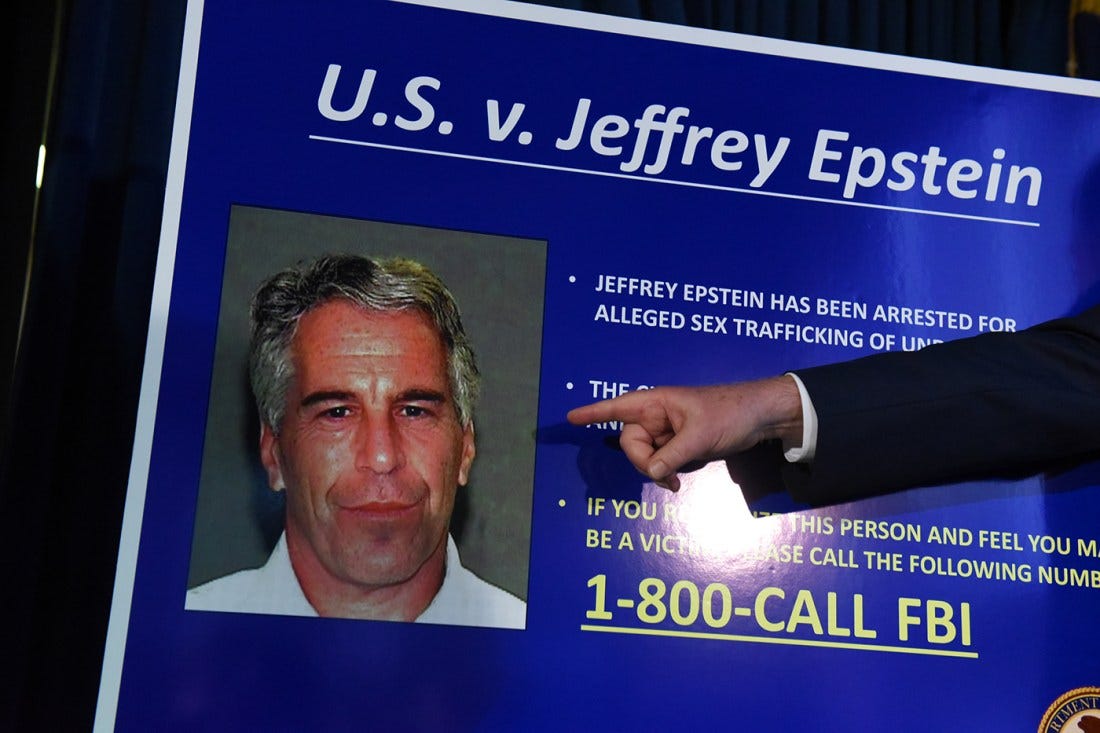
The promise of transparency often collides with the opaque reality of power. The recent release of the Jeffrey Epstein files, touted as a step towards accountability, serves instead as a stark illustration of how systemic forces orchestrate partial disclosures to maintain the integrity of elite networks. We are left to navigate a labyrinth of redactions and curated revelations, where the truth is not unveiled, but meticulously managed.
The Managed Mirage of Transparency
When the ‘Epstein Files Transparency Act’ promised full disclosure, many hoped for a true reckoning—a definitive illumination of the dark networks that shielded Jeffrey Epstein and his associates. Yet, as the initial trove of documents has been released, what we’ve received is not an unvarnished truth, but a carefully curated performance of transparency. Deputy Attorney General Todd Blanche’s announcement of a phased release, riddled with redactions for ‘national security, foreign policy, and ongoing investigations,’ immediately signaled a familiar pattern: the strategic withholding of information under the guise of legitimate concerns. This isn’t just about the Epstein case; it’s a profound demonstration of how deeply entrenched power structures can co-opt the very mechanisms designed for oversight, transforming them into tools of self-preservation.
We are witnessing a carefully managed mirage, where the promise of light is delivered through a filter of opacity. This process leaves the public in a perpetual state of partial knowing, unable to connect the dots, to see the full picture, or to hold the truly powerful accountable. The implications extend far beyond this single scandal, touching upon the very foundations of trust in our institutions and the integrity of justice itself. It forces us to confront the uncomfortable truth that in the highest echelons, accountability is often a performance, not a reality, leaving critical questions unanswered and vital connections obscured.
Truth is not something that is given to us, but something that we must create for ourselves through action.
– Hannah Arendt
The Architecture of Concealment
The core of the problem lies not in individual malicious actors, but in the institutional architecture built for concealment. We are told these redactions are for valid reasons—national security, foreign policy, ongoing investigations. And indeed, some information might genuinely warrant protection. But when these broad categories become default levers for opacity in a matter of profound public interest, they reveal a system capable of self-preservation above all else. The very mechanisms meant to protect the state can, and often do, serve to protect the powerful from scrutiny.
Consider the ‘ongoing investigations’ clause. While essential for preventing interference, in this context, it can become an indefinite deferral of full transparency. What is being investigated, and by whom? Without clear parameters, this phrase becomes a convenient black hole for inconvenient truths. Furthermore, the absence of enforcement mechanisms or penalties for non-compliance in the ‘Transparency Act’ itself speaks volumes. A law without teeth is less a mandate for disclosure and more a performative gesture, designed to quell public outcry without fundamentally altering the dynamics of power and information.
The true crisis is not the existence of secrets, but the institutionalization of secrecy as a defense for elite networks.
Echoes in the Shadows of History
This phenomenon is hardly new. History is replete with instances where the powerful have leveraged state mechanisms to insulate themselves from justice. From ancient aristocratic privileges to modern intelligence apparatuses, the temptation to control narratives and limit accountability is a constant. Think of the Church’s historical power to shield its own, or the Cold War-era intelligence agencies that operated with near-absolute impunity under the banner of national security. These are not mere parallels; they are expressions of a persistent human and institutional failing: the desire to maintain order and prestige, even at the cost of truth and justice.
The names change, the technologies evolve, but the underlying dynamic remains: a select few operate with an implicit understanding that certain truths are too destabilizing, too embarrassing, or too inconvenient to be fully exposed. The photos of Epstein with prominent figures like Noam Chomsky and Bill Gates, or the redacted images from his estate, serve as tantalizing glimpses into this world, yet they are fragments, carefully presented to evoke scandal without revealing the full depth of systemic complicity. These partial disclosures, in a strange inversion, reinforce the very power they claim to expose.
The greatest evil is not done in the first place by evil people, but by good people who are not willing to do good.
– Simone Weil
The Price of Partial Truths: Erosion of Trust
What is the cost of living in this state of perpetual partial truth? The most immediate casualty is public trust. When citizens repeatedly witness the powerful evade full accountability, cynicism takes root, and faith in the rule of law withers. This erosion of trust is not just an abstract concept; it has tangible consequences. It weakens democratic institutions, fuels populist resentment, and makes it harder to address genuine crises when the public doubts the integrity of its leaders and the information they provide.
Furthermore, it normalizes elite impunity. If the system consistently demonstrates its capacity to protect its own, regardless of the gravity of their transgressions, then the very concept of universal justice becomes a hollow promise. It creates a two-tiered system where the powerful operate under a different set of rules, fostering a deep sense of injustice and alienation among the populace. This can lead to a dangerous cycle where disaffection breeds apathy, further enabling the very structures that perpetuate opacity.
Reclaiming the Gaze: Demanding True Accountability
To counter this, we must shift our perspective from passive recipients of ‘disclosures’ to active participants in demanding genuine accountability. This requires a profound intellectual and moral vigilance. We must learn to read beyond the headlines, to question the framing, and to identify the silences. It means understanding that transparency isn’t a gift from power, but a right that must be relentlessly asserted.
Practically, this involves supporting independent journalism and investigative bodies that are uncompromised by political or corporate pressures. It means advocating for stronger legislative mandates that include clear enforcement mechanisms and penalties for non-compliance in transparency acts. But perhaps most importantly, it means cultivating a civic culture that refuses to be satisfied with partial truths, that understands the vital connection between full disclosure and the health of a democratic society.
Sustaining the Unflinching Gaze
The story of the Epstein files is not merely a sensational scandal; it is a profound lesson in the enduring struggle for accountability against entrenched power. It reveals that the fight for justice is not a singular event, but a continuous process of challenging the architecture of concealment. We must sustain an unflinching gaze, demanding not just ‘the files,’ but the full, unredacted truth behind them. Only then can we begin to dismantle the systems that uphold elite impunity and move towards a society where justice is truly blind, not just strategically selective.