The Unseated Assembly: Is the UN a Museum of a Forgotten Future?

The UN Secretary-General says the world’s governing principles are under ‘profound strain.’ You’ve heard that before. But what if this time is different? What if the institution we see as a flawed peacemaker has become something else entirely: a high-fidelity monitor of our own collapse?
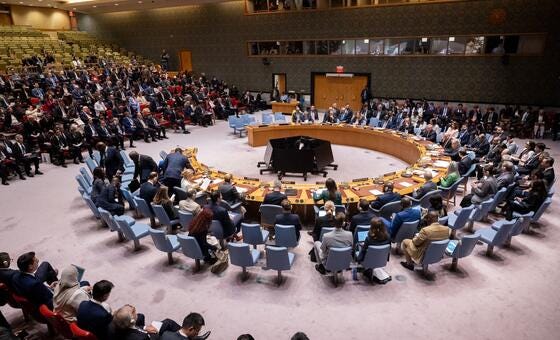
So, what does ‘profound strain’ actually mean?
Let’s start with the official alert. When a figure like UN Secretary-General António Guterres says the organization’s founding principles are under “profound strain,” you and I are meant to hear more than just diplomatic understatement. This is the machine’s chief operator telling us the core components are failing. The strain isn’t about budgets or a single peacekeeping mission. It’s about the very logic of collective security born from the ashes of World War II. We treat the United Nations like a global government it never was, and ignore the global danger it was designed to prevent. The problem isn’t just a breakdown in the system; it is a fundamental challenge to the system. The question you have to ask is: do those principles still mean anything in a world that no longer agrees on the basics?
But hasn’t the UN always been a bit of a joke?
I know what you’re thinking. ‘What else is new?’ Your cynical take is entirely earned. The Security Council was a political hostage during the Cold War. The blue helmets were ghosts in Rwanda and Srebrenica. The idea of the UN as an impotent talking shop is as old as the institution. But that familiar critique is a trap; it makes us miss what’s different now. In the past, the UN’s failures were about conflicts of interest *within* a shared framework. Today, it’s the framework itself that is being dismantled. Major powers aren’t just sneaking around the UN anymore; they’re building entirely new parallel structures—economic, military, political—that are designed to make it irrelevant. This isn’t the friction of normal politics. This is the sound of obsolescence.
If the strain is new, what is the force that’s breaking it?
The machine is breaking because of a fatal contradiction: it’s a 1945 design running on a 2024 operating system. Three pieces of evidence scream this at us. First, you watch the Security Council deadlock over a clear invasion. The veto is no longer a tool to protect a national interest; it’s a tool to delete reality. The purpose of a veto in the Security Council is no longer to protect a nation’s interest, but to nullify reality itself. Second, you have globe-spanning tech companies and private armies that operate completely outside the nation-state model the UN was built for. And third, the truly existential threats—climate, pandemics, AI—demand a surrender of national autonomy that is politically impossible. This is where the analysis gets more complex. This tension between sovereignty and global necessity is a theme we explore in our paid analysis, ‘The Sovereign’s Dilemma,’ which unpacks why all historical models of international order are now failing. But for now, the key point is the machine is breaking because it was designed for a world of bordered wars, and our deadliest threats are now borderless.
What This Demands of Us
So we have to stop seeing this as a simple story of institutional failure. It’s a story of succession. The UN’s function is changing right before our eyes. It is no longer the flawed arbiter of a global order. It is now our most important diagnostic tool—a global stage where the *end* of that order is performed live. Its failed resolutions are irrelevant, but its deadlocks are profoundly meaningful. They are a perfect map of the new fractures and power alliances that will define your future and mine. We’ve been asking the wrong question. It’s not ‘How do we fix it?’ It’s ‘What is it showing us about the world we’re in now?’ And the answer is terrifying. It’s showing us a world without a last court of appeal. The great illusion of the 21st century is that international law will enforce itself. It is a covenant, and the faith of its signatories is failing. The strain Guterres feels is the sound of our safety net tearing.
If This Matters to You
The Third Citizen publishes weekly deep dives, frameworks, and evidence digests for readers who take ideas seriously. Free articles like this one are the surface. Paid subscribers get the full architecture — the frameworks, the mechanisms, the uncomfortable implications.
If you’re still reading, you’re probably one of us.