


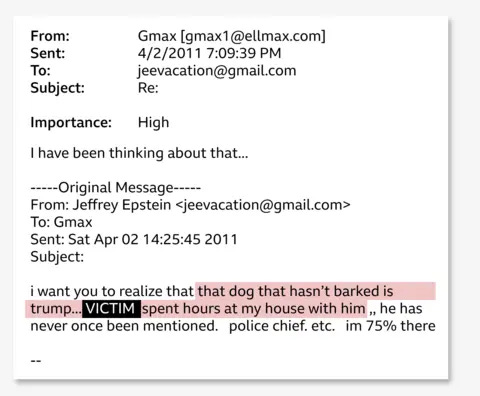
Friends, the recent unsealing of documents related to Jeffrey Epstein’s vast and disturbing network has once again thrust the uncomfortable truth of elite influence into our collective consciousness. Yet, as I reflect on these revelations, a critical question persists: why do such damning disclosures so rarely lead to meaningful accountability for the powerful figures implicated?
This isn’t just a legal puzzle; it’s a profound sociological and ethical challenge to the very foundation of justice in democratic societies. We, the public, are repeatedly promised transparency, only to be left grappling with a cycle where scandal erupts, headlines blare, and then, often, a return to a familiar, unsettling equilibrium where the most privileged seem largely untouched by the consequences that would befall ordinary citizens. The Big Question, therefore, isn’t just about the individuals involved in the Epstein saga, but about the systemic resilience of elite impunity itself. What are the invisible mechanisms that allow such power networks to operate, to be exposed, and yet largely endure?
I find myself thinking of Hannah Arendt’s incisive observation, not on specific crimes, but on the nature of truth in politics:
The moment we no longer have a reliable, commonly recognized factual world, we have lost not only the capacity to choose between right and wrong, but also the capacity to understand what is at stake in such choices.
– Hannah Arendt, “Truth and Politics”
Her words echo in my mind as we confront a world where the facts about power can seem so clear, yet the will to act upon them remains stubbornly opaque. This enduring enigma reflects a dialectical tension: our thirst for justice versus the structural resistance of entrenched power. The thesis posits that the revelations represent a potential crack in the edifice of elite immunity, a moment when public pressure could force a reckoning. The antithesis, however, is the observed pattern: how these revelations are often met with strategic obfuscation, legal maneuvering, and a collective societal fatigue that allows the powerful to weather the storm. The synthesis must then explore how we can move beyond mere outrage to genuinely dismantle these structures of privilege, recognizing that the challenge lies not only in exposing truth but in sustaining the political and moral will to act upon it. The danger is not merely that certain individuals escape justice, but that the entire concept of universal law is undermined when it is selectively applied, leaving us adrift in an unreliable, commonly recognized factual world.
Decoding the Epstein Dossier: An Overview
Let’s simplify what these latest documents, unsealed by court order, really mean for us. They provide further granular detail into the extensive web surrounding Jeffrey Epstein. While much of the media narrative has fixated on specific high-profile names, I believe our deeper interest lies in understanding the patterns of association and the mechanisms of denial or complicity. Key revelations include detailed flight logs from Epstein’s private jet, colloquially known as the “Lolita Express,” dating back to the 1990s. These logs document multiple flights taken by prominent individuals, including Donald Trump, often in the company of Ghislaine Maxwell. Notably, some flight manifests also listed younger individuals, though specific names are often redacted to protect the identities of potential victims or minors. These factual details, meticulously compiled from legal documents, paint a clearer picture of the sheer breadth of Epstein’s contacts. It’s a sobering reminder of how interconnected these powerful worlds truly are.
Beyond the flight logs, the documents contain emails, witness testimonies, and deposition excerpts that further illuminate the activities within Epstein’s orbit. For instance, a handwritten letter from Epstein to Larry Nassar, another convicted sex offender, contained crude and disturbing references to Donald Trump, underscoring the morally bankrupt world these individuals inhabited. It is crucial for us to note the Department of Justice’s (DOJ) historical statements, submitted prior to the 2020 election, asserting that some claims against certain figures were “untrue or sensationalist” and that no charges had been brought against Trump in connection with the Epstein investigation. These contextual details are vital for a comprehensive understanding, differentiating between confirmed association and legally established wrongdoing. The documents also include internal DOJ communications and media clippings, which, while numerous in references to Trump, primarily served as background or contextual information rather than direct indictments of his actions in relation to Epstein’s crimes. My goal here is to help us parse the verified details from the speculative, focusing on the demonstrable connections and official responses to those connections, so we can form our own informed opinions.
The Erosion of Public Trust
This persistent cycle of elite scandals, where evidence of wrongdoing or morally questionable associations surfaces only to dissipate without significant consequences for the most powerful, creates a profound erosion of public trust. This isn’t just about losing faith in individual leaders; it corrodes the very institutions designed to uphold justice and maintain social order. When we perceive a two-tiered justice system – one for the privileged and another for everyone else – the foundational principle of equality before the law is fundamentally undermined. This isn’t merely about cynicism, but about a deep, structural damage to the social contract that binds us together. The sense that certain individuals exist above the law fosters a dangerous apathy, where citizens become desensitized to corruption and lose faith in the possibility of meaningful change. The danger is that this normalization of impunity becomes self-perpetuating, making it even harder to mobilize collective will when future scandals inevitably arise.
This phenomenon, I believe, speaks to a universal human weakness: our tendency to accept the status quo, especially when challenging it feels overwhelming or futile. We are often drawn to the comfort of denial, preferring to believe that our institutions are fundamentally just, even when evidence suggests otherwise. The existential stakes are immense; a society that loses faith in justice ultimately loses faith in its own capacity for self-governance. It risks descending into a state where power alone dictates right and wrong, and where the rule of law becomes a mere suggestion. I’m reminded here of C.S. Lewis’s profound insight into the human desire for belonging and power:
In all but a very few, it is the desire to be inside the circle, to be one of those who know, that is the strongest motive of all.
– C.S. Lewis, “The Inner Ring”
The revelations from the Epstein files, therefore, serve as a stark mirror, reflecting not just the moral bankruptcy of a few, but the collective challenge to our societal conscience. They ask whether we are truly committed to justice, or merely to the performance of outrage, allowing the deeper structures of elite power to remain undisturbed, like a persistent shadow over the body politic, perpetuated by that very desire to be “inside the circle.”
Go Deeper
Step beyond the surface. Unlock The Third Citizen’s full library of deep guides and frameworks — now with 10% off the annual plan for new members.
Beyond Outrage: Cultivating Active Vigilance
So, how do we move beyond fleeting outrage to cultivate active vigilance? I believe it requires a conscious and sustained effort from each of us, and from our communities. The first step involves a commitment to intellectual rigor: critically analyzing information, distinguishing verified facts from speculation, and understanding the complex legal and social structures that often shield the powerful. This means resisting the urge to jump to conclusions based on sensational headlines, and instead, demanding primary sources and transparent reporting. It also entails supporting independent investigative journalism and legal organizations committed to pursuing justice without fear or favor. These are our frontline defenses against the obfuscation that accompanies elite scandals.
Furthermore, it is essential to engage in local and national civic processes. This includes advocating for judicial reforms that enhance accountability, supporting legislation that closes loopholes exploited by the wealthy, and participating in movements that demand ethical conduct from public officials. The goal is to build a counter-narrative and a counter-force to elite impunity, transforming passive observation into active participation. This requires cultivating a moral courage that resists the universal human weakness of conformity and the comfortable retreat into cynicism. The existential stakes are nothing less than the preservation of a just society. By refusing to normalize the exceptional treatment of the powerful, we reaffirm the fundamental principle that no one is above the law, thus safeguarding the integrity of our collective future. The true test of a society’s commitment to justice lies not in the exposure of wrongdoing, but in its unwavering resolve to ensure that accountability is absolute, regardless of power or prestige.
And let me share a thought from Václav Havel, on what it means to live authentically within such a system:
The chief task of the so-called dissident movements is not to play at being a political power, but to regain and defend its own identity, to bear witness to the truth, to call things by their proper names.
– Václav Havel, “The Power of the Powerless”
His words remind me that our power lies not in being ‘inside the ring,’ but in the unwavering commitment to truth and the courage to name the injustices we see, regardless of how entrenched the powerful may seem.