

The Theater of Impunity
How the Hearing Room Became a Stage for Nihilism

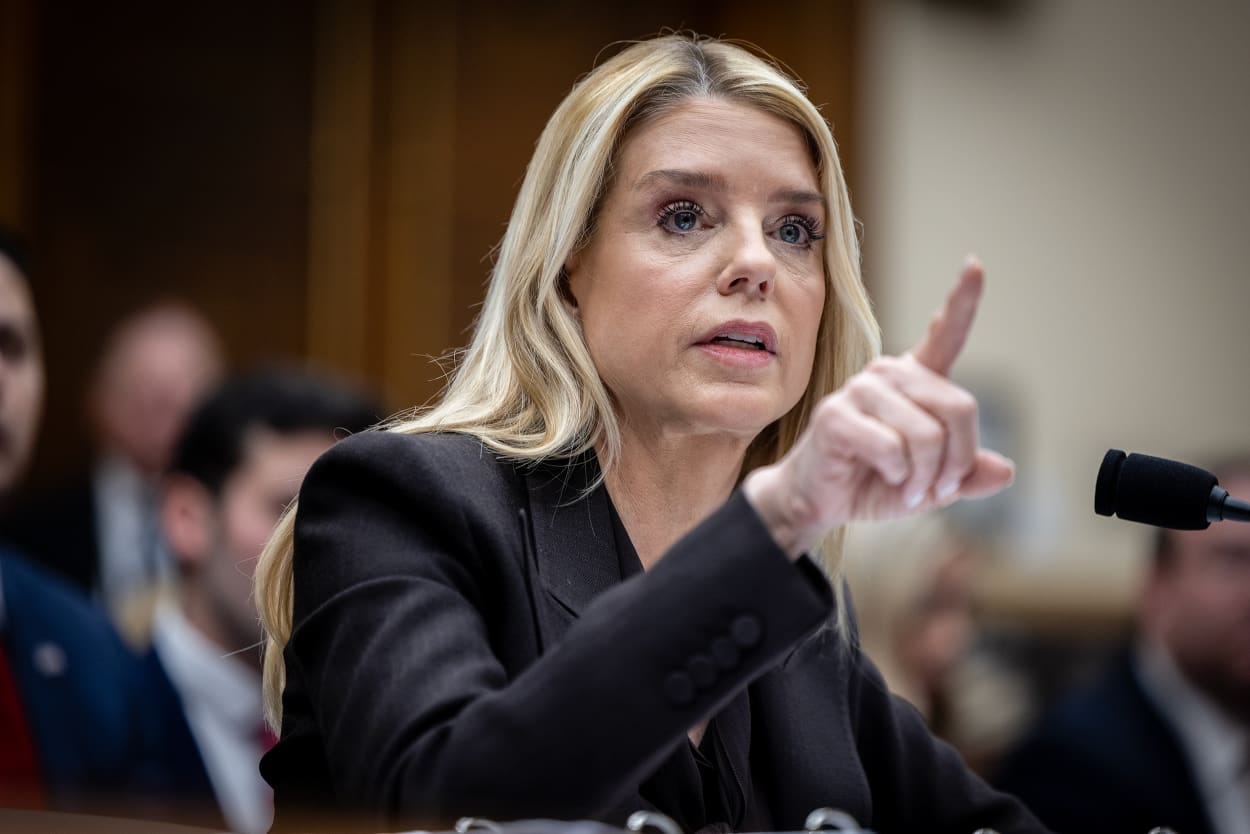
Beyond the insults and the shouting matches lies a deeper crisis: the replacement of impartial justice with performative loyalty. We explore the existential risks of an Attorney General who defends the Crown rather than the Constitution.
The Descent into Noise
It happened at the precise moment a sitting Attorney General, the highest law enforcement officer in the land, resorted to the playground slur of “washed-up loser lawyer” within the hallowed halls of Congress. February 12, 2026, was not a date of deliberation; it was a demarcation line. The air in the room did not crackle with the tension of legal argument but with the static of pure, unadulterated hostility.
To watch the exchange was to witness the final shedding of the veneer of civility that once masked the machinery of the state. I watched this not as a political analyst, but as someone deeply afraid that the language of governance has been irrevocably replaced by the language of the street brawl.
The Dow as a Shield
What struck me most forcibly was not the insult, but the defense. When cornered on issues of the utmost moral gravity—specifically, the entanglements with Jeffrey Epstein and the independence of her prosecutors—Bondi pointed to the economy. It is a terrifying syllogism: if the market is high, the government is just. This is the logic of a merchant, not a magistrate. It suggests that our collective morality is for sale, and that a bull market buys a lot of forgiveness. We are reminded of the warnings regarding the hollowness of material success when decoupled from truth.
Justice without force is powerless; force without justice is tyrannical. Justice without force is contradicted, because there are always wicked men; force without justice is accused. It is therefore necessary to put justice and force together; and, for this, to make sure that what is just is strong, or that what is strong is just.
– Blaise Pascal, *Pensées*
We have chosen the latter path: we have decided that what is strong—economically, politically—must inherently be just.
The Collapse of Separation
The hearing was a public dramatization of the collapse of the separation of powers. The Attorney General appeared not as an independent arbiter of the law, but as a consigliere protecting a client. The danger is not merely corruption; the danger is that we cease to recognize corruption because we have accepted loyalty as the highest virtue of the state. When the distinct lines between the person of the President and the office of the Presidency blur, the Republic effectively dissolves into a court of personal rule. The chaotic nature of the hearing was not a bug; it was the feature. By turning accountability into a circus, the administration delegitimizes the very concept of oversight.
A Crisis of Reality
Ultimately, this is about our relationship with reality. When an official stands before Congress and dismisses documented concerns as “lies” while offering personal insults as counter-evidence, they are engaging in the destruction of shared truth. It is a technique that relies on the exhaustion of the citizen.
If they shout loud enough, and if the spectacle is confusing enough, we will eventually tune out. But we must not tune out. As Václav Havel reminded us, the only defense against a system built on lies is the stubborn refusal to participate in the charade.
The tragedy of modern man is not that he knows less and less about the meaning of his own life, but that it bothers him less and less.
– Václav Havel
It must bother us. The moment we stop being bothered by the degradation of our institutions is the moment we lose them forever.