


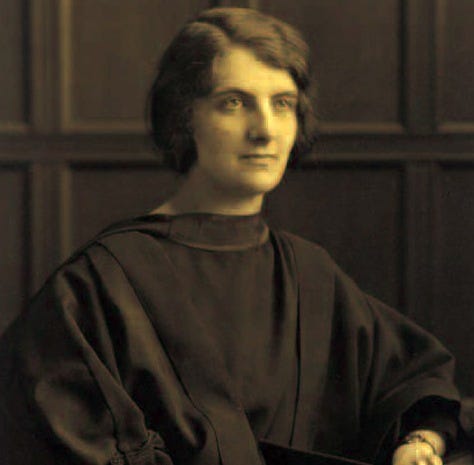
Frances A. Yates (1899–1981) was a distinguished scholar in Renaissance studies, renowned for her groundbreaking explorations of the art of memory and its implications for cognition and identity. Through her seminal work, particularly The Art of Memory, Yates examined the mnemonic techniques prevalent during the Renaissance, arguing that memory served not only as a cognitive tool but also as a fundamental aspect of the human experience and cultural heritage.
Yates’s scholarship provides a critical lens through which to view the evolving relationship between memory and technology. She contended that the modern tendency to outsource memory to digital devices contributes to a “spiritual atrophy” of the self, where individuals may lose touch with their internal cognitive resources and reflective capacities. By advocating for a return to traditional memory practices, Yates emphasized the importance of nurturing one’s internal memory as a means to foster deeper connections with oneself and the broader world.
If men learn this, it will implant forgetfulness in their souls; they will cease to exercise memory because they rely on that which is written, calling things to remembrance no longer from within themselves, but by means of external marks.
Socrates (in Plato’s Phaedrus)
The Scholar Behind the Theory
Born into a modest English family, Frances Yates experienced a challenging upbringing that shaped her scholarly pursuits. Despite her extensive research into the art of memory, Yates herself never mastered these intricate techniques. Instead, she dedicated her life to reading and writing, producing a remarkable body of work. Her prose is characterized by a rhythmic quality that captures the interplay of ideas and their embodiment in cultural practices, positioning her as a bridge between historical scholarship and the deeper psychological dimensions of memory.
