


In the ongoing struggle for Ukraine’s survival, Europe’s recent decision to provide a substantial loan rather than utilizing frozen Russian assets presents a profound moral and practical dilemma. This choice, framed as pragmatic, may inadvertently erode the very principles it claims to uphold, revealing deeper tensions between financial prudence and ethical imperatives in international relations.
Europe’s Moral Calculus: The Loan, the Assets, and the Unspoken Compromise
When European Union leaders finally emerged from marathon talks in December, they announced a significant financial lifeline for Ukraine: a €90 billion interest-free loan. On the surface, this appeared to be a decisive act of solidarity. Yet, the consensus reached was less about bold action and more about strategic avoidance. The loan, repayable only after Russia pays reparations, deliberately sidestepped the far more contentious, yet morally compelling, option of directly utilizing the vast sums of frozen Russian assets, estimated at €210 billion, mostly held in Belgium’s Euroclear.
This choice, I believe, is not merely a pragmatic financial maneuver but a profound statement on Europe’s understanding of its moral obligations in a time of war. It highlights a recurring dilemma where immediate legal and financial prudences are weighed against the stark ethical imperatives of supporting a nation under brutal assault. We are witnessing the solvent of principle at work, dissolving clear moral lines into the ambiguity of international finance.
The Pragmatic Veil: Why Prudence Prevailed Over Principle
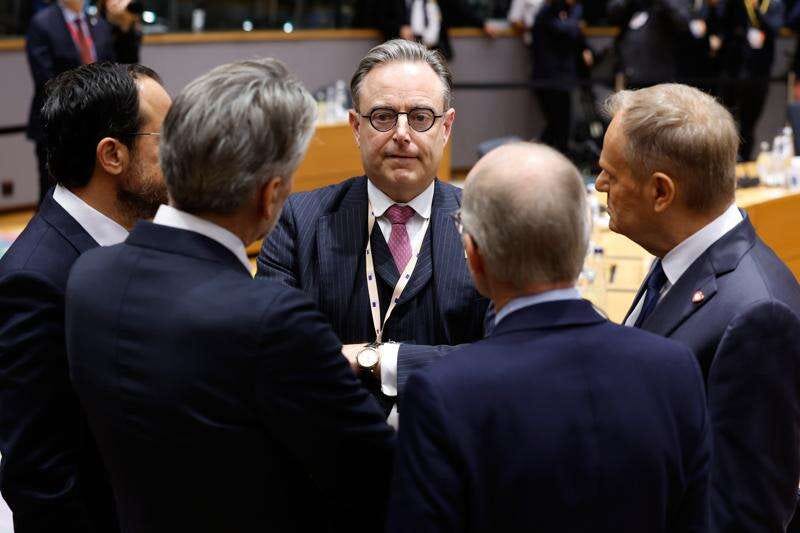
The decision to opt for a loan backed by the bloc’s budget, rather than directly confiscating Russian state assets, was driven by a complex web of legal, economic, and geopolitical considerations. Belgium, home to the majority of these frozen funds, demanded unlimited guarantees against potential Russian retaliation and, critically, against legal risks. Belgian Prime Minister Bart De Wever’s rejection of the direct asset use plan as ‘unstable’ underscored a deep-seated apprehension within the EU.
From a purely pragmatic standpoint, the loan offers immediate relief, allowing Ukraine to cover its military and economic needs into 2026. It bypasses the tangled legal battles that would undoubtedly ensue from asset seizure, and it shields individual member states from direct economic blowback from Moscow. This approach prioritizes predictability and internal cohesion, framing itself as the only realistic path forward. Yet, as the philosopher Simone Weil once observed:
To be just, it is necessary to be fully attentive to the reality of the other, especially the suffering other.
– Simone Weil
I question whether this ‘prudence’ truly embodies full attentiveness to Ukraine’s reality, or whether it reflects a convenient detachment from the radical demands of justice in wartime.
The Asset of Contention: Between ‘Robbery’ and Righteousness
The frozen Russian assets represent a significant financial resource that could be immediately deployed to bolster Ukraine’s defense and recovery. Their immobilization was a punitive measure, yet their repurposing for the victim remains an insurmountable hurdle for many in the EU. Russian President Vladimir Putin’s swift accusation of ‘attempted robbery’ and his envoy Kirill Dmitriev’s declaration of the EU’s failure as a ‘victory for law’ reveal the deep chasm in interpretation.
This brings us to a critical juncture. Is the failure to use these assets truly a ‘victory for law,’ or a victory for an overly cautious interpretation of law that inadvertently serves the aggressor’s narrative? International law, in its ideal form, seeks justice. When its complexities become an obstacle to supporting a nation’s existential fight against an illegal invasion, we must scrutinize its application. The ongoing debate over frozen assets exposes a deeper global struggle over the definition of legitimate financial warfare and the moral boundaries of state sovereignty.
Moral Economies and the Weight of Geopolitical Prudence
The EU’s choice can be understood within a framework of ‘moral economies’ – where economic decisions are not value-neutral but deeply embedded in ethical assumptions about fairness, justice, and responsibility. By opting for a loan, Europe effectively maintains a distance, providing aid while avoiding a direct, confrontational financial act that could set a precedent for future international conflicts or invite severe economic retribution. This is a gamble on geopolitical stability over immediate moral vindication.
However, this prudence comes with a cost to Europe’s moral authority. As Hannah Arendt might suggest when contemplating political action under duress:
Under conditions of terror, most people will comply but some people will not. No more is required, and no more can reasonably be asked, for this planet to remain a human dwelling-place.
– Hannah Arendt
In this context, compliance with perceived legal limitations, even when those limitations serve to protect the aggressor’s assets, raises uncomfortable questions about what is ‘required’ of a moral actor on the world stage. It suggests a compliance that, while avoiding overt terror, still sidesteps the radical responsibility demanded by the current terror in Ukraine.
The Erosion of Credibility and the Future of Deterrence
What message does this send to future aggressors? That state assets, even when frozen in response to illegal aggression, are largely untouchable? This precedent could weaken the deterrent effect of financial sanctions and signal a reluctance among democratic nations to take truly decisive economic measures, even when faced with overt violations of international law. Ukraine’s President Zelenskyy, while welcoming the loan, is acutely aware of the existential stakes and the need for more than just temporary financial bandages.
The dilemma is real: balancing short-term stability with long-term strategic and ethical goals. But a continuous prioritization of avoidance can lead to an erosion of credibility, both among allies and adversaries. This is not merely about money; it is about the soul of Europe’s commitment to justice and its role in shaping a multipolar world where aggressive actions carry tangible, inescapable costs.
Reclaiming the Ethical Imperative: Beyond the Comfort of Caution
Moving forward, Europe must reconcile its internal divisions and its external responsibilities. A more principled approach would involve a unified, robust legal framework for the appropriation of frozen state assets belonging to aggressor nations. This would require courage – the courage to face legal challenges, potential retaliation, and the discomfort of setting new precedents in international law.
Such an approach is not without risk, but the alternative – a continuous cycle of loan-based aid while an aggressor’s wealth remains secure – carries a far greater moral and strategic cost. It is a cost measured in human lives, in the prolonged suffering of a nation, and in the gradual diminishment of the very principles Europe purports to uphold.
Lessons from the Moral Crucible: What this Teaches Us
The EU’s dilemma in financing Ukraine’s resistance serves as a powerful case study in the complexities of modern geopolitics, where financial decisions are never truly neutral. It forces us to confront the uncomfortable truth that ‘prudence’ can sometimes be a mask for reluctance, and ‘legal stability’ a shield against radical justice. The true test of a moral economy, especially in times of war, lies not just in what aid is given, but in how it is financed, and what deeper principles are either affirmed or quietly abandoned in the process.