


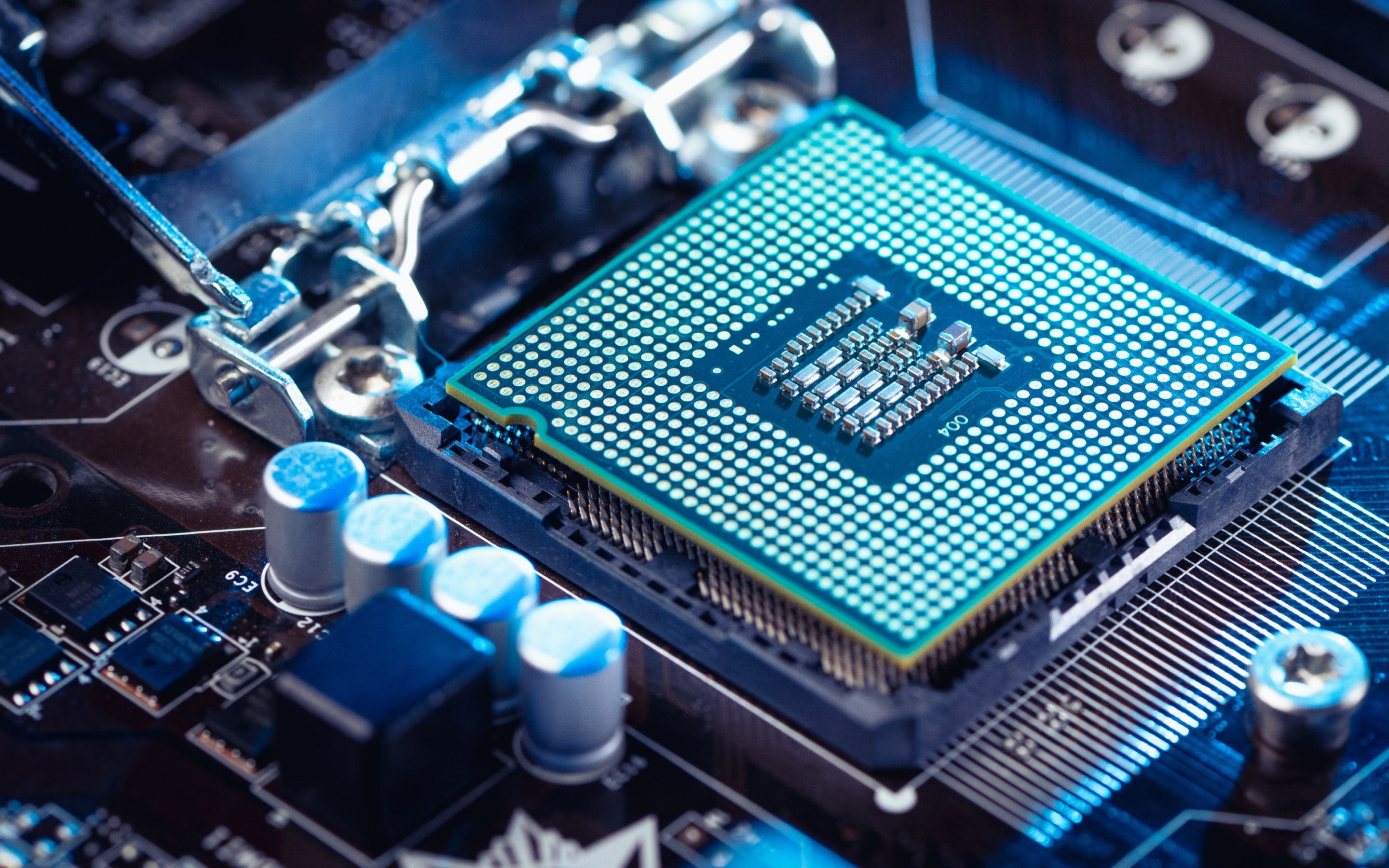
We’re all living in a technologically advanced world that feels incredibly stable, but what if I told you our ‘smart’ civilization is built on incredibly fragile foundations? This article is a personal wake-up call to prepare for a potential ‘Semiconductor Winter’ and embrace resilience over convenience.
My Unsettling Realization: Is a ‘Semiconductor Winter’ Coming?
Lately, I’ve been grappling with a deeply unsettling thought: what if the relentless march of technology, which we all take for granted, suddenly grinds to a halt? We live in a world where everything, from our phones to our cars to our coffee makers, runs on microchips. These tiny wonders are the lifeblood of our modern existence, yet their global supply chain is shockingly fragile. When I hear experts warning that ‘when the blockade starts, you won’t be able to buy a laptop for 2 years,’ it sends shivers down my spine. This isn’t just about inconvenience; it’s about a potential ‘Silicon Frost’ that could fundamentally change our lives.
I’ve always been an optimist about progress, but recent geopolitical events and a deeper dive into how these chips are actually made have forced me to confront a very real, very urgent danger. We’ve built an entire civilization on a house of cards, intricately connected and incredibly vulnerable. And honestly, it feels like we’re all pretending not to see it.
The Myth of Endless Tech: What We’ve Forgotten
For most of my life, and probably yours too, technology has felt like an endless river of innovation. New gadgets every year, faster processors, more connected homes. It’s a comforting myth, isn’t it? This illusion of infinite abundance has made us forget a crucial truth: technology isn’t magic; it’s a physical, material reality built on finite resources and complex logistics. We’ve become disconnected from the brutal industrial ballet required to put a smartphone in our hands.
The greatest trick the modern world ever pulled was convincing us that the machine would always provide.
– Attributed to a modern philosopher of technology
The stark antithesis to this blissful ignorance is the reality of bottlenecked production, specialized factories in precarious regions, and the very real possibility of disruption. We optimize for efficiency, yes, but often at the cost of resilience. The synthesis? We need to remember that true progress isn’t just about speed and features; it’s about building a sustainable and robust foundation that can withstand the inevitable shocks.
Why Our Global Gadgets are Our Greatest Weakness
Think about your favorite gadget. Now, imagine tracing every single component back to its origin. You’d traverse continents, cross oceans, and pass through highly specialized factories. This ultra-complex, globally distributed supply chain is a marvel of human ingenuity, but it’s also a terrifying vulnerability. A single natural disaster, a trade war, or a military conflict in a key region could cripple the entire system.
We saw hints of this during the pandemic, with minor disruptions causing major ripple effects. But imagine something far more severe, something that halts the flow of essential components for months or even years. This isn’t just about economic loss; it’s about the very real possibility that our digital tools, our communication, our very way of life could become profoundly incapacitated. The context here isn’t abstract economics; it’s the fragile, physical reality of our highly interconnected world.
The Quiet Threat of Smart Home Dependency
We love our ‘smart’ homes, don’t we? Thermostats that learn, refrigerators that order groceries, lights we can control from our phones. It’s all so convenient! But here’s the quiet threat: these ‘smart’ devices are utterly dependent on a constant supply of chips, software updates, and often, internet connectivity. When the chip supply falters, or if the digital infrastructure is compromised, what happens?
That expensive ‘smart’ fridge could become nothing more than a very large, very heavy cooler. Your smart car might struggle to start or receive critical updates. Our pursuit of ultimate convenience has inadvertently ushered in an era of profound dependency, transforming objects designed to make our lives easier into potential points of systemic failure. This is the existential stake: what happens when our conveniences become our masters, and then, suddenly, cease to function?
Taking Stock: A Personal Tech Audit for Resilience
So, what can we do? My first piece of advice, and something I’ve been doing myself, is to perform a rigorous ‘tech lifecycle audit.’ Go through your home. What devices are absolutely essential for your work, your family’s safety, your communication? How long would they truly last if new parts or software updates weren’t available? Can you actually fix them, or are they black boxes?
This isn’t about hoarding or panic; it’s about being pragmatic. It’s an exercise in confronting our own vulnerabilities and asking hard questions about what we truly need versus what we merely want. For me, it was a revelation to see how many critical functions I’d unconsciously offloaded to fragile, external systems. This audit helps you identify where you’re most exposed and where you can start building a more robust, independent setup.
The Case for ‘Dumb’ Appliances: My Urgent Recommendation
This might sound counterintuitive in our ‘smart’ world, but I’m increasingly convinced of the imperative to acquire ‘dumb’ versions of essential items. Think about it: a classic, mechanical alarm clock needs no Wi-Fi. A basic flip phone might still work if mobile networks are degraded but not completely down. A simple, mechanical coffee maker will brew your morning cup long after your app-controlled one has bricked.
The more technologically advanced we become, the more we stand to lose in a single moment of fragility. True wisdom lies in balancing innovation with robust simplicity.
– Nassim Nicholas Taleb, on Antifragility (paraphrased)
These ‘dumb’ goods are inherently more resilient. They don’t rely on complex external ecosystems, proprietary software, or constant connectivity. They can often be repaired with basic tools and skills, rather than requiring specialized technicians or entirely new circuit boards. It’s a strategic investment in future self-sufficiency, prioritizing enduring utility over fleeting, connectivity-dependent features. This approach directly challenges the consumerist drive for the ‘latest and greatest’ and instead champions enduring functionality.
Your Blueprint for an Anti-Fragile Digital Life
Building resilience against a potential ‘Semiconductor Winter’ isn’t just about buying different stuff. It’s about a shift in how we think and live. It’s about reclaiming agency. For me, that means learning basic repair skills, understanding how things fundamentally work, and leaning into local communities. Who in my neighborhood can fix a broken engine? Who knows how to garden effectively?
This blend of personal preparedness and community connection creates an ‘anti-fragile’ approach. It acknowledges that while technology is powerful, our over-reliance on centralized, globalized systems can make us incredibly vulnerable. We’re talking about maintaining our ability to function, communicate, and live meaningful lives even when the most advanced digital tools are temporarily unavailable. It’s about freedom, really, from the tyranny of hyper-dependence.
Go Deeper
Step beyond the surface. Unlock The Third Citizen’s full library of deep guides and frameworks — now with 10% off the annual plan for new members.
Facing the Future: Building Your Personal Tech Sanctuary
The possibility of a ‘Semiconductor Winter’ is a harsh warning, but it’s also an opportunity. It’s a chance to stop sleepwalking through our technologically saturated lives and ask ourselves what truly matters. We need to move beyond the naive belief in endless progress and also avoid succumbing to despair. Instead, we must embrace a path of informed preparedness.
I urge you to audit your digital life, consider investing in reliable ‘dumb’ alternatives, and start building your personal and communal skills. This isn’t about going ‘off-grid’ entirely, but about intelligently diversifying our dependencies. By understanding our vulnerabilities now, we can build robust ‘tech sanctuaries’ that will see us through disruptions, ensuring that we remain capable and adaptable, no matter what the future holds.
I realized after the first few sentences just how grateful I should be for my skepticism and quasi-ludditery. Despite the fact that half of my work in design is done in 3-D modeling, and photoshop, and all of my writing is done on a computer, I have never even considered a “smart” anything. I don’t want a television that can spy on me. When I buy one I pay to have its internet capability disabled. Nor do I ever shop by internet or stream media. There a hard rational line that I draw between necessity false convenience. If your doctor can remotely monitor your pacemaker, then a hacker can kill you. If your car can be controlled over the web, then you may have paid for it, but you don’t own it.
The time is now to decide who’s in charge, you, or your toaster?
Apple has applied for a patent for earbuds equipped with electroencephalography (EEG) sensors capable of monitoring brain activity through electrodes placed in or around the ear canal. Soon you’ll be able to open an app to find out if you’re happy.