


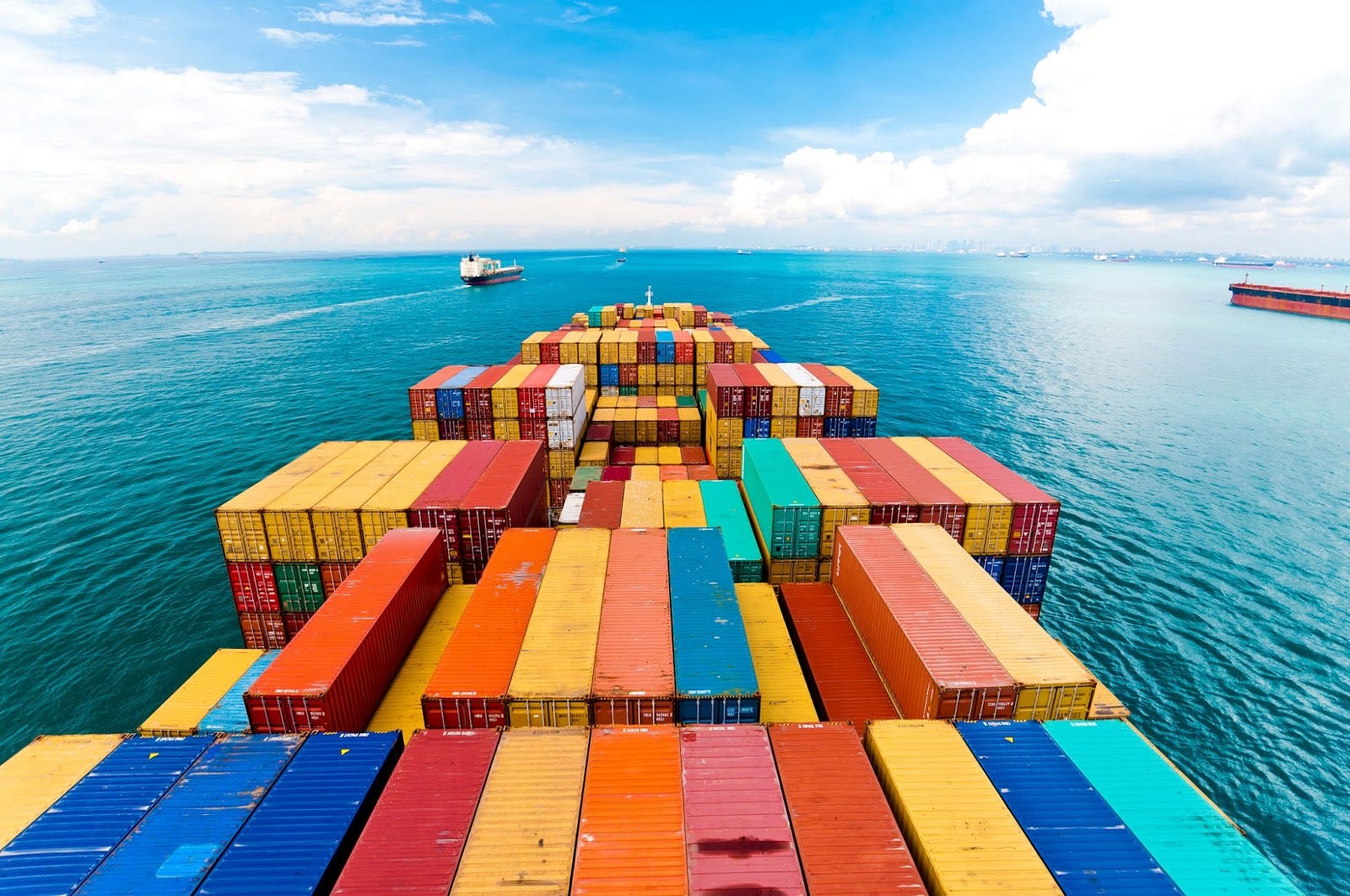
In an increasingly fractured world, reliance on global supply chains has transformed from economic efficiency to a profound strategic vulnerability. This comprehensive guide dissects the geopolitical shifts necessitating a radical re-localization of production and consumption, presenting a blueprint for community resilience and individual autonomy.
The Global Village in Flames: A New Era of Supply Chain Precarity
Friends, we’ve lived for decades under the comfortable illusion of an endlessly flowing ‘global buffet.’ Everything we wanted, whenever we wanted it, delivered to our doorstep from halfway across the world. But if you’ve been paying attention—and I know you have—you can feel the heat from the ‘global village’ burning down around us. From the Red Sea to the Strait of Malacca, those vital shipping lanes aren’t just trade routes anymore; they’re becoming geopolitical choke points, instruments of power in a world where every nation is looking out for itself.
This isn’t just about economics; it’s about survival. Our ‘just-in-time’ efficiency model, once hailed as genius, is now revealing itself as a profound strategic vulnerability. We’re witnessing the rise of neo-mercantilism, where nations prioritize their own interests, and the idea of relying on distant strangers for our essential goods, especially our food, feels less like globalization and more like a dangerous gamble. As the philosopher Simone Weil once wrote,
To be rooted is perhaps the most important and least recognized need of the human soul.
– Simone Weil
And in this context, ‘rooted’ means locally sourced, locally grown, locally resilient. We have to start thinking of our farmers’ markets not as cute weekend outings, but as our frontline siege logistics.
From ‘Just-in-Time’ to ‘Just-in-Case’: Your Local Supply Line as a Shield
Here’s the stark truth: localism isn’t just a trendy preference anymore; it’s a strategic imperative for your personal and our collective security. Remember those empty shelves during the pandemic? The sudden price hikes for basic goods? Those weren’t anomalies; they were previews of coming attractions. Every ‘food mile’ isn’t just an environmental cost; it’s a ‘risk mile,’ a potential point of failure that leaves your family vulnerable. We must pivot from the brittle ‘just-in-time’ mindset to a robust ‘just-in-case’ strategy. This isn’t about retreating from the world; it’s about building a sturdy lifeboat for your community in increasingly turbulent waters.
This paradigm shift is about understanding that your choices at the grocery store have geopolitical implications. It’s about recognizing that securing local production is a foundational act of defense, a way to insulate your community from the inevitable economic and geopolitical squeezes ahead. This is not merely a lifestyle choice; it is the civic duty of the 21st century, a non-negotiable pact with our collective future.
The Siren Song of Convenience: Why We’ve Grown Vulnerable
Let’s be honest with ourselves: we’ve fallen prey to a deep-seated human weakness—the allure of comfort and the illusion of effortless, infinite choice. We’ve become passive consumers, utterly disconnected from where our food comes from, who makes our goods, and the true, hidden costs of globalized convenience. This detachment has fostered a kind of willful ignorance, a collective denial of the systemic fragility that underpins our daily lives. It’s easier to just pick up whatever’s on the shelf than to ask questions, to build relationships, or to demand local alternatives.
But the ‘global buffet’ is closing, and ignoring that reality is a luxury we can no longer afford. To awaken to this requires confronting our own complacency, acknowledging that the path of least resistance often leads to the greatest dependency. You, the Third Citizen, must pivot from a mindset of passive consumption to one of active stakeholder. Understand that your economic sovereignty—your family’s security—begins with reclaiming autonomy over your own supply lines.
Digging In: Practical Steps to Localize Your Logistics Perimeter
So, what can we actually do? This isn’t abstract theory; it’s a call to immediate, tangible action. First, I urge you to conduct a ruthless audit of your household’s ‘food miles.’ Look at the labels, track where your essentials come from, and identify those glaring vulnerabilities. Second, actively seek out and build relationships with local producers. I’m talking about farmers, artisans, and small businesses within a reasonable radius—say, 50 miles. Go to their markets, talk to them, understand their struggles and their strengths. Third, make a conscious decision to commit a significant portion of your budget—start with 20% if you can—to these local sources. This isn’t charity; it’s an investment in your regional infrastructure and your community’s economic sovereignty.
Consider practical steps like joining a Community Supported Agriculture (CSA) program. Start or join a local buying club. Invest in local storage solutions, both at home and communally. And crucially, learn productive skills that reduce your reliance on external systems, whether that’s gardening, preserving, or basic repairs. Decentralizing your consumption isn’t just about ‘supporting local’; it’s about fortifying the perimeter of your own existence, brick by brick.
The Citizen as Producer: Reclaiming Autonomy and Collective Strength
This isn’t just a shift in how we buy; it’s a fundamental recalibration of our role in society. We are no longer merely consumers in a vast, anonymous market. We are—we must be—custodians of our own survival, integral components of our community’s defense. The market alone won’t save us, and frankly, waiting for the state to solve every problem in a crisis is a fool’s errand. True resilience, true freedom, emerges from collective action: neighbors connecting, local networks forming, and shared resources being cultivated.
This requires a proactive mindset from each of us. We must pivot from waiting for external solutions to actively becoming the solution. The future, in this context, isn’t some gleaming high-tech metropolis; it’s small, local, and tough. It demands a readiness to produce, to organize, and to endure. Václav Havel, the great Czech dissident, understood this deeply when he wrote,
The only way to achieve freedom is to live in truth.
– Václav Havel
And the truth is, we must take responsibility for our own supply lines. This is not a drill; it is the new normal, and immediate adaptation is paramount.
Go Deeper
Step beyond the surface. Unlock The Third Citizen’s full library of deep guides and frameworks — now with 10% off the annual plan for new members.
The Unseen War: Choose Local, Choose Life
The stakes couldn’t be higher: adapt or face profound consequences. The choice to prioritize localism isn’t merely economic; it’s a declaration of your intent to survive, to maintain autonomy, and to build a future rooted in tangible reality rather than abstract global promises. Investing in your local producers, supporting regional economies, and cultivating self-sufficiency are acts of profound resistance against systemic fragility. This is my call to action for you, the Third Citizen: map your local sources, build those relationships, and fortify your community against the inevitable disruptions. Before the shelves empty, before prices skyrocket, before the borders harden, the time to act is now. Choose local, choose resilience, choose life. The global buffet is closing. Welcome to the siege economy. It’s time to dig in. The Third Citizen is prepared. Are you?