


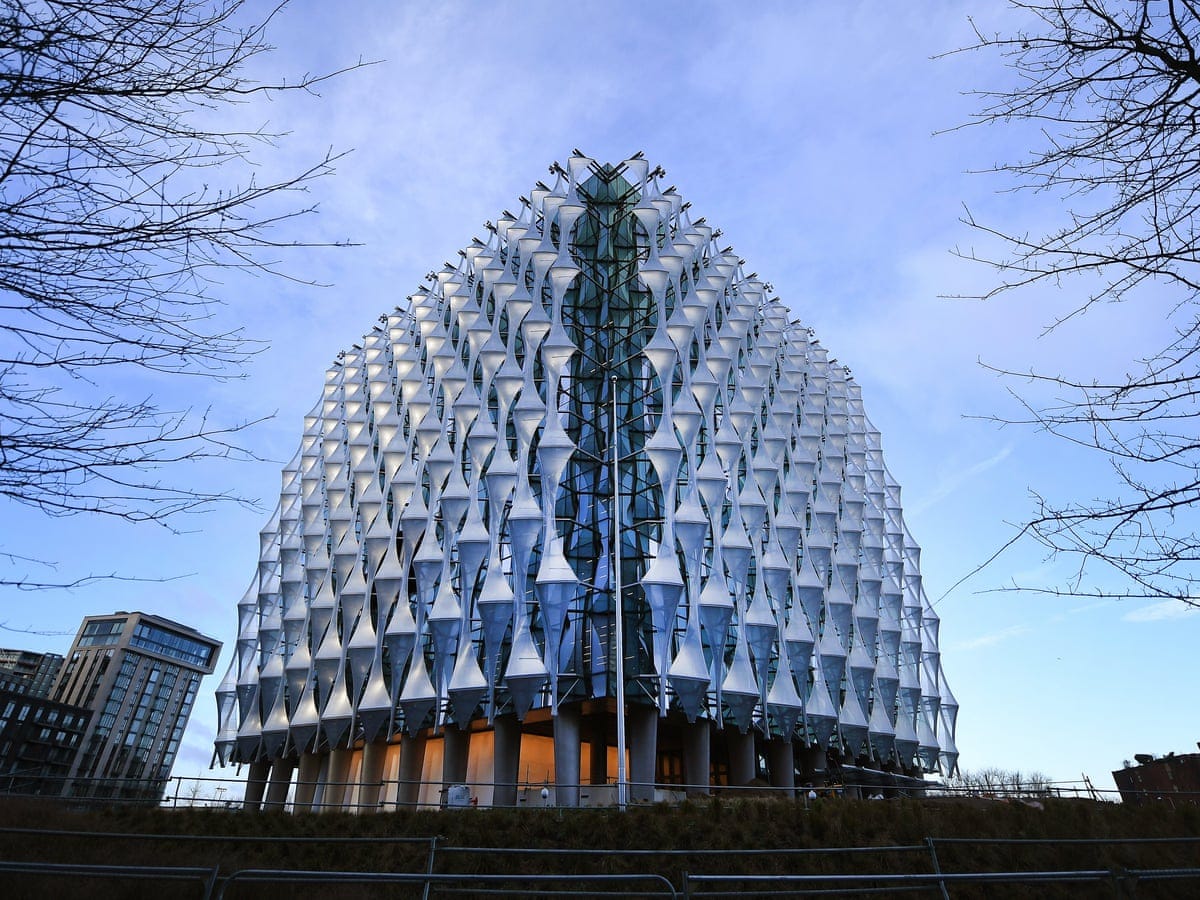
Writing from the perspective of a historian in 2074, we look back at the moment London welcomed a Trojan Horse into its heart, mistaking submission for diplomacy.
The View from 2074
I am writing this from the archives of the late 21st century, looking back at a map of London from 2024. It is strange to see the old city layout before the shifts, but one landmark stands out—not for its beauty, but for its audacity. The Royal Mint Court embassy. You might remember the debates, or perhaps you just remember the resignation. At the time, you were told it was just a building, a necessary grease for the wheels of international trade. But from where I sit, fifty years down the river of time, it looks less like a diplomatic outpost and more like a tombstone.
It brings to mind the chilling observation of the philosopher Simone Weil, who understood the nature of force better than your planning councils did:
Force is as pitiless to the man who possesses it, or thinks he does, as it is to its victims; the second it crushes, the first it intoxicates.
– Simone Weil,
The Politeness of the Defeated
What strikes me most about the documents from your era is the politeness. There was a terrified civility to the whole affair. The security services whispered warnings about espionage, about the risks of planting a sophisticated intelligence-gathering hub right next to the Tower of London. But the political class? They were terrified of appearing ‘closed off.’ They mistook weakness for openness. You allowed a rival power to build a fortress in your capital because you were afraid of being called rude.
This was the era of the ‘Trojan Facade.’ You didn’t need to be tricked; you opened the gates yourselves because the ledger demanded it. We now know that the day the concrete poured at the Royal Mint was the day the United Kingdom admitted it was no longer a protagonist in its own history, but merely a venue for others. It reminds me of Czesław Miłosz’s warning about the seductive nature of resignation:
In a room where people unanimously maintain a conspiracy of silence, one word of truth sounds like a pistol shot.
– Czesław Miłosz,
Go Deeper
Step beyond the surface. Unlock The Third Citizen’s full library of deep guides and frameworks — now with 10% off the annual plan for new members.
A Monument to What We Lost
By 2040, the embassy wasn’t just a building; it was a node. It was the physical manifestation of the surveillance state that you all sleepwalked into. You traded the sanctity of your capital for the promise of investment, only to find that the investment came with invisible strings that eventually wove a net around your sovereignty. The ‘Diplomatic Fortress’ wasn’t a mission; it was a beachhead.
Looking back, I want to shake you. I want to tell you that sovereignty isn’t a line on a map; it’s the ability to say ‘no’ to the encroaching shadow. But you didn’t say no. You signed the permits. And in doing so, you built the very watchtower that would spend the next three decades staring down at you.