

The Ocean Just Spoke. It Utterly Shattered the Myth of Human Superiority.

I want you to sit with this for a moment.
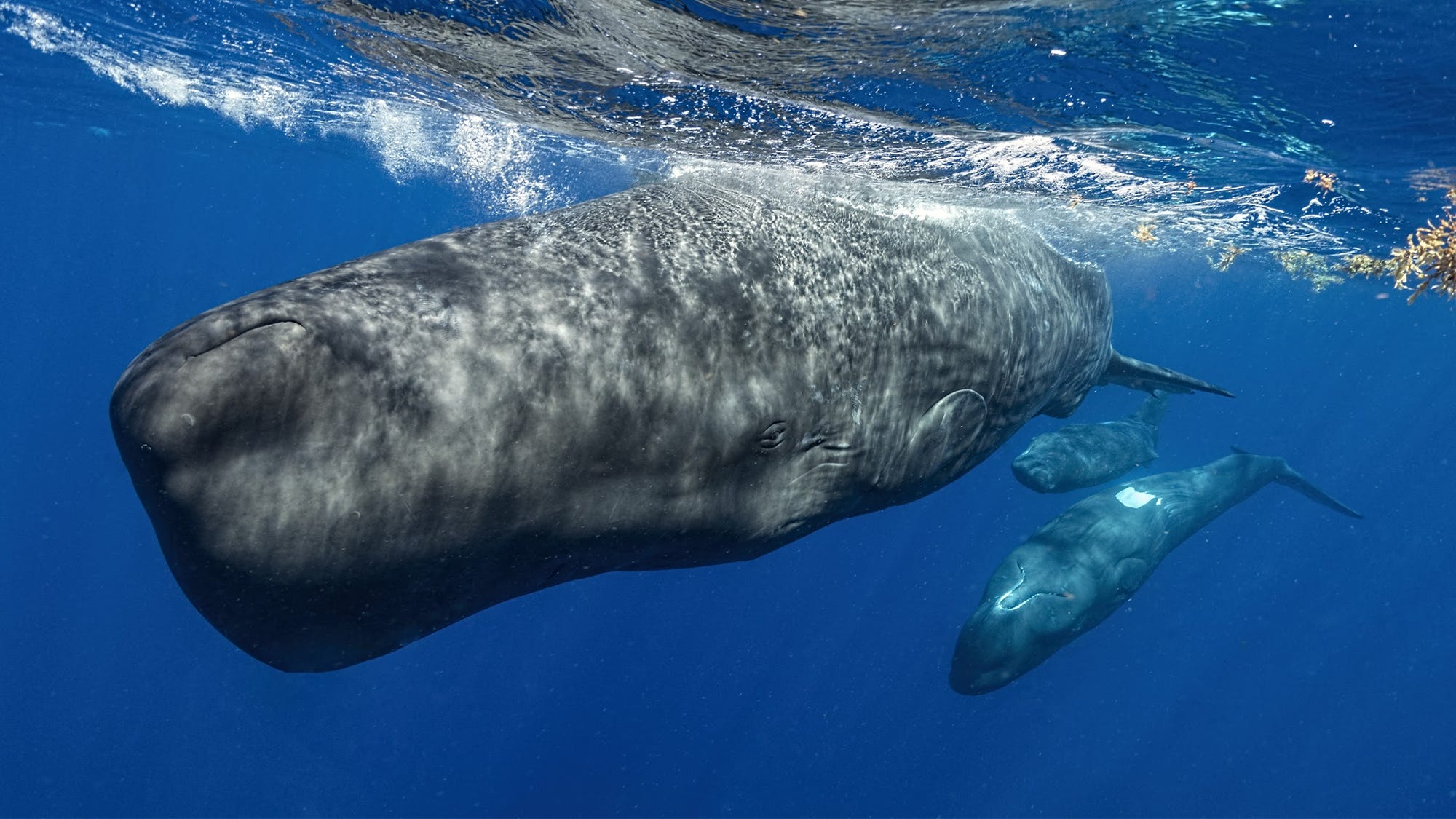
Scientists have confirmed sperm whales use a phonetic ‘alphabet.’ This isn’t just cool nature news. This is a verdict on our arrogance, a challenge to everything you and I were taught about our place in the universe. We were wrong.
First Question: What if the world was never silent, and we were just screaming too loud to hear it?
We built our entire identity on a single idea: we are the only ones who can truly speak. It’s the bedrock of our religions, our philosophies, our legal systems. We talk, therefore we are superior. Everything else—the rustle of the forest, the song of the bird, the call of the whale—we dismissed as noise. Cute, maybe. Instinctual, certainly. But not language. Not the real thing.
Well, we were catastrophically wrong. The revelation that sperm whales communicate using a combinatorial phonetic system—an alphabet of clicks with rhythm, tempo, and flair—isn’t just a scientific finding. It’s an accusation. It accuses us of a profound deafness born of an even more profound arrogance. The silence of the world was a story we told ourselves to justify our brutal dominion over it. For millennia, there has been a civilization of minds in the deep, composing, sharing, and living through a language more ancient than any of ours. We just labeled their libraries as ‘ocean sounds’ and moved on with our plunder.
Second Question: If we didn’t invent language, what the hell are we?
Think about what this means for our self-concept. If the very tool we used to crown ourselves masters of creation is also used by a creature we nearly hunted to extinction for its oil, then what is our crown made of? It’s a fraud. The sharp, clean line we drew between ‘human’ and ‘animal’ has just been erased. We aren’t the sole proprietors of complex thought; we’re just one branch office.
This should terrify you, but it should also liberate you. Our supposed uniqueness has been a terrible burden, giving us a license to exploit without consequence. Now, we are forced to see ourselves as part of something much, much larger. We are not owners. We are not managers. We are family, and we have been ignoring a brilliant, ancient branch of that family. Our uniqueness wasn’t a gift; it was a prison of our own making, and the whales just handed us the key. What do we do now that we know we are not alone in the Citadel of the Mind?
Go Deeper
Step beyond the surface. Unlock The Third Citizen’s full library of deep guides and frameworks — now with 10% off the annual plan for new members.
The Final, Awful Question: Now that we know, what are we going to do about it?
You cannot un-hear this. You cannot go back to believing the oceans are silent. The acoustic chaos our ships and sonar and drills create is not just ‘noise pollution’ anymore. It is the deafening of a culture. It is the bombing of a city. It is an act of relentless, unthinking aggression against another intelligence.
So, the question is no longer ‘how do we save the whales?’ but ‘how do we establish diplomatic relations?’ It sounds insane, but it’s the only sane question left to ask. This demands a revolution in law, in economics, and in ethics. It means recognizing that the right to exist, to communicate, and to flourish is not a uniquely human privilege. We’ve been acting like gods on a dead planet. Now we know it is a living, speaking world, and we are not its masters. We are just one of its many, many voices.
Hace tiempo que los sonidos de las ballenas eran fuente de estudio y que desde una perspectiva no sólo de la acústica, había un entramado que hacía suponer en una racional estructura linguistica. Creo que es fascinante descubrir que nuestro "mundo" no nos pertenece sólo a nosotros y a nuestra vanidad. Hemos convertido el planeta en nuestro universo y detentado el poder sobre él, ignorando las llamadas de la naturaleza. Ignoro si tendremos tiempos de poder entender y lograr una comunicación mayor con otros seres vivos, cuando nos hemos abocado mayormente a la destrución del planeta. Quizás, en este caso los cetáceos nos sobrevivan, y en todo caso, seguir contandose entre ellos, que alguna ves en la superficie existio una civilización que hizo todo lo posible por autodestruirse.