


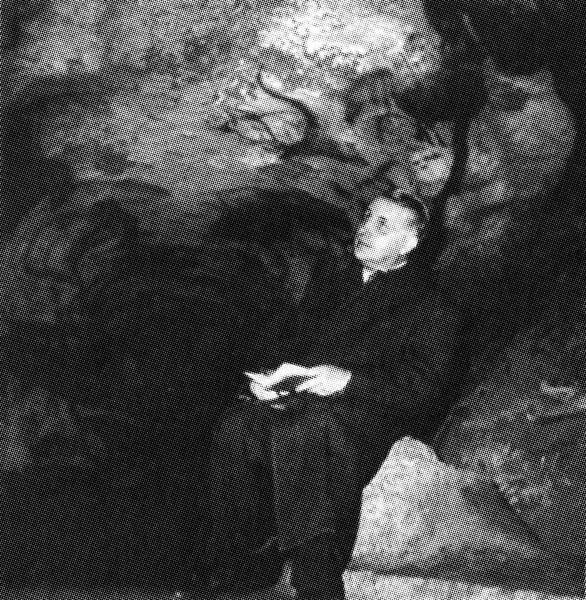
Georges Bataille (1897–1962) was a French intellectual whose provocative exploration of violent transgression as a misguided pursuit of authenticity has significantly influenced 20th-century thought in philosophy, literature, and art. His work emerged in the context of the early to mid-20th century, a tumultuous period marked by social upheaval and existential crises, prompting Bataille to challenge prevailing norms and question the limits of human experience.
Central to his philosophy is the idea that transgression—particularly in its violent forms—serves as a means of escaping societal constraints and attaining a deeper sense of sovereignty and authenticity. However, Bataille argues that the search for authenticity through violent acts often leads to existential peril rather than liberation. He posits that such transgressions not only defy cultural taboos but also reveal a deeper alienation from one’s authentic self.
One does not become enlightened by imagining figures of light, but by making the darkness conscious.
Carl Jung
This duality is a key theme in his seminal texts, where he delves into the complexities of desire, excess, and the human condition, illustrating how acts of transgression can simultaneously liberate and ensnare individuals in cycles of fear and societal condemnation. Despite the controversies surrounding his ideas, Bataille’s legacy endures, influencing contemporary discourse on the intersections of art, philosophy, and the darker aspects of the human psyche.
Historical Context
Georges Bataille was deeply influenced by the tumultuous historical backdrop of the early to mid-20th century. Born in 1897, his childhood was marked by instability due to his father’s mental illness and the constraints of a rigid religious upbringing. These experiences instilled in him a fascination with decay, excess, and the limits of human rationality. The chaos within his family environment served as a precursor to his later obsessions with transgression and the sacred profane.
Bataille’s intellectual journey began against the backdrop of World War II, a time that catalyzed his exploration of the sacred and the profane. His writings critique dominant philosophical paradigms, notably those of Hegel and Kant, which he perceived as reductive and utilitarian. Instead, he argued for a sovereign experience that transcends conventional understanding. Influenced by Marxism and later Nietzschean thought, his explorations of eroticism and sacrifice positioned him as a pivotal figure in discussions surrounding excess and the human condition.
Key Concepts
Bataille’s philosophy is characterized by several key concepts that form the foundation of his exploration of transgression, sovereignty, and the relationship between the sacred and the profane.
Transgression
At the heart of Bataille’s thought is the notion of transgression, which he presents as a means of escaping the limitations of everyday existence. He outlines a schema where transgression leads to profanation and ultimately to
