


Her name was Maya, and she had, by any reasonable standard, perfected herself. Her Instagram was a curated chapel of early morning light and deliberate imperfection — the one strategically wilted flower in the vase, the dog-eared book whose title you could just make out if you leaned in, the caption that struck the exact tone of unguarded confession. Her audience of 290,000 found her authentic. She called herself a creator. She had a morning routine, a signature vulnerability, and a theory about grief she delivered in three-minute voice notes.
Last year, she told me she no longer knew who she was without the feed. Not in a dramatic way. In the quiet, terrible way of someone who has looked in a real mirror and found it less informative than the curated one. Her selfhood had, somewhere in the iterative process of content creation, been outsourced. And the substitute was better — better lit, better received, more consistent. The original had become redundant.
I want to use Maya — and all of us who recognize something of ourselves in her — as the entry point into an argument that will probably make you deeply uncomfortable. Not because the argument is extreme. Because it is almost certainly true.
We Were Sold a Freedom That Became a Factory
The command to “be yourself” is one of the great rhetorical achievements of late capitalism. It arrived draped in the language of liberation. Think about how it sounded in the mouths of its early prophets: the counterculture movements of the 1960s, the therapy culture of the 1970s, the self-help explosion of the 1980s that handed you The Road Less Traveled and told you that your individual journey was the point. By the 1990s, it had been commodified into brand identity — corporations began instructing employees to bring their “whole self” to work, a request that sounds progressive and functions as surveillance.
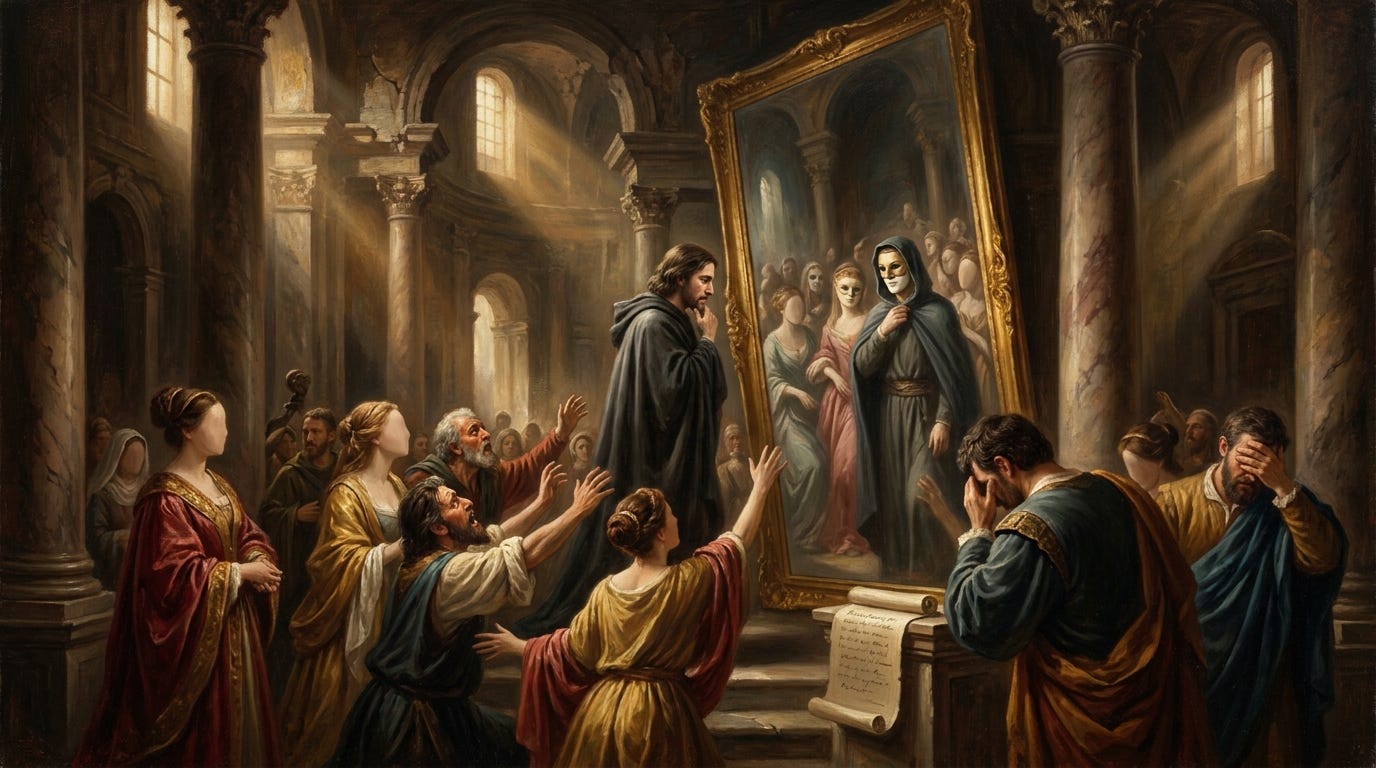
And then came social media, which did something far more structurally elegant. It built an amphitheater and handed everyone a microphone and told them: here is the stage, now perform your authentic self, and the audience will decide if it was real enough.
The problem is not that people are lying when they “share themselves” online. The problem is that they are not. They are telling a version of the truth that has been pre-processed through the question: “Will this be understood?” — and that question changes the truth before it can be spoken.

This is precisely where Jean Baudrillard walks in — and I want to invoke him not as a fashionable theoretical decoration, but because his framework from Simulacra and Simulation (1981) turns out to be the most precise diagnostic tool we have for what is happening to selfhood in the digital age. Baudrillard argued that we have entered an era of hyperreality: a condition in which the representation of a thing has replaced the thing itself, to the point where the original no longer exists in any meaningful sense. The map, in his famous phrase, now precedes the territory.
