

The Mirage of the Mediator: Why We Must Stop Confusing Talk with Peace

Twenty-one hours in an Islamabad conference room didn’t bring us closer to peace. It exposed a dangerous illusion we all share about how the world actually works.
My Confession on the Limits of Reason
I have a confession to make. For a very long time, I operated under a comforting, fundamentally naive assumption. I believed—perhaps because it is what we are all taught from childhood—that if you just get people into a room, if you just force them to talk face-to-face, the sheer power of human communication will eventually break down the walls of conflict. This week, watching the fallout from the U.S. and Iranian delegations’ twenty-one-hour marathon in Islamabad, I realized the depth of my own self-deception. I found myself waiting for a breakthrough, treating global diplomacy like a tense drama that must inevitably resolve in the final act. But life is not a script, and talk is not inherently a solvent for violence.
We are all prone to this universal human weakness: the desperate desire to believe that rationality always triumphs over force. We see diplomats sitting across from one another, and we feel a collective exhale. We mistake the exhaustion of the negotiators for the exhaustion of the conflict itself. But as I watched the delegations pack up and leave Pakistan with nothing but lingering disputes and a fractured two-week truce, the reality hit me. We must accept that in the modern theater of geopolitics, the negotiating table is often just another front line, designed not to end the war, but to stall the clock.
The Big Question: Why Does the Room Fail?
This forces us to ask a deeply uncomfortable question. If mediation, high-level envoys, and twenty-one straight hours of direct contact cannot bridge the gap, what is actually happening? Why does diplomacy fail so systematically when the stakes reach an existential threshold? We have to translate this complexity into something we can grasp. The failure isn’t because they didn’t talk long enough, or because the coffee in Islamabad was bad. The failure is structural.
To call things by their wrong names is to add to the affliction of the world.
– Albert Camus
We are calling this “peacemaking,” but that is the wrong name. When we put actors in a room whose survival depends on the destruction of the other’s influence, we aren’t mediating; we are merely providing a civilized venue for hostility. The Big Question we must answer is how to navigate a world where the primary tool of international order—the diplomatic summit—has been hijacked by actors who use it as a shield while they continue to wield the sword in the shadows.
The Findings: Two Realities Collide
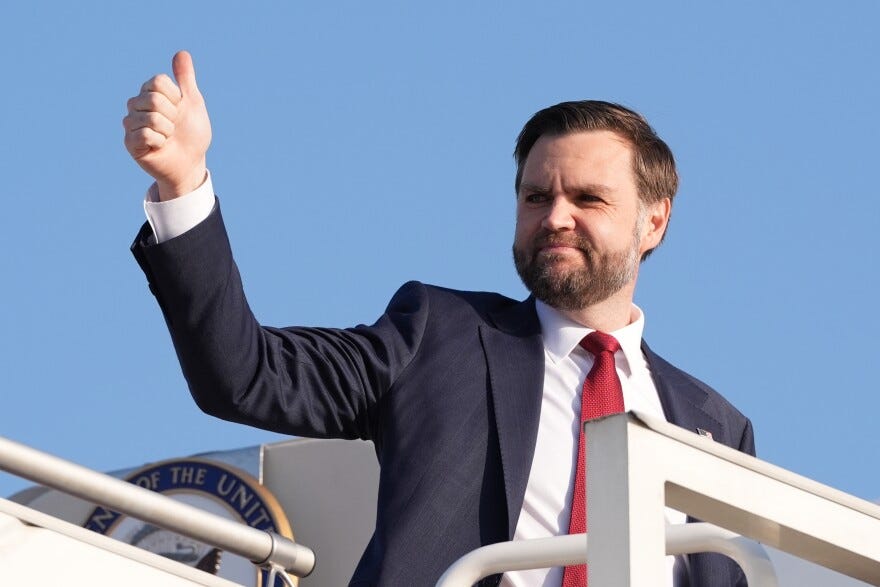
Let’s look closely at the evidence from the collapse in Pakistan. It wasn’t a subtle disagreement over the phrasing of a treaty. It was a head-on collision of entirely different realities. The American delegation, led by Vance, arrived demanding immediate, tangible changes in the physical world: reopen the Strait of Hormuz. Stop the physical disruption of global trade. It was a demand rooted in the mechanics of global stability.
The Iranian delegation, however, brought preconditions that belonged to a different ledger. They demanded the release of frozen assets and an end to the strikes in Lebanon. They weren’t negotiating about the maritime chokepoint; they were negotiating about their broader proxy survival and economic strangulation. The findings are clear: there was no shared reality to negotiate within. You cannot split the difference between a secure ocean and a frozen bank account when both sides view their demand as the baseline for survival. The fragile two-week truce was never going to hold because it meant two entirely different things to the people sitting at the table.
Go Deeper
Step beyond the surface. Unlock The Third Citizen’s full library of deep guides and frameworks — now with 10% off the annual plan for new members.
The Implication: Recognizing the Tactical Stall
What does this mean for us, the citizens watching this play out? It means we must radically upgrade our psychological armor. We have to stop reacting with despair every time a summit fails, and stop reacting with blind hope every time one is announced. We must learn to recognize the “tactical stall.”
Against folly we have no defense. Neither protests nor force can touch it; reasoning is no use; facts that contradict personal prejudices can simply be disbelieved.
– Dietrich Bonhoeffer
When adversaries engage in marathon talks only to reiterate impossible preconditions, they are rarely trying to find peace. They are buying time. They are managing domestic optics, placating third-party mediators like Pakistan, and repositioning their pieces on the board. The true implication of Islamabad is that we must separate genuine shifts in power from the mere theater of diplomacy. We must watch what happens in the Strait of Hormuz and the skies over Lebanon, not what is said behind closed doors in a conference center. Only by discarding our illusions can we clearly see the world as it actually is.
Thank you