


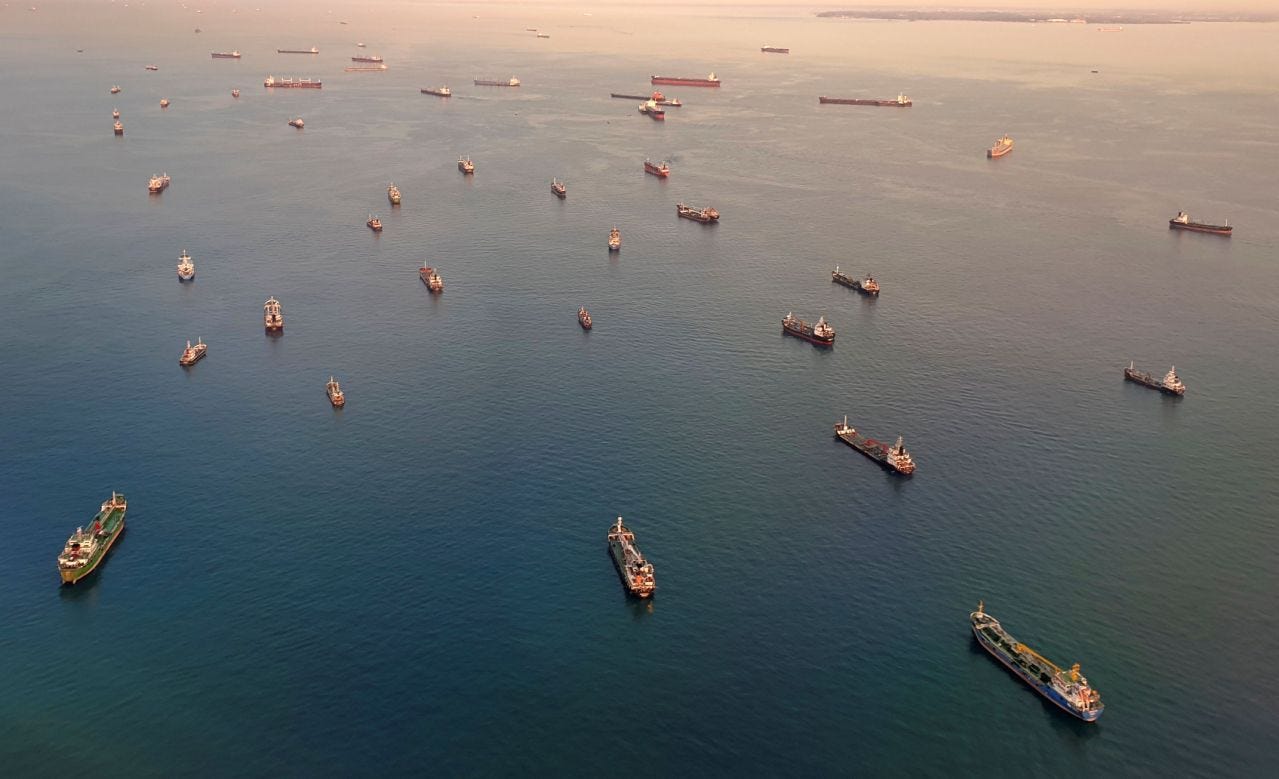
A personal reflection on how the invisible vulnerabilities of our global supply chains, from distant choke points to naval shifts, are directly impacting our daily lives and wallets. It’s time to understand your personal import exposure.
That Grocery Bill: A Signal from Distant Shores
Have you noticed your grocery bill creeping up lately? Or perhaps the shelves for certain items seem less stocked than they used to be? It’s easy to dismiss these as minor inconveniences, a fleeting blip in the grand scheme of things. But what if I told you these everyday frustrations are direct signals from distant shores, echoes of a vast, invisible system that governs much of our modern comfort and security? I’ve been thinking a lot about how interconnected our lives truly are, and how that connectivity, while offering incredible abundance, also harbors a profound vulnerability.
For too long, we’ve lived under the comfortable illusion that everything we need will always be there. This ‘just-in-time’ world, where goods magically appear, has made us incredibly efficient but also incredibly fragile. My core belief is that personal resilience today demands we truly grasp our ‘Import Exposure Score’—a way of understanding just how much our daily lives hinge on things brought in from far away. It’s not about fear; it’s about acknowledging a truth that’s often left unspoken, giving language to a hidden recognition many of us already feel.
The Hidden Architecture of Our Comfort: A Naval Chess Game
Think about where most of our goods come from. If it’s not local, it’s probably traveled by sea. And these journeys aren’t just open ocean cruises. They funnel through crucial ‘choke points’—narrow passages like the Straits of Malacca, the Suez Canal, or the Panama Canal. These aren’t just lines on a map; they are the literal bottlenecks of global commerce, through which the vast majority of everything we consume must pass. A disruption here isn’t just a delay; it’s a potential shutdown.
The sea is an unforgiving master, and those who command its thoroughfares hold the keys to prosperity and peril alike.
– Alfred Thayer Mahan
I find Mahan’s insight eerily relevant today. For decades, the US Navy has essentially guaranteed the security of these routes, a silent guardian of our global supply lines. But naval power shifts, and geopolitical tensions rise. When I look at the discussions around a shrinking US naval fleet and the ambitions of other powers, I see a vast, unseen game of chess being played out on the oceans. Your comfortable access to goods is, in a very real sense, a byproduct of this often-unseen power dynamic. It’s a reminder of how deeply our personal economies are intertwined with global strategy.
Your Personal Import Exposure: More Than Just a Number
I want you to consider your own ‘Import Exposure Score’. This isn’t some complicated government metric; it’s a simple mental exercise to identify how much of your daily life relies on goods from abroad. Think about your breakfast: Is your coffee from Colombia? Your banana from Ecuador? Your smartphone: where were its components manufactured? Your medications? Your car parts? The recent spikes in container shipping rates, which you might have felt in higher prices or slower deliveries, are simply the marketplace screaming about this underlying vulnerability.
These rate fluctuations aren’t just abstract economic data; they directly affect your wallet and, more importantly, your sense of security. It’s exactly what I’ve been feeling, but no one dares to say it directly: we’ve outsourced so much of our basic needs that we’ve made ourselves existentially brittle. A high score means a deep reliance on systems that could falter overnight. A lower score means you’ve built more resilience into your own life, making you less susceptible to the turbulence of global trade.
The True Cost of Convenience: Beyond Just Dollars
The truth is, our relentless pursuit of convenience and low prices has hidden a dangerous bargain. We’ve become accustomed to an endless stream of goods, unaware that this stream flows through precarious channels. When those channels are threatened, the cost isn’t just financial; it’s psychological and societal. We face a universal human weakness: a collective denial of our dependencies, an almost wilful ignorance of the fragility beneath our comfort. This isn’t just about inflation; it’s about the potential for real scarcity, the kind that challenges our social fabric.
The comfortable illusion of endless shelves can quickly shatter into a stark reality of scarcity and rising prices, revealing the profound vulnerability of our interconnected lives. I feel a deep urgency about this. To ignore these foundational risks, to remain indifferent to the systems that feed and clothe us, is to participate in a slow erosion of our collective stability. It’s a subtle form of moral decay, where we value immediate gratification over long-term security and wisdom.
Go Deeper
Step beyond the surface. Unlock The Third Citizen’s full library of deep guides and frameworks — now with 10% off the annual plan for new members.
Building Your Own Ark: Steps Towards Local Resilience
So, what can we do? This isn’t about retreating into isolation, but about building layers of resilience. Personally, I’m trying to prioritize local and seasonal foods, not just for taste, but for security. I’m thinking about what essential items I could reasonably stock up on, reducing my immediate reliance on distant supply chains. It’s about diversifying, about consciously choosing to support more localized systems where possible. This is a practical application of foresight, not fear.
The greatest security comes not from endless plenty, but from the ability to do without.
– Seneca
Seneca’s wisdom resonates deeply. It’s a call to examine our own dependencies and make conscious choices. On a broader scale, we should be asking difficult questions about our national supply chains, advocating for robust local economies, and demanding a clear-eyed strategy for protecting essential trade routes. This conversation isn’t just for politicians or economists; it’s for all of us. By understanding the maritime trap, we begin to build our own ark, safeguarding our personal economies and, by extension, the stability of our communities. It’s about being prepared, not paralyzed, by the urgent realities of our interdependent world.