

The Invisible Machine That Turns Every Crisis Into a Market Opportunity
A dead Hungarian economist explains why every disaster you survive becomes, within weeks, a product line.

In January 2025, while parts of Los Angeles were still burning, residents of Altadena and Pacific Palisades started receiving text messages. Not from FEMA. Not from insurers. From real estate investment firms.
“We buy houses as-is, even fire-damaged. Cash offer in 24 hours.”
Some of these texts arrived less than 72 hours after evacuation orders. Families who had lost everything — who did not yet know if their homes were structurally sound, who hadn’t received a single dollar from insurance — were being offered pennies-on-the-dollar cash buyouts for scorched lots, sight unseen, by entities with no interest in rebuilding a neighborhood, only in acquiring land that would be worth ten times more once the community infrastructure was restored by someone else’s tax dollars.
This is not a scandal in the tabloid sense. Nobody broke a law. The horrifying part is that nothing here is a glitch — it is the system performing exactly as designed.
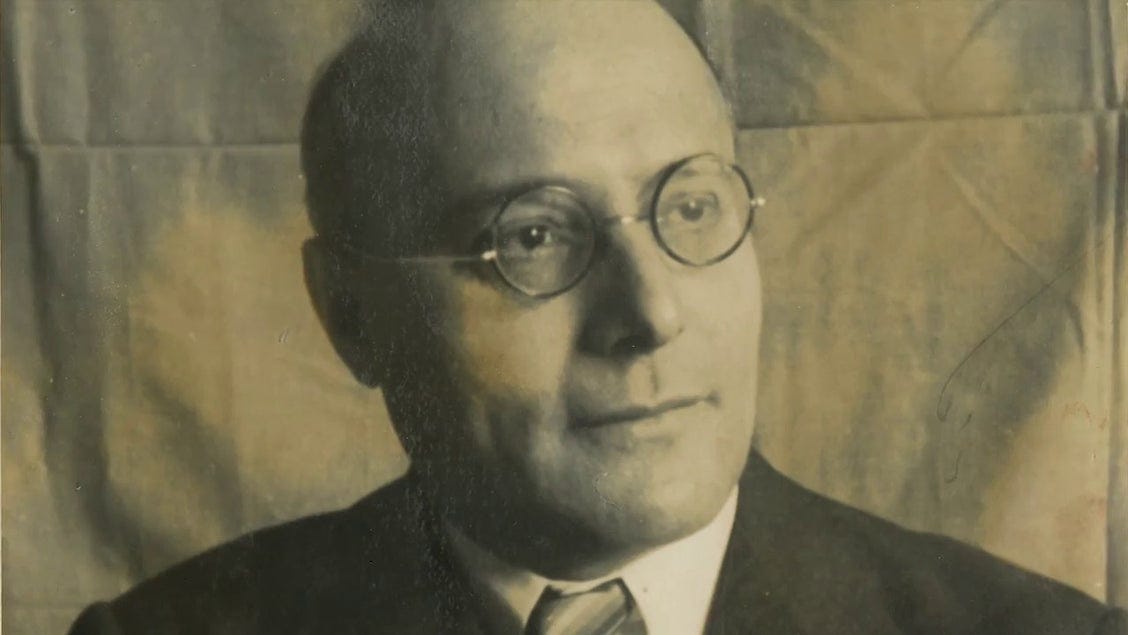
A century ago, a Hungarian-born economic historian named Karl Polanyi watched a nearly identical mechanism destroy the fabric of European society, and he gave it a name that almost nobody outside academic economics remembers today: the double movement. Once you understand it, you cannot watch a wildfire, a pandemic, a housing crisis, or a mass layoff the same way again.

The Machine Polanyi Watched Being Built
Polanyi wrote The Great Transformation in 1944, in the smoking ruins of a global order that had just torn itself apart twice in thirty years. He wasn’t interested in blaming a single villain — a bad treaty, a bad currency, a bad man. He was interested in a structural pattern so consistent across nineteenth-century Europe that he believed it amounted to a law of modern history.
Here is the pattern, stripped to its skeleton.
