


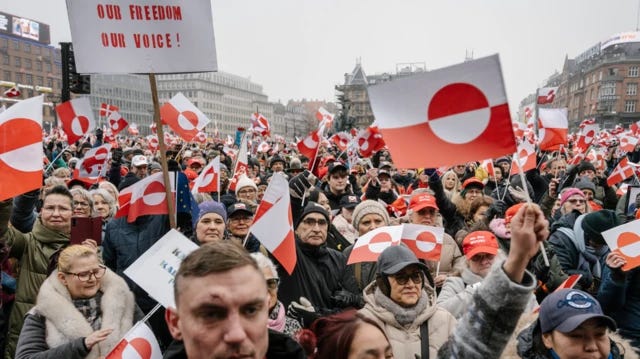
They want to buy the land, but they are really pricing our souls. Why the Greenland ultimatum isn’t just politics—it’s a test of what we believe is ‘unsaleable’.
The Unthinkable Offer
I remember reading the headline and feeling a distinct sense of vertigo. It wasn’t the usual political nausea; it was the feeling of the ground shifting. The President of the United States wasn’t just threatening a trade war; he was threatening a liquidation sale of a sovereign territory. It sounded like a joke, but the troop movements and the market tremors told a different story. We are watching the mask slip. The polite fiction that nations interact as equals is dissolving, replaced by the raw, brutal logic of the boardroom. If a country can be bullied into selling a piece of itself, then ‘country’ is just a word we use to feel safe.
Question 1: Are We Citizens or Inventory?
This brings me to the first question I can’t shake: If Greenland is for sale, what stops the rest of us from being listed? We like to believe that our citizenship is a sacred covenant, a bond of blood and history. But this move exposes a terrifying alternative view held by the powerful: that we are merely inventory attached to strategic real estate. Hannah Arendt saw this danger decades ago when she warned of the expansion of business logic into political life.
imperialism was born when the ruling class in capitalist production came up against national limitations to its economic expansion.
– Hannah Arendt, The Origins of Totalitarianism
We are seeing that expansion now, not for resources, but for the very ground beneath our feet. If we accept this logic, we cease to be citizens and become squatters waiting for eviction.
Question 2: Is Protection Just Extortion in Disguise?
The second question hits closer to home for anyone who believes in the ‘Western Alliance.’ What happens when your bodyguard tells you that the price of safety is your house? The anger from London, Berlin, and Copenhagen is righteous, but it masks a deep, trembling fear. We realized suddenly that our ‘protection’ acts a lot like a shakedown. The tariffs are the stick; the sale of Greenland is the carrot. This isn’t diplomacy. It is the logic of the mob. We have to ask ourselves if we can honestly call ourselves ‘allies’ when the relationship is predicated on the threat of economic destruction. It forces us to confront the uncomfortable reality that Europe has outsourced its survival to a power that no longer respects its existence.
Question 3: What Is the Price of Your Dignity?
Finally, we have to look in the mirror. The most painful question is this: Would we sell if the price was right? Or, more accurately, will we sell to avoid the pain of the tariffs? It is easy to say ‘Greenland is not for sale’ when the cost is abstract. But when the price of goods skyrockets, when jobs are lost, when the economy bleeds—will our principles hold? Simone Weil understood that the soul of a people is rooted in their obligations to one another, not in their comfort.
To be rooted is perhaps the most important and least recognized need of the human soul.
– Simone Weil, The Need for Roots
If we sever those roots to save our GDP, we have lost something far more valuable than an island. We have lost the right to call ourselves free.
Go Deeper
Step beyond the surface. Unlock The Third Citizen’s full library of deep guides and frameworks — now with 10% off the annual plan for new members.
The Choice
This is not a news cycle to endure; it is a choice to be made. We either accept that the world is a marketplace where everything, including our homes, has a price tag, or we draw a line that cannot be crossed, regardless of the cost. The checkout counter is open. The question is, are we buying or being sold?