

The Great Stagnation: How Beijing’s Retreat Exposes the Fragility of Our Comfort?

The China that powered our cheap lifestyle is gone. As Beijing pivots to survival mode, I explore what this structural break means for your wallet, your job, and the illusion of endless abundance.
Symptoms: Did You Feel the Engine Sputter?
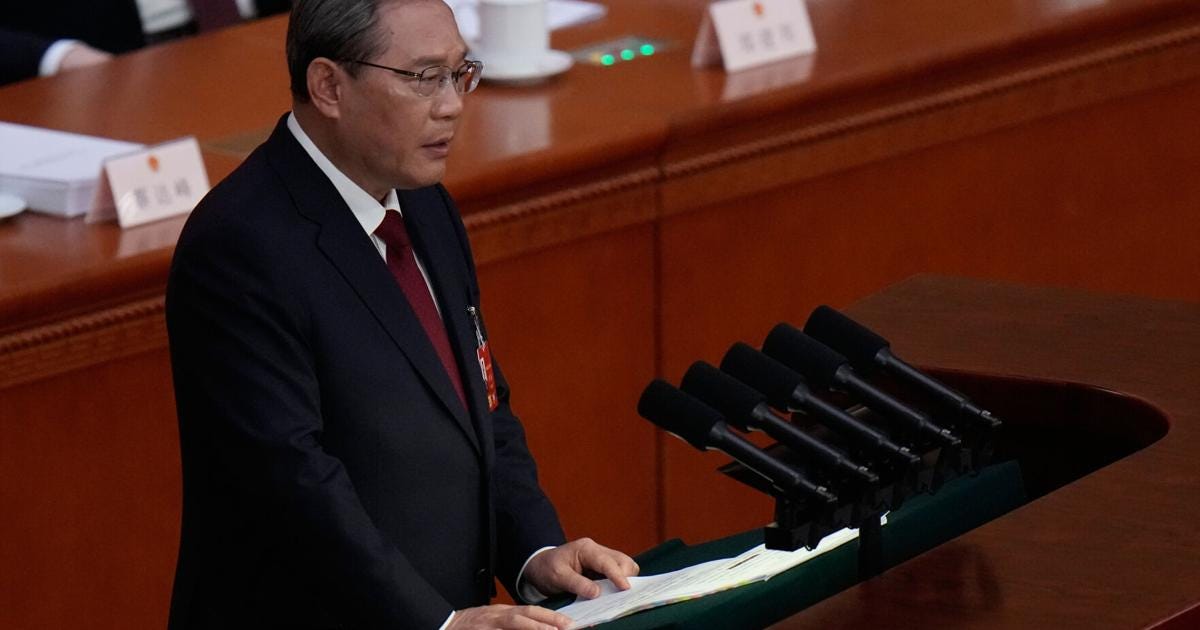
I want you to look around your room right now. How many items do you see that were manufactured in China? The phone in your hand, the lamp on your desk, perhaps even the chair you’re sitting in. We have lived for thirty years in a world where these things appeared as if by magic—cheap, abundant, and instantly replaceable. But last week, a quiet announcement in Beijing signaled that the magic is running out. Premier Li Qiang set a growth target of around 5%—effectively admitting a slowdown to 4.5% or lower. It sounds like a boring statistic, doesn’t it? But symptoms often appear benign before the fever breaks.
The symptoms are everywhere if you know how to read the chart. The property market in China is not just cooling; it is freezing over. The government is issuing bonds not to build new mega-cities, but just to keep the lights on. And externally, the flow of goods is hitting walls—tariffs, wars, and a breakdown in trust. We are watching the slow-motion car crash of the globalized model.
The crisis consists precisely in the fact that the old is dying and the new cannot be born; in this interregnum a great variety of morbid symptoms appear.
– Antonio Gramsci
We are living in that interregnum. The old world of easy consumption is dying, and we haven’t figured out what replaces it.
Diagnosis: We Are Addicted to a Ghost
My diagnosis is uncomfortable, and you might not want to hear it. We are addicted to an economic model that no longer exists. We act as if China is still the desperate, rising power of 2005, willing to pollute its air and underpay its workers just to earn our dollars. That China is gone. The patient has changed. Beijing is now diagnosing itself with a need for ‘security’ over ‘growth.’ They are prioritizing high-tech chips and military capacity over making cheap plastic toys for American stockings.
This isn’t just a recession; it’s a divergence of souls. The West wants to continue the party of consumption; the East is preparing for a siege. The diagnosis is that our economy is built on a dependency that has become a liability. We outsourced our resilience for efficiency, and now the bill is coming due.
Prognosis: The End of the Discount Bin
So, what happens next? If I were a betting man, I’d say we are heading for a decade of ‘stagflationary friction.’ As China exports less deflation (cheap goods), prices in the West will structurally rise. The things you took for granted will become luxuries. We are moving from an era of abundance to an era of scarcity. This is the prognosis: a harder, more expensive life.
There are decades where nothing happens; and there are weeks where decades happen.
– Vladimir Lenin
This week in Beijing may well be one of those moments where a decade of future history was written. The prognosis includes a radical shift in how we value labor and goods. If we can’t import it for pennies, we have to make it for dollars. That transition will be painful, chaotic, and necessary.
Go Deeper
Step beyond the surface. Unlock The Third Citizen’s full library of deep guides and frameworks — now with 10% off the annual plan for new members.
Prescription: Build Your Own Lifeboat
I can’t fix global supply chains, and neither can you. But we can change how we live within them. The prescription is to stop waiting for the ‘normal’ to return. It won’t. You need to look at your own life and ask: Where am I fragile? Where am I dependent on a system that is breaking down?
The only rational response to a fragile global system is to build a robust local reality. Buy things that last. Learn how to fix them. Support local supply chains not out of charity, but out of necessity. The era of the global citizen is fading; the era of the local steward is beginning. We must plant our feet on the ground we actually occupy, rather than the digital cloud we’ve been floating in.