


Geopolitical maneuvers often claim precision, but their ripple effects can devastate ordinary lives far beyond the intended target. This article explores how U.S. sanctions, ostensibly aimed at Venezuela, have plunged Cuba into an escalating crisis, unveiling the ‘collateral winter’ of economic warfare that freezes the spirit of a nation and its people. It’s a sobering look at how abstract policy decisions manifest as concrete human suffering, challenging our understanding of justice and responsibility in international relations.
The Unseen Fallout of Distant Policy
In the intricate web of international relations, policies enacted with specific targets in mind often cast a far wider, more devastating shadow. We are frequently presented with narratives of surgical precision, where economic measures are depicted as calibrated instruments designed to pressure recalcitrant regimes. Yet, the reality on the ground, particularly for the ‘third citizen’ – the ordinary people caught between great powers – tells a different story. The case of Cuba, currently grappling with a severe economic downturn exacerbated by U.S. sanctions primarily aimed at Venezuela, serves as a stark, urgent reminder of this.
As reports emerge detailing power outages, food shortages, and the looming specter of social unrest across the island, it becomes painfully clear that what begins as a geopolitical strategy can quickly unravel into a humanitarian crisis. This situation compels us to question the very foundations of how we assess the ‘cost’ of such policies and to whom those costs truly accrue. It’s an interrogation of power illusions, where the promise of targeted justice often gives way to widespread, indiscriminate suffering, revealing the profound interconnectedness of economies and the devastating human toll of abstract political decisions. We must confront the uncomfortable truth that geopolitical decisions, no matter how distant, are never truly devoid of human consequence.
The Illusion of Surgical Strikes: When Policy Misses Its Mark
Sanctions are frequently framed in the halls of power as precise, surgical instruments, designed to apply pressure selectively, avoiding harm to innocent populations. This is the rhetoric of accountability, a language that suggests a clean division between culpable regimes and their blameless populace. However, this framing often ignores the complex, interconnected nature of global economies, particularly within regions like Latin America, where nations share historical ties, economic dependencies, and geopolitical vulnerabilities. The U.S. oil blockade on Venezuela, intended to destabilize the Maduro regime, stands as a prime example of this inherent flaw in the ‘surgical strike’ mentality.
What happens when the target country’s allies are inextricably linked, not just by ideology, but by the very infrastructure of their daily lives? Venezuela, once a major oil supplier to Cuba under preferential agreements, became a proxy battlefield. The ensuing constriction of oil supplies to Cuba was not an unintended side effect but an inevitable domino fall, impacting everything from power generation to agricultural production on the island. The illusion of precision shatters when the consequences ripple through entire societies. As Simone Weil observed in ‘The Need for Roots,’
To be uprooted is probably the most dangerous disease of human societies... A human being has roots by virtue of his real, active, and natural participation in the life of a community which preserves living treasures of the past and living expectations for the future.
– Simone Weil
The economic chokehold on Cuba, a consequence of policies aimed elsewhere, directly attacks the roots of a society, threatening its very ability to sustain its people and future.
Cuba’s Unfolding Crisis: A Nation on the Brink
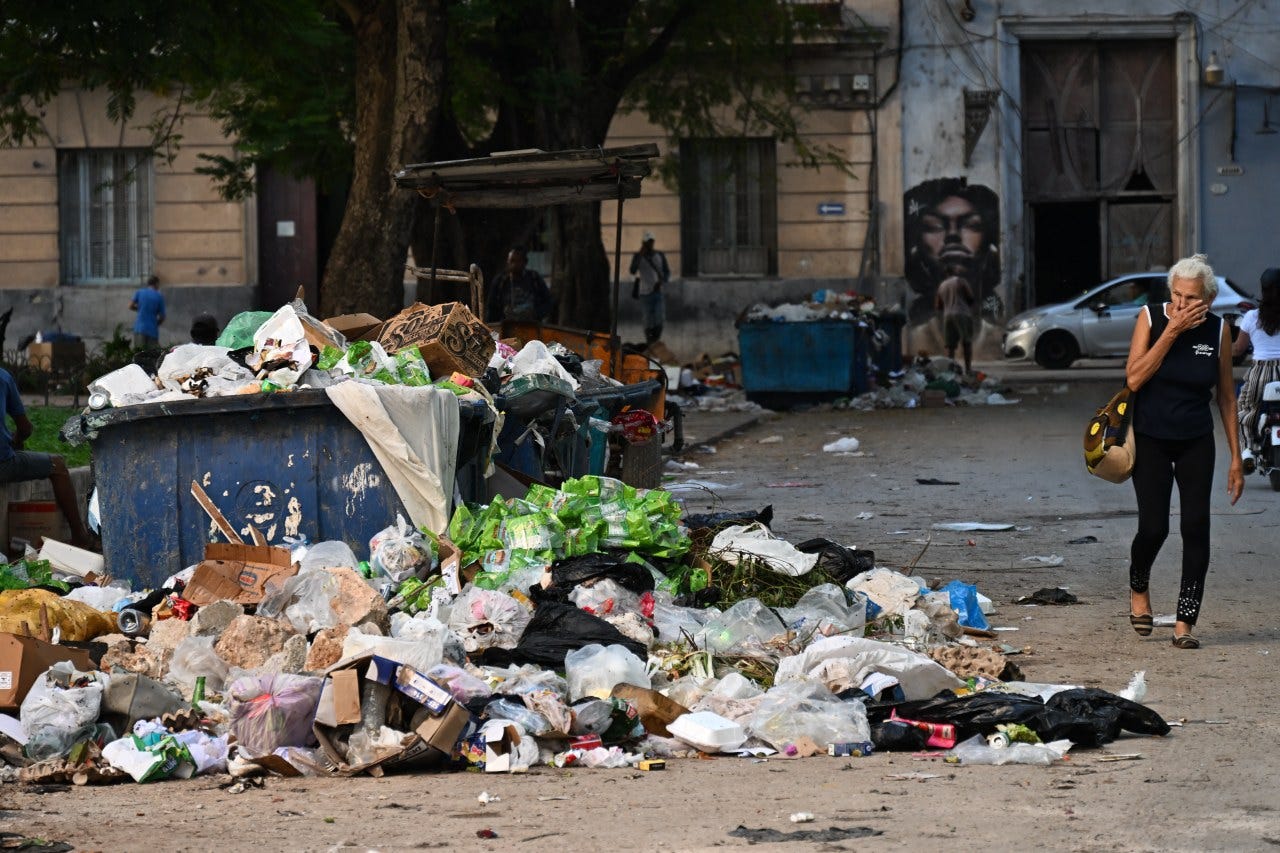
The data paints a grim picture: Cuba is experiencing its worst economic crisis in decades. The U.S. blockade on Venezuela has significantly curtailed the island’s access to vital oil, leading to chronic fuel shortages. This scarcity cascades through every sector of society. Power plants struggle to operate, plunging cities into extended blackouts that disrupt daily life, education, and commerce. Transportation grinds to a halt, isolating communities and hindering the distribution of essential goods.
The impact on food security is particularly alarming. With less fuel for farming machinery, harvesting, and distribution, coupled with dwindling foreign exchange to import staples, food scarcity has become pervasive. Everyday citizens stand in long queues for basic necessities, a stark testament to the systemic strain. This isn’t just about economic numbers; it’s about the erosion of dignity, the constant stress of uncertainty, and the quiet despair that settles over a population struggling for survival. We witness the tangible human cost of policies framed abstractly in distant capitals.
The Moral Calculus of Distant Suffering: Our Shared Blindness
When policies create suffering on such a scale, a profound moral question arises: how do we, as global citizens, confront this reality? Often, there is a convenient distance between the policy architects and those who bear its brunt. The ‘third citizen’ in Cuba becomes an abstraction, a statistic in a geopolitical game, rather than a human being enduring profound hardship. This detachment allows for a peculiar form of moral blindness, a collective denial that such ‘targeted’ actions could lead to such widespread distress.
We face a universal human weakness: the capacity to ignore suffering that does not directly impact us, especially when that suffering is framed as a necessary cost for a ‘greater good’ or ‘justice.’ Yet, true justice cannot be built on the deprivation and destabilization of an entire people. James Baldwin eloquently stated,
Not everything that is faced can be changed, but nothing can be changed until it is faced.
– James Baldwin
We are called to face the truth of this collateral damage, to pierce through the political rhetoric and acknowledge the raw, human consequences of economic warfare. Only by doing so can we begin to reclaim a sense of moral clarity and accountability.
Beyond Retribution: Reimagining Geopolitical Responsibility
The Cuban crisis, exacerbated by Venezuelan sanctions, serves as a powerful argument for a fundamental rethinking of international policy tools. If the stated goal of sanctions is to influence regimes, but the observable outcome is the suffering of millions, then the efficacy and ethics of such tools must be rigorously re-evaluated. This is not to advocate for inaction in the face of injustice, but to demand a more humane, context-aware approach to international relations.
A dialectical perspective requires us to synthesize the thesis of state sovereignty and the antithesis of universal human rights. Sanctions, while theoretically a non-military option, often function as a form of slow, systemic warfare. Our synthesis must be an approach that prioritizes civilian well-being and long-term stability over short-term political leverage. This demands diplomatic innovation, a willingness to engage in dialogue, and a profound empathy that extends beyond national borders. We must move beyond a punitive mindset and towards one that fosters genuine human flourishing.
Shattering the Freeze: Pathways to Empathy and Awareness
The ‘collateral winter’ currently engulfing Cuba is a stark reminder of our shared humanity and the interconnectedness of our global village. To shatter this freeze, we must cultivate a deeper awareness of how geopolitical decisions affect ordinary lives. This involves actively seeking out narratives from those directly impacted, questioning official government rhetoric, and advocating for policies that prioritize human well-being above ideological purity or strategic dominance.
The path forward demands that we resist the urge to simplify complex geopolitical dilemmas into good-versus-evil binaries. Instead, we must embrace the messy, difficult work of nuanced understanding, empathetic engagement, and the relentless pursuit of solutions that alleviate suffering rather than exacerbate it. Our collective responsibility is to ensure that the silent anguish of the ‘third citizen’ is heard, acknowledged, and acted upon, transforming abstract policy into tangible relief.