


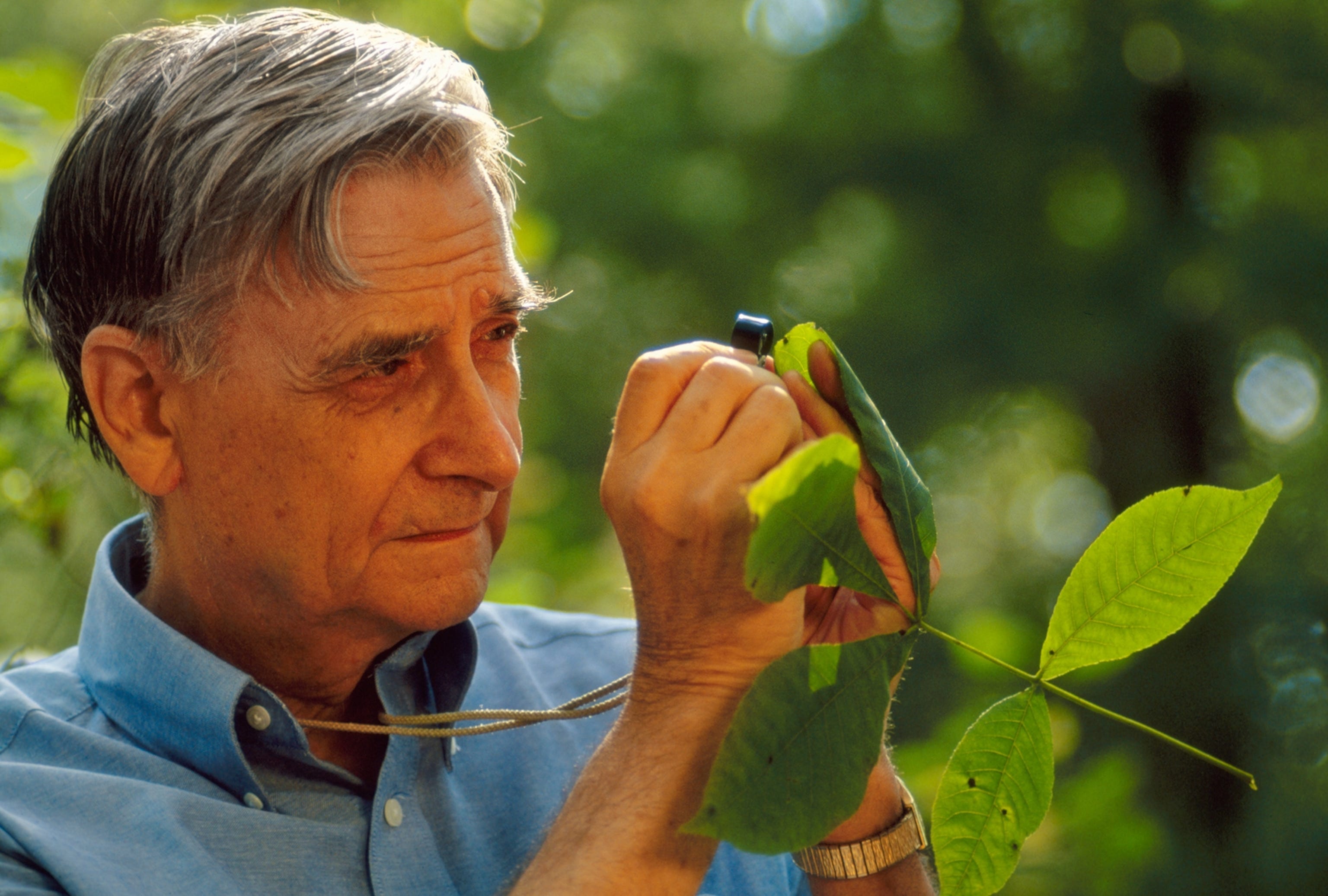
Join me in exploring why E.O. Wilson’s call for ‘consilience’ is more critical than ever. In a world drowning in specialized knowledge but starved of wisdom, we’re falling into a trap of our own making. Let’s talk about why connecting the dots between science, art, and philosophy isn’t just a nice idea—it’s essential for our future.
A World Unraveling: Why Our Knowledge Divides Us
Have you ever felt like the world is simultaneously overflowing with information and utterly bereft of sense? I know I have. We live in an era where experts know more and more about less and less, creating an intellectual landscape that resembles a sprawling city of towering silos rather than an interconnected web of understanding. We have incredible breakthroughs in medicine, stunning advancements in technology, and deep dives into every imaginable corner of human inquiry. Yet, when faced with massive, interconnected challenges like climate change, social division, or public health crises, we often seem paralyzed, unable to put all the pieces together.
This isn’t just an academic debate; it’s a crisis that affects all of us, shaping our politics, our economies, and even our personal sense of meaning. It’s why I’ve been thinking a lot about E.O. Wilson’s powerful, yet often overlooked, concept of ‘consilience’—the unity of knowledge. He believed we could, and must, connect the natural sciences, social sciences, and humanities to build a coherent understanding of existence. In an age of unprecedented specialization, I believe embracing Wilson’s vision is not just a good idea, it’s perhaps our only way out of the current intellectual labyrinth we’ve constructed for ourselves.
E.O. Wilson’s Grand Vision: A Forgotten Blueprint for Understanding
When I first encountered E.O. Wilson’s ‘Consilience: The Unity of Knowledge,’ it felt like a breath of fresh air. Here was a world-renowned scientist, a giant in his field, arguing for something so profoundly simple yet so revolutionary: that all knowledge is ultimately interconnected. Wilson believed that whether we’re studying physics, poetry, economics, or ethics, we’re all trying to understand the same reality, and therefore, our insights should ultimately converge. It was a vision that echoed the great Enlightenment thinkers, who saw science and philosophy as two sides of the same coin, aiming for a grand, unified theory of everything.
The greatest enterprise of the mind has always been and always will be the attempt to connect the sciences with the humanities.
– E.O. Wilson
Wilson’s point wasn’t to reduce humanities to science, but to show how they could enrich each other, how understanding our biological origins could illuminate our moral choices, and how scientific discoveries could inspire art. He saw the current fragmentation as a failure of imagination, a self-imposed limitation on our collective intelligence. For him, the quest for consilience was the greatest intellectual adventure possible, offering a complete and verifiable understanding of who we are and our place in the universe. It’s a blueprint we desperately need to dust off today.
My Journey into the Specialist’s Maze: The Illusion of Depth
Like many of you, I’ve spent years navigating academic and professional landscapes that strongly encourage, even demand, specialization. We’re told to pick a niche, master it, and become the undisputed expert in that tiny corner of the world. And honestly, there are undeniable benefits. Specialization has given us incredible technological advancements, medical cures, and deep insights into complex phenomena. It’s efficient; it allows us to push boundaries in ways a generalist simply can’t.
But as I’ve gone deeper into various subjects, I’ve also felt the growing unease of intellectual claustrophobia. The more I learned about one thing, the less I seemed to understand about its connections to everything else. It’s an illusion of depth, where you’re digging a very deep well, but you’re often unaware of the vast, dry desert stretching around you. This relentless focus on the narrow has created a generation of highly competent professionals who often lack the broader perspective to understand the real-world impact of their work, or how it intertwines with other societal challenges. We become incredible puzzle solvers for individual pieces, but we lose sight of the overall picture.
The Price of Fragmentation: Why “Smart” Doesn’t Mean Wise
This brings me to the core of what I see as the “brilliant idiot’s trap.” We are surrounded by incredibly smart people—geniuses in their chosen fields—who, through no fault of their own, often make decisions or create innovations without a full grasp of the wider consequences. They have immense knowledge, yes, but knowledge without context, without ethical grounding, and without a holistic understanding of human nature and society, often falls short of wisdom.
Think about some of the policy failures we’ve witnessed, the technological advancements that created unforeseen social dilemmas, or even the ethical quagmires surrounding AI. These aren’t the products of stupid people; they’re often the products of brilliant people operating within incredibly narrow frameworks, unable to see the ripple effects across disciplines. When specialized knowledge divorces itself from a broader, integrated understanding, it can become a dangerous force, leading us down paths that are technically feasible but existentially perilous. It’s a harsh truth, but one we need to confront: being “smart” in a silo is not the same as being wise for the world.
Seeing the Whole Picture: How Our Silos Undermine Progress
The real danger of this intellectual fragmentation is how it sabotages our collective ability to tackle the truly monumental challenges of our time. Take climate change. It’s not just a scientific problem; it’s an economic problem, a social justice problem, a political problem, and even a philosophical one concerning our relationship with nature. If climate scientists talk only to other climate scientists, economists to economists, and politicians to politicians, we end up with piecemeal solutions that fail to address the interconnected roots of the crisis. It’s like trying to fix a complex machine by only understanding one gear.
This systemic blindness, born of our disciplinary silos, ensures that our efforts are often misdirected, incomplete, or even counterproductive. We optimize for local efficiency while creating global inefficiencies. We develop incredible solutions for symptoms but fail to cure the underlying disease because we refuse to look beyond our immediate expertise. Wilson saw this coming, warning us that ignoring the fundamental unity of knowledge would leave us incapable of self-correction, trapped in a cycle of reacting to crises rather than understanding and preventing them.
Can We Rebuild the Bridges? A Call for Consilience
So, what do we do? Do we abandon specialization? Absolutely not. Depth is crucial. But we must also consciously, deliberately, and systematically build bridges between these intellectual islands. This means rethinking our education systems, encouraging genuine interdisciplinary studies, and valuing breadth as much as we value depth. It means creating spaces—both academic and professional—where scientists can meaningfully converse with philosophers, where artists can inspire engineers, and where policymakers are informed by a true diversity of thought, not just a panel of narrowly focused experts.
The only way to achieve truly insightful solutions to the most complex problems is to integrate perspectives from every corner of human endeavor.
– Steven Pinker (paraphrased)
It’s not an easy task. It requires humility, a willingness to step outside our comfort zones, and a genuine curiosity about fields alien to our own. It means actively seeking out different viewpoints, reading widely, and engaging in dialogue with those whose expertise lies far from ours. But I believe this conscious act of intellectual synthesis is the most important work we can undertake right now. It’s about reclaiming the lost art of seeing the whole picture.
Why This Matters to You: The Personal Stakes of Integrated Thought
You might be thinking, “This sounds like an academic problem, how does it affect me?” But the truth is, the fragmentation of knowledge has profound personal implications. It shapes the world you live in, the policies that govern your life, and the very narratives that define our society. When experts can’t agree on fundamental truths because they’re speaking different intellectual languages, it creates confusion, mistrust, and polarization. It leaves us vulnerable to simplistic answers and demagoguery, as we collectively struggle to grasp the nuance and complexity of reality.
Moreover, embracing consilience isn’t just about global problems; it’s about enriching your own life. By consciously seeking connections between disparate ideas—how biology impacts ethics, how history informs current events, how art expresses scientific truths—you develop a richer, more nuanced understanding of yourself and the world. It’s a pathway to genuine wisdom, fostering critical thinking and a profound sense of interconnectedness that counters the alienation often felt in our specialized age. This isn’t just about societal survival; it’s about reclaiming intellectual agency and meaning in your own life.
Go Deeper
Step beyond the surface. Unlock The Third Citizen’s full library of deep guides and frameworks — now with 10% off the annual plan for new members.
A Path Forward: Embracing a Unified Future
The legacy of E.O. Wilson is a powerful reminder that the human intellect is capable of grand synthesis, not just endless dissection. His vision of consilience provides us with a critical lens through which to examine our present intellectual predicaments and a hopeful path towards a more coherent future. We must actively resist the “brilliant idiot’s trap” by valuing the integrators as much as the specialists, by fostering environments where diverse knowledge can converge, and by personally committing to a broader, more interconnected understanding of the world.
The task is not to reverse the course of specialization entirely, for its benefits are real. Rather, it is to temper its excesses with a renewed commitment to synthesis—to consciously weave together the threads of knowledge into a tapestry of wisdom. Our collective future, and indeed our individual capacity for meaningful understanding, hinges on whether we choose to continue building higher, isolated silos, or whether we decide, finally, to build bridges between them. Let’s choose the bridges.