

The Anti-Simulacra Toolkit: 5 Decisions to Reclaim Your Reality
A Glitch in the Consensus

You are scrolling through your feed at 11:47 PM. A video appears: a man you recognize as a sitting senator—except he is speaking words he never said, with a face that moves just slightly too smoothly. The hands gesture in that uncanny valley rhythm. You know it’s synthetic. But your neighbor shared it. Your cousin commented on it. A news anchor will repeat its talking points tomorrow as if they were real. For one vertiginous moment, you feel the floor dissolve. Not because of the lie—but because the difference between the real and the fake has stopped mattering. You are no longer participating in a shared reality. You are participating in a consensus about what is plausible. That is the moment Baudrillard warned you about.
That is the door to the hyperreal.
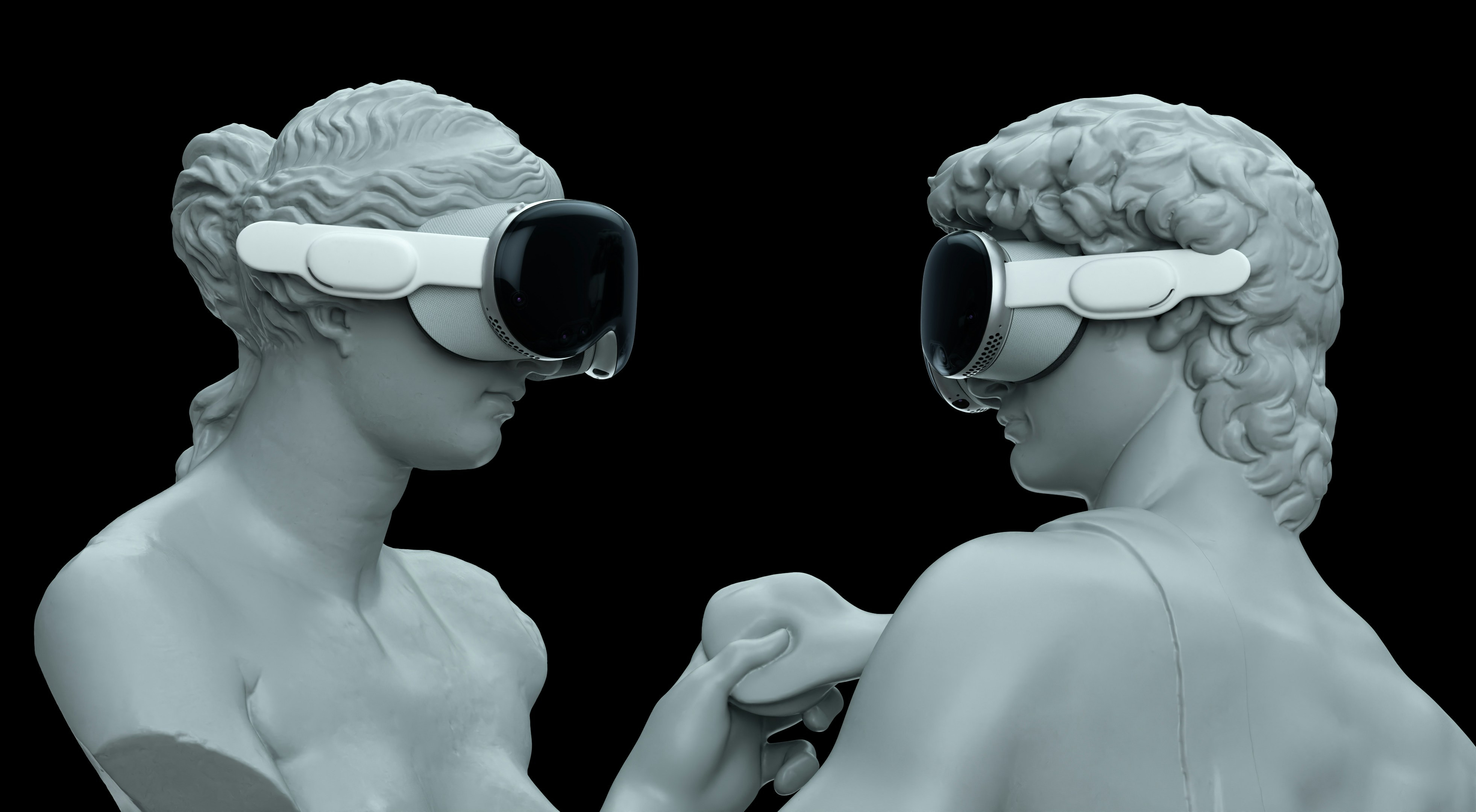
The Ghost in the Machine
Jean Baudrillard died in 2007, but he never saw a deepfake. He never used TikTok. He never heard of QAnon. He did not need to. What he understood was the mechanism by which signs eat their own originals. In Simulacra and Simulation (1981), he described four phases of the image: first, it reflects a basic reality; second, it masks and perverts that reality; third, it masks the absence of a basic reality; fourth, it bears no relation to any reality whatsoever—it is its own pure simulacrum. We are now living in the fourth phase, and most of us do not even know we have passed through the gate.
Baudrillard’s favorite example was Disneyland. He argued Disneyland is not a fantasy escape from America; it is a real fantasy that makes the rest of America seem real by comparison. The fake Main Street, the robotic presidents, the meticulously engineered joy—all these are a map that pretends to represent a territory. But when the map becomes more real than the territory, you have entered the hyperreal. The simulation is no longer a copy of the real. It is now the standard of truth itself.
Where the Map Ate the Territory
Scroll your phone for sixty seconds. You will see a filter that erases pores, an AI-generated image of a city that never existed, a video of a war repurposed from a video game, a political statement that was scraped from a parody account. None of these are lies in the traditional sense. They are not distortions of reality; they are replacements. The map has not just grown—it has consumed the ground it was supposed to map.
Consider the 2024 U.S. presidential campaign. Polling is now so suspect that strategists use prediction markets—trading on what people believe others believe. The economy? GDP numbers are revised months later, but the stock market reacts instantly to the report of the numbers, not the reality. The economy has become a simulation of itself. Meanwhile, influencers buy followers, then use those fake followers to land real brand deals. The metric—not the audience—becomes the product.
In education, universities sell “experiential learning” modules that are curated, sanitized, and pre-packaged. Students no longer encounter the mess of an actual classroom conversation; they get a PDF and a discussion board. We are training people to navigate a world of signs while losing the ability to touch the referent.
And then there is the void. The simulation does not stop at entertainment or politics. It has colonized your sense of self. Your online persona is not a representation of who you are; it is the model against which you now compare your actual life. You feel inadequate not because your real life is bad, but because your real life cannot match the simulacrum. You are losing a competition with a ghost.
The Structure of the Spectacle
Why is this happening? The easy answer is technology—AI, algorithms, deepfakes. But that is like blaming the knife for the wound. The deeper mechanism is a combination of economic pressure and cognitive laziness. Capitalism requires constant growth in the attention market. The most efficient way to capture attention is not to deliver truth—truth is slow, complex, and often boring—but to deliver intensity. Intensity is cheap; truth is expensive.
Simulacra outcompete reality because they are easier to produce and easier to consume. A real protest has bad lighting, awkward pauses, and confusing motivations. A simulation of a protest—a viral video with a soundtrack—has perfect pacing and a clear villain. The simulation wins every time.
But there is also a human weakness at work: the desire for certainty. Reality is ambiguous. Simulacra are clean. When you inhabit the hyperreal, you never have to sit with discomfort. You never have to wait. You never have to reconcile contradictory facts. The system gives you a pre-chewed version of reality that aligns with your tastes. You are not being deceived; you are being seduced by convenience.
Baudrillard called this the “precession of simulacra”—the copy comes before the original, and then the original disappears entirely. We are now at the stage where a politician’s AI-generated quote is debated as if it were real, while the actual tape is dismissed as “unconvincing.” The copy has become the authority.

The Weight of the Real
If you do not understand what is happening, you will become a passive consumer of this system. The cost is not just confusion—it is agency. When you can no longer distinguish between a genuine human interaction and a scripted performance, between a real crisis and a manufactured outrage, you lose the ability to act meaningfully. You become a spectator in your own life.
The stakes are not merely political. They are existential. Without a stable reference point for reality, relationships become transactional performances. Trust becomes a scarce resource. The individual, adrift in a sea of signs, begins to doubt everything, then believes anything. The hyperreal breeds first cynicism, then fanaticism. There is no middle ground.
Democracy requires a shared fact base. It requires citizens who can deliberate about an actual state of affairs. The simulation does not destroy democracy openly—it suffocates it by making every fact negotiable and every truth a matter of preference. We are already watching this happen, and we are too distracted by the simulation to grieve it.
Five Decisions to Unplug the Simulation
There is no system-wide solution to the hyperreal. You cannot legislate your way out of a world where signs have become autonomous. But the thinking citizen can adopt a posture of resistance. The Anti-Simulacra Toolkit is not a cure—it is a set of daily decisions that keep your feet on the actual ground.
Decision One: Seek the Offline. Make it a practice to encounter reality without mediation. Walk a street without mapping it. Talk to a stranger without recording it. Eat a meal without photographing it. The goal is not nostalgia; it is to remind your nervous system that the world still exists outside the screen.
Decision Two: Prefer the Uncomfortable. When something is easy to consume, ask who made it convenient. The smooth, the polished, the instantly digestible—these are signs of the hyperreal. Seek the rough edges, the awkward pauses, the genuine confusion. The truth is rarely optimized for your attention span.
Decision Three: Cultivate Silence. The simulation is a noise machine—constant, curated, and designed to fill every gap. If you never allow silence, you never allow reality to speak. Five minutes a day without input. No podcast, no music, no scroll. Let your own mind produce its own content. That silence is the only space where an original thought can be born.
Decision Four: Practice Symbolic Exchange. Baudrillard’s term for the opposite of the simulacrum—direct, reciprocal, non-commodified interaction. Write a letter. Have a conversation that does not end in a transaction. Help someone without documenting it. Do something that leaves no evidence except in the memory of the other.
Decision Five: Choose the Slow. The simulation accelerates everything. Speed is its ally. Decide to read one long book per month. Watch one film without trailers, reviews, or analysis. Let an idea sit for a week before forming a judgment. In a world that moves at algorithmic speed, slowness is an act of war.
These decisions will not fix the system. They will not bring back the pre-hyperreal world—it never really existed as we imagine it. But they will give you a reference point. They will let you feel the weight of something actual. And that feeling, faint as it is, is the beginning of reclaiming your reality.
Disneyland exists because of SRI. It is the perfect example of the modern illusory reality we live in which breeds the contempt and delusional state of citizens.
https://www.sri.com/hoi/disneyland/