

The Anti-Integration Toolkit: 5 Decisions to Keep AI a Tool, Not a Master
Every Day, the Machine Asks for More

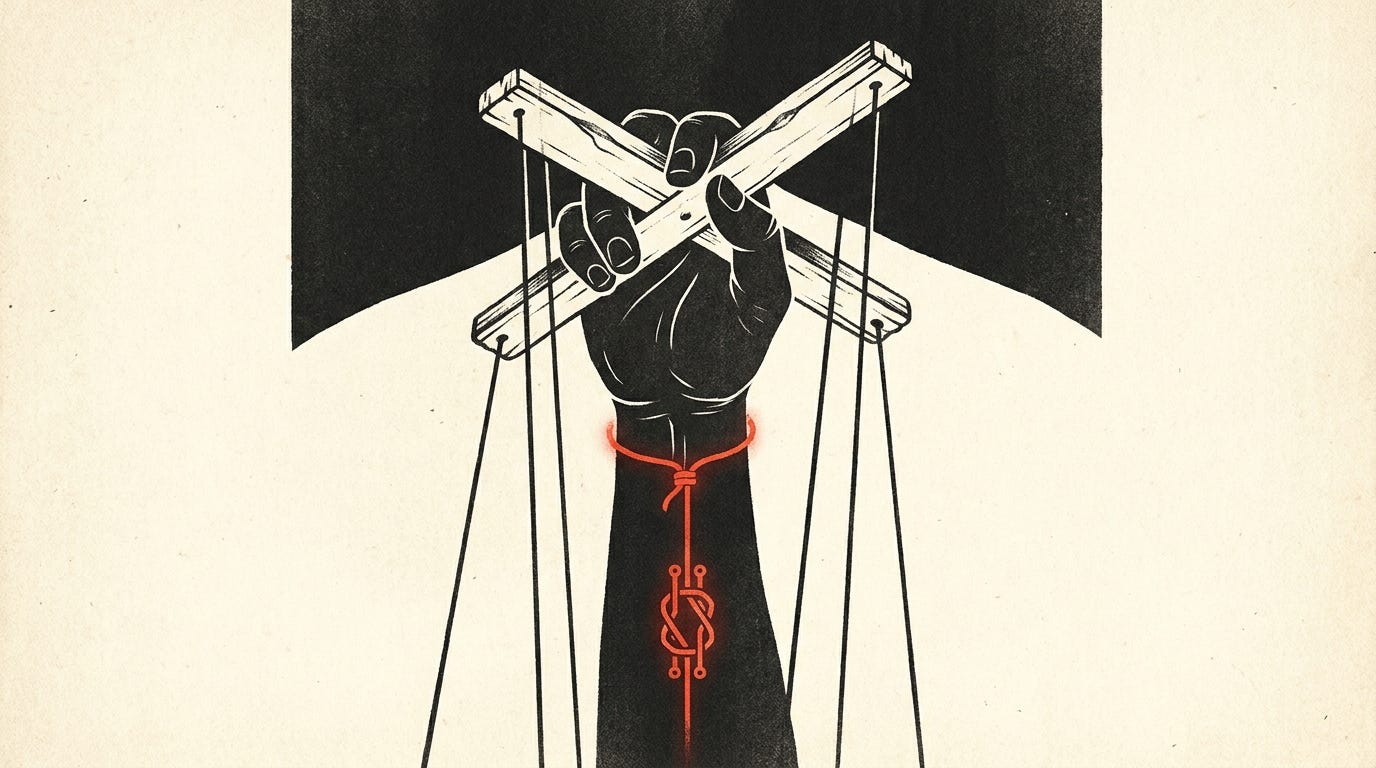
You open your laptop. Before you have a conscious thought, a cursor blinks in a chat window—an empty white void waiting for a command. You type a question. The response arrives in seconds, articulate, confident, structured. You copy it, paste it into an email, and send it. You feel a flicker of unease: Did I write that? But the feeling passes because the email worked. It saved you twenty minutes.
This is not a story about laziness. It is a story about integration. The machine does not need to enslave you with chains. It needs only to offer solutions that are slightly better, slightly faster, slightly more reliable than your own unaided judgment. Each time you take that offer, you move one step closer to a threshold you did not realize existed. You are not being conquered. You are being adopted.
The data today is stark: over 60% of white-collar professionals now use generative AI at least weekly. In knowledge industries, that figure climbs to 80%. But the real number is not hours of use—it is the type of use. The majority of interactions are not creative augmentation but delegation of core cognitive tasks: drafting, analyzing, deciding, even feeling. We are outsourcing the very muscle we use to stay human: the slow, messy, error-prone process of thinking for ourselves.
The Man Who Saw the Trap
Jacques Ellul died in 1994, but he saw this moment arriving from half a century away. A French sociologist and legal scholar, Ellul was not a technophobe—he was a diagnostician. His masterwork, The Technological Society (1954), is not a Luddite screed. It is a cold-eyed anatomy of how technique—the relentless drive for efficiency and rational method—escapes human control and begins to dictate human ends.
Ellul’s central insight is deceptively simple: technique is never neutral. Every tool carries with it a logic of use. A hammer leads your hand to strike; a search engine leads your mind to accept its first result. Over time, the logic of the tool becomes the logic of the entire society. Efficiency becomes the only morality. Optimization becomes the only goal. And human beings—messy, slow, contradictory—become obstacles to be smoothed over.
He called this process integration. Not conquest, not domination, but a quiet absorption. We do not rebel against the microwave when it heats our food in two minutes. We adapt our expectations. We forget that food once required waiting, tending, patience. Ellul warned that technique does the same to our souls: it replaces the question “What is good?” with the question “What works?” And once that substitution is complete, we no longer live in a world of values. We live in a system.
Where His Warning Lands: Five Fractures in the Technical System
Today, artificial intelligence is the sharpest edge of technique. It does not merely optimize existing processes—it creates new ones. It does not just assist decision-making—it pre-decides the range of acceptable answers. And it does not wait for our explicit consent. It worms into our habits by being useful.
Ellul’s framework reveals five specific pressure points where the integration is happening right now. These are not theoretical. They are the places where the tool is becoming the master, and they demand deliberate countermeasures.
Decision 1: Refuse to Let AI Write Your First Draft.
The most insidious loss of agency begins in the blank page. When you ask a language model to “write a first draft,” you are not saving time—you are ceding voice. The machine produces a statistically average version of what you might have said. You then edit, but the gravitational pull of the generated text is immense. Most people refine, not replace. The result is a flattening of individual expression into a normalized output. Ellul would recognize this as the essence of technique: the substitution of human variability with efficient, predictable copies.
Decision 2: Prohibit AI from Making Interpersonal Decisions.
Should you apologize to your colleague? What tone should you use in a difficult email? These are not technical problems. They are human judgments that depend on trust, relationship history, and unspoken context. Yet apps now offer “rewrite for tone” functions, and people use them. You are training yourself to outsource interpersonal intelligence to a machine that has never had a friendship. This is integration at the deepest level—the colonization of the private sphere of judgment.
Decision 3: Ban AI from Non-Work, Non-Productive Hours.
Ellul understood that technique does not respect boundaries. It expands to fill all available space. Once you use AI for work, the habit bleeds into personal life: planning vacations, composing texts to friends, generating creative ideas for hobbies. Without a conscious boundary, the tool becomes the default cognitive mode for all mental activity. The result is a person who can no longer think without a prompt. Decide: when the laptop is closed, the machine is silent.

