

Socrates’s Third Question: Why Algorithmic Fate Is Devouring Human Freedom?

You pick up your phone. The motion is automatic, a twitch learned through ten thousand repetitions. You didn’t decide to do it, not in any meaningful sense. Your thumb unlocks the screen before your conscious mind can form an objection. An icon, glowing with a promised notification, pulls you in. For the next seventeen minutes—or is it forty-seven?—you are gone.
You cycle through outrage at a headline you don’t read past, a pang of envy at a curated vacation photo, a flicker of desire for a product you were just discussing, and a brief, warm wash of dopamine from a video of a dog befriending a capybara. When you finally look up, the light in the room has changed. A stiffness has set into your neck. And a quiet, hollow question echoes in the back of your skull: What just happened to me? You feel used. Not by a person, but by a process. You made a thousand tiny choices in that time—to scroll, to like, to linger—yet you feel you have exercised no real freedom. You sense, correctly, that you are not the user of the device, but the resource it is consuming. This feeling, this phantom limb of lost agency, is the single most important and least-discussed crisis of our time. It is the silent pandemic of the soul.
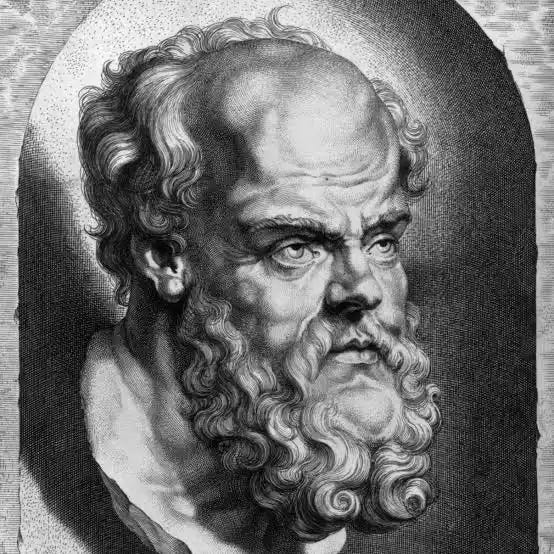
To understand this crisis, we must go back 2,400 years to an Athens wrestling with its own version of information overload and political decay. We must go to Socrates. Forget the caricature of a man in a toga spouting axioms. Think of him instead as a public irritant, a human stress-test for the certainty of others. His profession was not teaching, but demolition. He would approach the most confident men in the marketplace—the politician certain of justice, the general certain of courage, the poet certain of beauty—and, with a series of simple, disarming questions, help them dismantle their own beliefs brick by brick until they stood naked in their own ignorance.
This method, the elenchus, was not about providing new answers. It was about exposing the contaminated foundations of the old ones. Most people, then as now, operate on two questions. The first is the ethical: What is the good life? What is right? The second is the strategic: How do I achieve it? What is the most effective path? Socrates proposed, by his actions, an
