


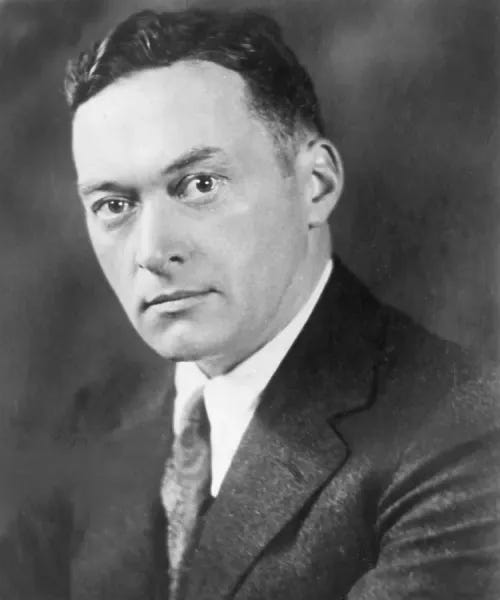
Walter Lippmann, an influential American journalist and political commentator, posited that public opinion is largely shaped by mental images rather than direct contact with reality. His work significantly influenced the understanding of public opinion and its relationship with media.
Lippmann argued that individuals form simplified representations of complex societal issues based on their interpretations of media narratives and societal influences. These insights underscore the potential for media to shape perceptions, often leading to distorted understandings of critical issues and influencing political and social dynamics in profound ways.
He emphasized the importance of how news is presented, noting that the framing of issues—whether through episodic or thematic storytelling—can significantly impact how audiences perceive and react to events. The influence of media, therefore, is not merely informative but fundamentally shapes the lens through which the public interprets reality.
Despite critiques that his perspective might oversimplify opinion formation or downplay active social discourse, Lippmann’s work remains a cornerstone in the study of public opinion. It highlights the challenges posed by media representation and the necessity for critical media literacy in a complex information landscape. In contemporary discussions about misinformation and media manipulation, Lippmann’s ideas about the interplay between mental imagery, media, and public opinion are increasingly relevant.
Background
Walter Lippmann’s analysis of public opinion emphasizes that individual perceptions of reality are largely shaped by mental images rather than direct experiences. He argued that people rely on constructed representations of the world, often influenced by the media and authority figures, rather than engaging with reality itself. This dependency on external sources highlights a fundamental limitation in human cognition: the difficulty in discerning the truth amidst a plethora of information, especially when individuals lack direct knowledge of the subjects in question.
Lippmann also noted that the framing of information plays a crucial role in shaping public perception. For instance, the way news is presented—whether through episodic framing, which focuses on specific details, or thematic framing, which addresses broader issues—can significantly influence how individuals understand and react to events. The example of the “Météo Climat” segment in French news illustrates this concept; by integrating daily weather reports with the context of climate change, the segment encourages viewers to understand meteorological events within a larger narrative. This approach reflects a movement towards constructive journalism, which advocates for a more nuanced portrayal of complex issues by including diverse perspectives and avoiding oversimplification.
