


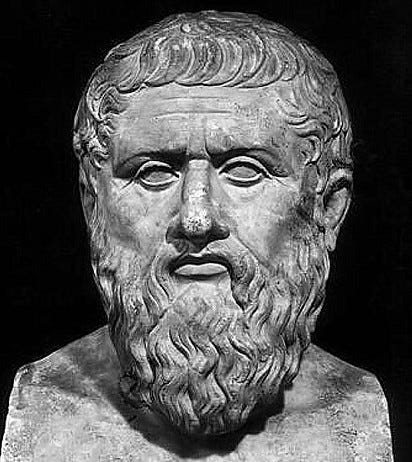
Plato reveals how modern digital influencers resemble the Sophists he warned against in his ancient critique. In the bustling marketplace of ideas that was ancient Athens, a group of itinerant teachers known as the Sophists rose to prominence. Today, in the digital agoras of TikTok and Instagram, a new class of persuaders has emerged.
While separated by millennia, the parallels between these ancient rhetoricians and modern digital influencers are striking, raising critical questions about authenticity, truth, and the future of public discourse.
The Rise of the Sophists
The Sophists were itinerant teachers and philosophers who gained prominence during the 5th century BCE, particularly in Athens. They emerged in response to the increasing wealth and intellectual demands of Greek society, which sought advanced education in rhetoric and persuasion essential for success in a nascent democratic political landscape.
Although the Sophists contributed significantly to philosophical discourse—especially regarding relativism and ethics—they faced criticism for prioritizing rhetoric over objective truth. This led to accusations that they were undermining traditional values and moral standards.
Rhetoric is the art of ruling the minds of men.
Plato
Plato’s Critique: Truth vs. Persuasion
Plato’s relationship with the Sophists, particularly figures like Protagoras, was marked by deep philosophical opposition. He perceived a fundamental divide between the philosophical inquiry he championed and the relativistic tendencies of the Sophists.
In his dialogues, Plato critiques the Sophists for promoting a view of knowledge that he believed undermined the search for absolute truth. His concerns centered on several key points:
Relativism: Protagoras famously asserted that “man is the measure of all things,” suggesting that truth is subjective and dependent on individual perception.
Moral Chaos: Plato argued that such relativistic stances could lead to moral and intellectual chaos, eroding the principles of justice.
Profit over Wisdom: Unlike philosophers who sought wisdom, Sophists were often viewed as opportunists who charged high fees to teach the art of winning arguments regardless of the truth.
Plato believed that by emphasizing rhetoric over genuine understanding, the Sophists manipulated public opinion and threatened the moral fabric of society.
Enter the Digital Influencer
Fast forward to the 21st century, and the spirit of the Sophist has found a new home. Modern digital influencers, leveraging social media platforms, echo the Sophists’ strategies of persuasion and audience engagement. Often prioritizing self-promotion over genuine expertise, these influencers possess the ability to shape public opinion and behavior, mirroring the Sophists’ historical role in public discourse.
The evolution of influencer marketing reflects a democratization of influence reminiscent of the Sophistic practices of ancient Greece. However, this comparison raises critical questions about authenticity. Just as the Sophists were accused of blurring the lines between genuine expertise and rhetorical flair, today’s influencers navigate the complexities of public engagement with varying degrees of transparency.
The celebrity is a person who is known for his well-knownness.
Daniel J. Boorstin
The Art of Manipulation
The parallels between the Sophists and contemporary influencers highlight ongoing concerns regarding the manipulation of truth. Both groups are characterized by their emphasis on persuasion over truth, utilizing rhetoric as a tool to manipulate opinions and emotions rather than to seek genuine understanding.
Modern influencers employ various tactics to manipulate online discourse:
Algorithmic Exploitation: Utilizing understanding of platform algorithms to maximize reach, often prioritizing sensationalism.
Emotional Engagement: Using pathos (emotional appeal) to bypass critical thinking and foster parasocial relationships.
The Spectacle: Creating a “spectacle” that prioritizes appearance over sincerity, contributing to a decline in meaningful communication.
The Crisis of Public Discourse
The rise of social media has facilitated a culture where attention-grabbing content can overshadow substantive dialogue. As influencers engage in tactics reminiscent of Sophistic rhetoric, the challenge of discerning fact from fiction intensifies.
This dynamic prompts a reevaluation of the moral responsibilities that accompany persuasive communication. The digital age has intensified the prevalence of cognitive biases, such as confirmation bias, which can be exacerbated by algorithm-driven content that creates echo chambers.
Ultimately, the discourse surrounding Sophists and digital influencers underscores the enduring relevance of these ancient philosophical debates. As we navigate a world saturated with digital stimuli, the need for critical thinking and a commitment to objective truth is more pressing than ever.
The result of a consistent and total substitution of lies for factual truth is not that the lies will now be accepted as truth, and the truth be defamed as lies, but that the sense by which we take our bearings in the real world is destroyed.
Hannah Arendt