


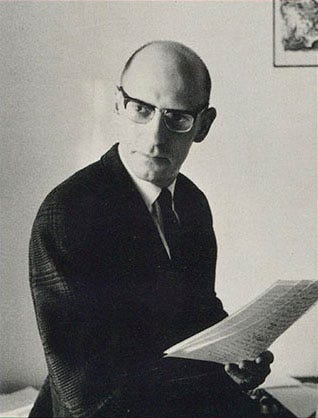
Michel Foucault explains how biopower turns the human body into a site of political struggle and control. This article delves into the historical context, key concepts, mechanisms, implications, and critiques surrounding this pivotal idea.
Michel Foucault’s concept of biopower describes how modern states and institutions exert control over human bodies, transforming them into sites of political struggle. Emerging in the late 18th century, biopower signifies a shift from sovereign power—which revolves around the authority to take life—to a governance model focused on managing populations and regulating life itself.
This paradigm highlights how societal institutions, through mechanisms like public health and demographic management, shape individual behaviors and norms, effectively intertwining power with the regulation of biological existence.
Notably, biopower operates through two key dimensions: anatomo-politics, which concerns individual bodies and disciplines, and biopolitics, which addresses population dynamics. Foucault argues that these dimensions reflect a profound connection between power and knowledge, asserting that the exercise of power is inextricably linked to the production and organization of knowledge concerning health and social norms.
This approach reveals the complexities inherent in how societies govern life, revealing the ways individuals are categorized and subjected to regulation based on perceived normality and deviance.
The implications of biopower extend into contemporary discussions about state control and individual rights, particularly during crises such as the COVID-19 pandemic, where the balance between public health and personal freedoms is contested. Critics have raised ethical questions regarding how biopower influences social inequalities and disproportionately impacts marginalized groups, highlighting the nuanced power dynamics that characterize modern governance.
Moreover, Foucault’s ideas have sparked significant debate in academia, prompting critiques that challenge the completeness of his framework and its applicability to contemporary sociopolitical contexts, particularly in relation to issues of race, gender, and class.
Where there is power, there is resistance.
Michel Foucault
Historical Context
Michel Foucault’s concept of biopower emerged as a significant shift in the understanding of power dynamics in modern societies, particularly around the end of the eighteenth century. Traditionally, power was understood as sovereign power—where a monarch had control over death, deciding who could live and who could die.
However, Foucault posits that by the end of the nineteenth century, biopower replaced sovereign power as the dominant mechanism of control. This new form of power focuses on the management and regulation of life itself, functioning at the level of populations through mechanisms such as demography and public health.
Biopower is characterized by its capacity to both foster life and allow certain individuals to die, marking a critical transition in the practices of governance. As Foucault argues, this form of power operates through a complex network of social institutions, regulations, and technologies that qualify, measure, and appraise the biological aspects of human existence. It is through these mechanisms that states exert control over individuals, transforming bodies into sites of political struggle and surveillance.
