


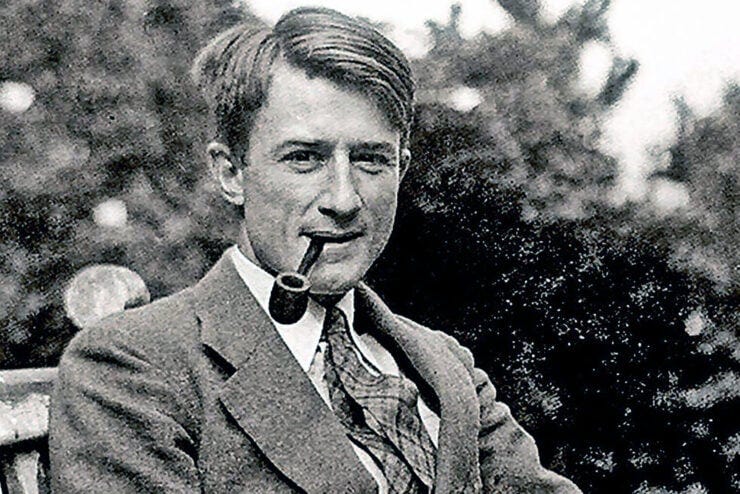
Michael Oakeshott, a significant British philosopher and political theorist, raised critical concerns about the perils of political rationalism, emphasizing its detrimental impact on governance and societal complexity. Born in 1901, Oakeshott’s intellectual journey was shaped by his education at Cambridge, where he focused on political philosophy and theology.
His key assertion—that political rationalism’s over-reliance on abstract principles oversimplifies the intricacies of human experience—has garnered attention in both philosophical and political circles, positioning him as a vital figure in discussions on the nature of governance and human behavior in the modern world.
Oakeshott characterized political rationalism as an ideology that seeks to impose rigid frameworks on governance, often leading to tyrannical outcomes. He argued that such an approach dismisses the rich historical contexts and experiential knowledge necessary for sound political decision-making. Instead of viewing political action as a mere technical exercise, Oakeshott advocated for an understanding of politics that embraces uncertainty and complexity, warning against the “fatal arrogance” of believing that abstract theories can adequately capture the reality of human society.
His critiques highlight the risks of oversimplification in political discourse, emphasizing the importance of tradition, context, and individual judgment. This notion of political rationalism as both a philosophical and practical danger remains particularly relevant today, where ideological divides often lead to polarized and ineffective governance.
Oakeshott’s work calls for a reevaluation of contemporary political methods that prioritize conformity to rationalist principles over engagement with the nuanced realities of diverse human experiences. His insights serve as a cautionary tale for modern political discourse, urging a more reflective and historically informed approach to governance.
Background
Michael Oakeshott, a prominent British philosopher and political theorist, was born on December 11, 1901, in Chelsfield, Kent. He attended St. George’s, a progressive coeducational secondary school, before proceeding to Gonville and Caius College, Cambridge, in 1920. There, he pursued a degree in political science as part of the history tripos, graduating with first-class honors in 1923. Oakeshott was elected to a fellowship at Caius shortly thereafter and began teaching in the history department, where he focused on political philosophy and theology, themes that would shape his later works.
