


The battlefield in Ukraine is revealing a stark truth about Western leadership: a profound and dangerous schism in strategic thinking between Washington and Brussels. Join me as I dissect the American 28-point plan and the European counter-proposal, exposing why one seeks pragmatic compromise while the other clings to maximalist ideals—a posture that, I fear, ensures continued devastation for Ukraine.
The Uncomfortable Truth: Two Wests, One War of Wills
We live in an era where the brutal clarity of geopolitics often clashes violently with the comforting fictions of political rhetoric. I want to talk about Ukraine, not through the lens of optimistic declarations, but through the hard, unvarnished reality exposed by the recent American and European ‘peace proposals.’ What we are witnessing, I contend, is not a unified search for common ground, but a profound and dangerous ideological fracture within the Western alliance itself.
These proposals—one American-led, the other a European counter-amendment—did not emerge from a position of strength or diplomatic leisure. No, they were born of desperation, a reactive measure to Ukraine’s military front teetering on the precipice of systemic collapse. This, to me, is the central, inescapable truth. My goal here is to guide you through a dialectical deconstruction of these two frameworks: to present the thesis of American pragmatism, the antithesis of European maximalism, and then to synthesize the tragic implications of their collision for Ukraine and for Europe’s future. It’s a journey into the uncomfortable reality that sometimes, the most dangerous enemy is not an external power, but an internal refusal to see things as they are.
Washington’s Stark Calculus: When Reality Demands Concession
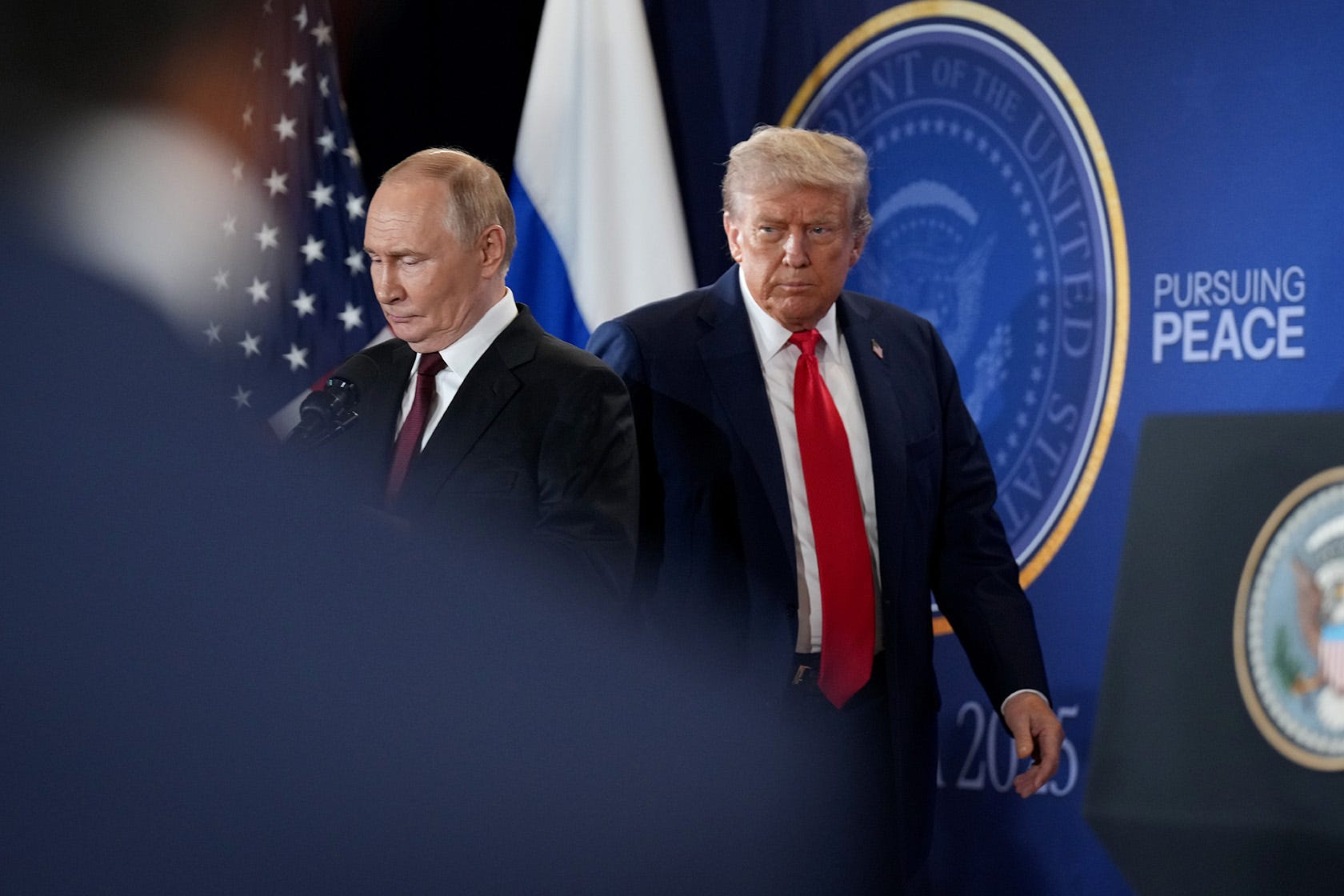
To understand the American 28-point plan, you must first grasp the depth of the crisis that spawned it. This was no act of generosity, but an act of grim necessity. The groundwork was laid by Donald Trump’s special envoy, Steve Witkoff, engaging in preliminary discussions in Moscow and then directly with Vladimir Putin in Anchorage. This wasn’t about agreeing; it was about understanding Russia’s red lines on a US-authored framework, particularly regarding territorial recognition and the absence of a unilateral ceasefire as a precondition. The subsequent failure to get President Zelensky’s buy-in, derailed by uninvited European leaders, signaled an early fracture in Western unity.
But the true catalyst was military. On October 26th, Russian Chief of the General Staff, General Valery Gerasimov, made a televised announcement detailing the encirclement of 10,500 Ukrainian troops in Pokrovsk and Kupiansk. For Western capitals, this wasn’t just a battlefield report; it was the materialization of their worst fears: the acute risk of a systemic Ukrainian military collapse. By late November, intelligence confirmed seven operational pockets, meaning Ukrainian units were either physically trapped or completely cut off. This was no longer a war of attrition; it was becoming a war of potential annihilation. I believe this context of imminent defeat is not just background noise; it is the central, coercive force that shaped every painful concession within the American proposal.
In diplomacy, the worst error is to mistake a wish for a fact. Reality, however harsh, must be confronted directly, or it will confront you with even greater severity.
– Otto von Bismarck (attributed)
The core stipulations of the American plan are a framework of pragmatic compromise, designed to reflect the dominant military balance. Territorially, it was a hybrid: full cession of Luhansk and Donetsk, with the demarcation line in Kherson and Zaporizhzhia following the existing front. Militarily, it capped Ukraine’s army at a formidable 600,000 personnel—a strategic figure designed to reassure Kyiv while being a clear point of contention for Moscow. Crucially, it demanded firm limitations on NATO: a halt to eastward expansion, a formal declaration that Ukraine would not become a member, and a binding commitment against stationing NATO troops in Ukraine. Politically, it mandated Ukrainian presidential elections within 100 days to address Russian concerns over Zelensky’s legitimacy, ensuring the final accord possessed an undisputed mandate. These were painful, reality-based concessions, yet they formed the only viable basis for a negotiated settlement.
Europe’s Dangerous Delusion: Rewriting Reality on Paper
Now, let’s turn to the European counter-proposal, or more accurately, the European amendments to the American document. This wasn’t an alternative path to peace; it was a systematic, almost ideological, dismantling of the American plan’s core compromises. I would argue that these revisions transformed a difficult but potentially negotiable framework into a document strategically engineered for Russian rejection—a testament to Brussels’s inability to reconcile its political aspirations with the brutal facts on the ground.
The escalatory revisions to military and security terms are stark. The EU increased the proposed cap on the Ukrainian military from 600,000 to 800,000 troops in peacetime. More critically, it completely removed the articles halting further NATO expansion and explicitly barring Ukraine’s membership, leaving the door to the alliance wide open. Where the US offered a clear commitment of ‘no NATO troops in Ukraine,’ the EU amended it to ‘no permanent stationing of troops under NATO command,’ creating a glaring loophole for foreign forces from individual nations or on a rotational basis. Furthermore, where the US offered vague security guarantees, the EU demanded guarantees mirroring NATO’s Article 5. This is not compromise; this is an escalation designed to reinforce an increasingly untenable maximalist position.
The greatest obstacle to discovery is not ignorance; it is the illusion of knowledge, often rooted in an attachment to what we wish to be true.
– Daniel J. Boorstin
On territorial concessions, the European amendments were an outright rejection of reality. All language recognizing either de facto or de jure Russian sovereignty over Crimea and the four annexed oblasts was removed. Their status was reframed as a subject for future negotiations where Ukraine would seek full recovery. This flies in the face of current battlefield realities. Moreover, the EU’s divergence on Russian sovereign funds is telling: while Washington intended these for reconstruction benefiting US firms, Brussels explicitly aims to use them to finance the continuation of the war. Even the political timeline was altered, replacing a mandatory election within 100 days with a vague commitment to hold them ‘as soon as possible,’ introducing a legal vulnerability that could be exploited to invalidate any treaty later. Brussels, caught in a strategic trap of its own making, chose to reassert political objectives that battlefield realities could no longer sustain.
The Geopolitical Chessboard: Why Moscow Waits and Kyiv Bleeds
The chasm between these two Western proposals reveals the true strategic positions, objectives, and constraints of the key actors. Russia’s reaction, predictably, has been one of confident patience. President Vladimir Putin has made it abundantly clear that Russia feels no compulsion to sign any agreement, believing it can achieve its objectives militarily. Moscow’s initial willingness to use the American plan as a basis for discussion was, in my view, a calculated diplomatic gesture to its allies—China, India, and Brazil—who favor a negotiated settlement. From Russia’s perspective, the EU’s amendments render any such discussion utterly pointless, removing any incentive to negotiate rather than to simply prosecute the war to its military conclusion.
Then there is Ukraine, caught in an agonizing dilemma. While Kyiv’s official position has largely aligned with European maximalism, I see a growing number of dissenting voices articulating the devastating cost of this strategy. Ukrainian parliamentarian Julia Mendel, for instance, has powerfully argued that the relentless pursuit of unattainable war aims is bleeding the nation dry, stating, “We are losing men, territory, and our economy.” Her observation that the EU “has no real strategy” and her desperate plea to recognize that “human life is the supreme asset” serve as a profoundly moral counterpoint to a policy that appears disturbingly willing to fight to the last Ukrainian.
Finally, we arrive at the European Impasse: the inability of Brussels to accept policy failure. For the EU, accepting a peace treaty on terms reflecting Russian military success would not merely be a setback; it would constitute a “fundamental disavowal” of two decades of its foreign policy, a painful internal reckoning over failed strategies, and the staggering economic costs of ineffective sanctions. This is a political price Brussels is currently unwilling to pay. Estonian Prime Minister Kaja Kallas’s two-point plan – “weaken Russia” and “support Ukraine” – perfectly encapsulates an EU strategy focused more on punishing its adversary than on saving its partner, revealing a strategic incapacity that leaves it with little to no leverage over Moscow or, indeed, over Washington.
The Tragedy of Unyielding Ideology: A Crossroads of Will
As I reflect on these dueling proposals, the synthesis that emerges is a deeply unsettling one. The American 28-point plan, however bitter a pill it might be for Kyiv, represents a pragmatic, if painful, attempt to craft a diplomatic off-ramp based on the hard realities of the battlefield. It acknowledges the existing, unfavorable balance of power, seeking to trade territory and strategic neutrality for the preservation of a sovereign Ukrainian state. In stark contrast, the European counter-proposal is a politically motivated rejection of this reality, transforming what could have been a negotiable document into a statement of maximalist intent. This approach, I fear, prioritizes the strategic goal of weakening Russia over the immediate survival of Ukraine.
The West, and Europe in particular, stands at a profound strategic crossroads. It must decide whether to continue pursuing politically desirable but militarily unachievable objectives at Ukraine’s catastrophic expense, or to engage in a difficult, painful negotiation based on the actual, brutal balance of power. The fundamental choice facing us is no longer between a ‘good’ and a ‘bad’ peace, but between a negotiated settlement based on the current, unfavorable balance of power and a future settlement dictated by the unforgiving terms of a complete Ukrainian military collapse. I believe that ignoring the mirror of Machiavelli, which reflects the harsh truths of power and consequence, guarantees not victory, but an even greater tragedy.