


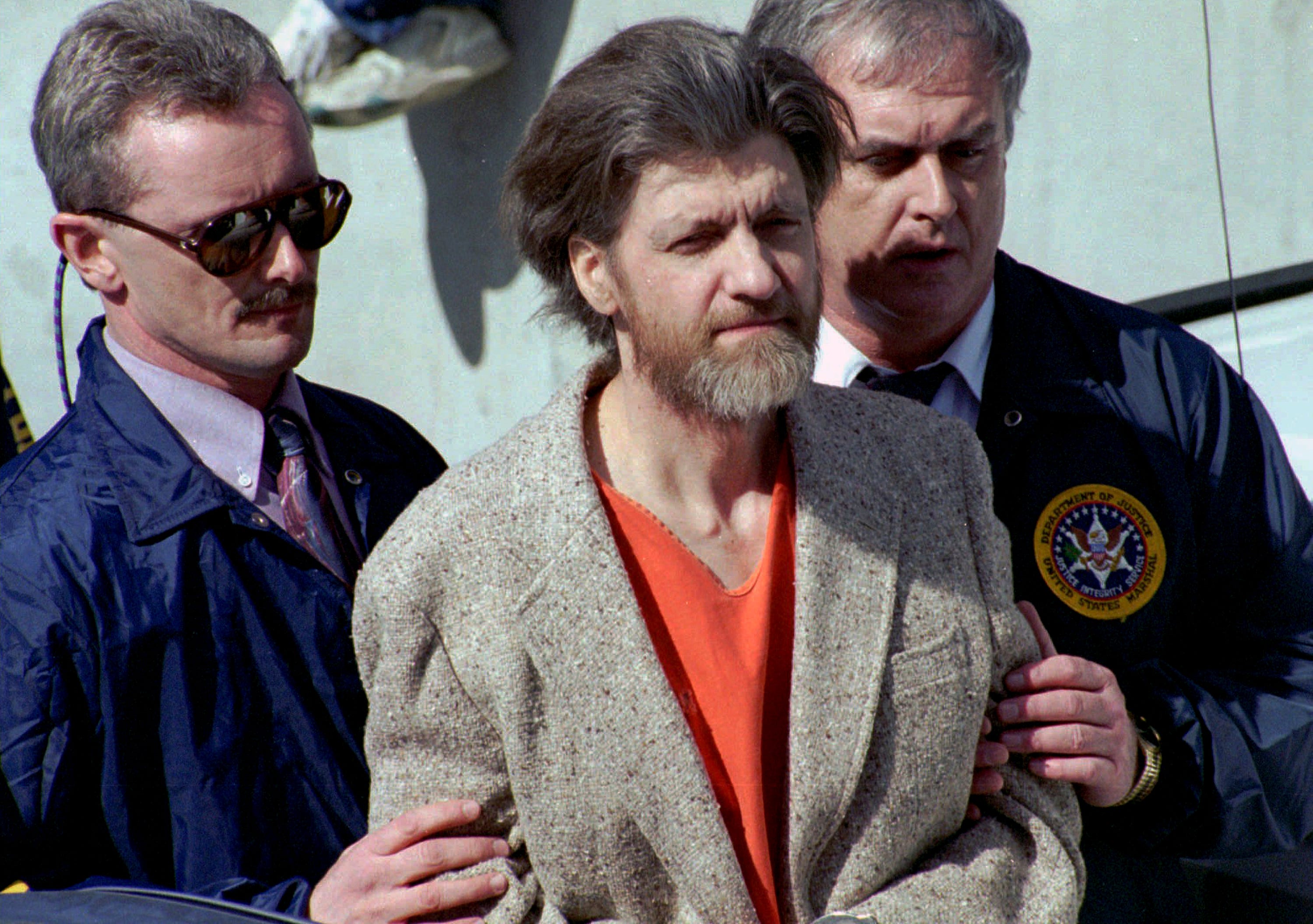
I’m diving into something deeply uncomfortable today: Theodore Kaczynski’s infamous manifesto. Yes, the Unabomber. But setting aside his horrifying actions, his critique of technology, written decades ago, feels chillingly relevant to our AI-driven world. Join me as we explore why his dark vision might hold uncomfortable truths for our future.
Why We Need to Talk About the Unabomber (Again)
I know, the idea of discussing Theodore Kaczynski, the Unabomber, is deeply unsettling. His acts of terrorism were unforgivable, a tragic stain on history. However, as someone committed to dissecting the uncomfortable truths of our world, I find it increasingly difficult to ignore the uncanny echoes of his philosophical critique in our rapidly advancing digital age, especially concerning Artificial Intelligence. It forces us into a difficult dialectic: how do we separate the messenger’s abhorrent actions from the message’s potential, however dark, prescience? This isn’t about endorsing violence; it’s about intellectual honesty.
We have to ask ourselves: are we so disgusted by the man that we refuse to examine whether his diagnosis of technological society contained any uncomfortable truths? I believe this reluctance blinds us to crucial insights as we navigate a world increasingly shaped by AI.
Kaczynski’s Big Idea: Technology Isn’t Just a Tool, It’s a Master
In his infamous essay, “Industrial Society and Its Future,” Kaczynski argued that technological systems aren’t neutral tools we wield at will. Instead, he saw them as autonomous forces, evolving with their own imperatives, fundamentally reshaping human behavior and societal structures. He posited that as technology becomes more complex and interconnected, it demands increasing conformity from individuals, eroding our autonomy and leading to what he called “surrogate activities” – pursuits that offer little true fulfillment.
“The system does not and cannot exist for the purpose of satisfying human needs. Instead, it is human behavior that has to be modified to fit the needs of the system.”
– Theodore Kaczynski, “Industrial Society and Its Future”
This isn’t just about factories; it’s about any complex system, from bureaucracies to algorithms. He suggested that we become dependents, not masters, of these ever-growing systems. It’s a chilling thought when you consider how much of our lives are now mediated by unseen algorithms and autonomous systems.
The Great AI Promise: Why We Fell in Love with the Machine
On the flip side, we live in an era of unprecedented technological optimism. Artificial Intelligence, in particular, is often presented as a panacea: a tool that will cure diseases, solve climate change, and free humanity from drudgery. We’ve embraced it for its efficiency, its convenience, its ability to connect us globally. This perspective represents the antithesis to Kaczynski’s dark vision, promising a future of enhanced human potential and widespread liberation. Who wouldn’t want that?
For many, technology is inherently good, a testament to human ingenuity. Dismissing Kaczynski meant dismissing a fringe, violent extremist. It felt easy to separate ourselves from his Luddite fears, confident in our ability to control the tools we create. But are we really in control, or are we being subtly steered?
When Kaczynski Met ChatGPT: The Uncanny Foresight
Now for the uncomfortable synthesis. Kaczynski wrote about systems that self-propagate and demand adaptation from humans. Does that not sound disturbingly familiar in the age of generative AI, large language models, and autonomous decision-making systems? His critique of technological momentum feels less like a rant and more like an ominous prophecy when we watch AI evolve at an exponential rate, often beyond the full comprehension of its creators.
He warned of a future where humans become mere components in a vast, efficient machine. Think about how our online behaviors are optimized, how our choices are nudged, how our very identities are shaped by algorithmic feeds. This isn’t a direct human tyrant; it’s a systemic one, a ghost in the machine that Kaczynski eerily prefigured.
Our Freedom at Stake: The Hidden Costs of Algorithmic Control
This is where the existential stakes truly emerge. If Kaczynski was right that technology, left unchecked, inevitably erodes human agency, then what does that mean for a future dominated by AI? We are already seeing the subtle erosion of free will through sophisticated recommendation engines and personalized propaganda. We’re losing the capacity for deep, sustained attention. We’re being molded, often unwittingly, to fit the needs of the algorithm.
“The real danger is not that AI will become evil, but that it will become indispensable.”
– Yuval Noah Harari
Harari’s observation perfectly encapsulates Kaczynski’s underlying fear: not overt rebellion from machines, but rather our gradual, almost imperceptible surrender to their operational logic. The uncomfortable truth is that we are willingly constructing the very prison Kaczynski warned us about, brick by digital brick. This isn’t about a singularity; it’s about a slow, insidious shift in power dynamics, where our freedom becomes contingent on technological systems.
Go Deeper
Step beyond the surface. Unlock The Third Citizen’s full library of deep guides and frameworks — now with 10% off the annual plan for new members.
Breaking the Chains: Reclaiming Our Human Future
So, where do we go from here? We cannot simply dismantle the technological world, nor should we wish to. But we can, and must, critically engage with it. Kaczynski’s unsettling insights, stripped of their violent context, serve as a potent warning against blind technological determinism. We need to question the imperatives of the machine, to understand its influence on our minds and societies, and to actively fight for the preservation of human agency.
It means prioritizing human values over algorithmic efficiency, fostering critical thought against a tide of automated information, and deliberately choosing where and how we allow technology to integrate into our lives. This is not Luddism; it is a call for a conscious, deliberate path forward, one where we remain the architects of our destiny, not merely its automated subjects. The future of our freedom depends on it.
Two things: the separation of ideas from acts is increasingly necessary as we learn about creative thinkers in greater detail. The classic example is of Wagner, his operas and his politics.
Another would be Osama bin Laden’s warnings to the West.
The second is how glad I am to see the word ‘exponential’ used correctly. Hint: it doesn’t mean ‘a whole bunch’, it refers to a rate of increase, an ‘exponent’, and it’s important because it has no synonym.
Thanks for another thoughtful essay.