

Is Deconstruction Just Another Form of Escapism?
Simone Weil on Attention, Belief, and Staying in the Room

The woman in the front row of the lecture hall is typing furiously into her phone, not notes, but a tweet. The speaker on stage is deconstructing the concept of “truth” as a tool of colonial power structures. She nods vigorously. She posts the tweet. She feels smart. She feels righteous. She feels, for a moment, like she has done something. She has not. She has performed a ritual of intellectual dismissal that costs her nothing and changes nothing. Meanwhile, two miles away, a man is starving in a doorframe. He is not an abstraction. He is not a text to be interpreted. He is a body, and he is dying. The woman will never see him. Her attention is elsewhere—on the architecture of the problem, not the problem itself. This is the great betrayal of the modern intellectual: we have learned to deconstruct the world rather than to see it.
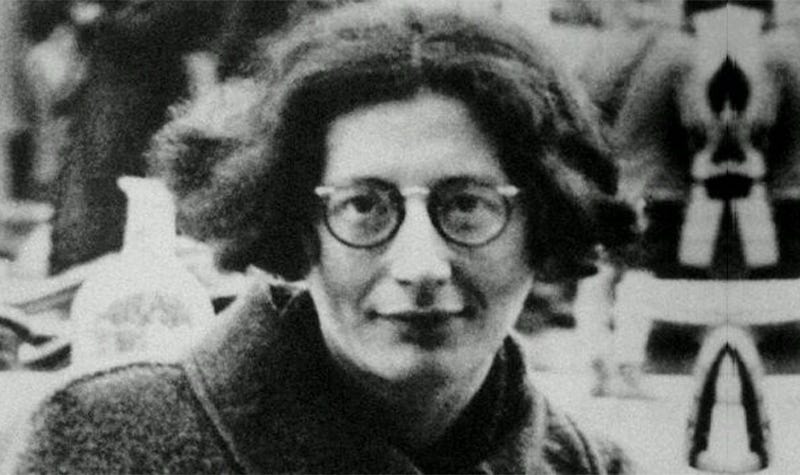
Simone Weil would have recognized this woman immediately. She would have pitied her, but she would not have excused her. Weil was a French philosopher, mystic, and factory worker who died in 1943 at the age of thirty-four, partly from self-imposed starvation in solidarity with the occupied French. She was not a system-builder. She was a diagnostician of the soul. Her central insight was devastatingly simple: attention is the rarest and most sacred human act, and we have collectively lost the capacity for it. She wrote that “attention, taken to its highest degree, is the same thing as prayer.” But she did not mean prayer as supplication. She meant prayer as radical presence—the willingness to hold a thing in your mind without immediately reducing it to a category, a critique, or a cause.
For Weil, the modern world was not suffering from a lack of ideas. It was suffering from a lack of reality. We had built elaborate systems of thought—Marxism, psychoanalysis, structuralism—that allowed us to explain suffering away rather than to sit with it. She called this “the disease of the age.” We had become experts at interpreting the world, and in doing so, we had become incapable of loving it.
The Factory and the Lecture Hall
Weil’s warning was not abstract. She lived it. In 1934, she took a year-long leave from her teaching position to work as a manual laborer in a factory. She wanted to understand the experience of the worker from the inside, not from the safety of a library. What she found nearly destroyed her. The factory was not a place of exploitation in the Marxist sense. It was a place of annihilation. The machines demanded a kind of attention that was the opposite of prayer—a deadening, repetitive focus that left no room for thought, for feeling, for presence. She wrote that the factory worker “is not allowed to think. He is not even allowed to feel. He is only allowed to function.”

This is the prophecy that maps onto our present moment with terrifying precision. We have built a world that systematically destroys the capacity for attention, and we have called it progress. The smartphone is the factory floor of the 21st century. Every notification is a machine demanding your focus. Every algorithm is a foreman optimizing your time for extraction. We have outsourced our attention to systems that have no interest in our humanity.
