

I Was Wrong About the Future of War: The Ghost in the Kill Chain Is Already Here

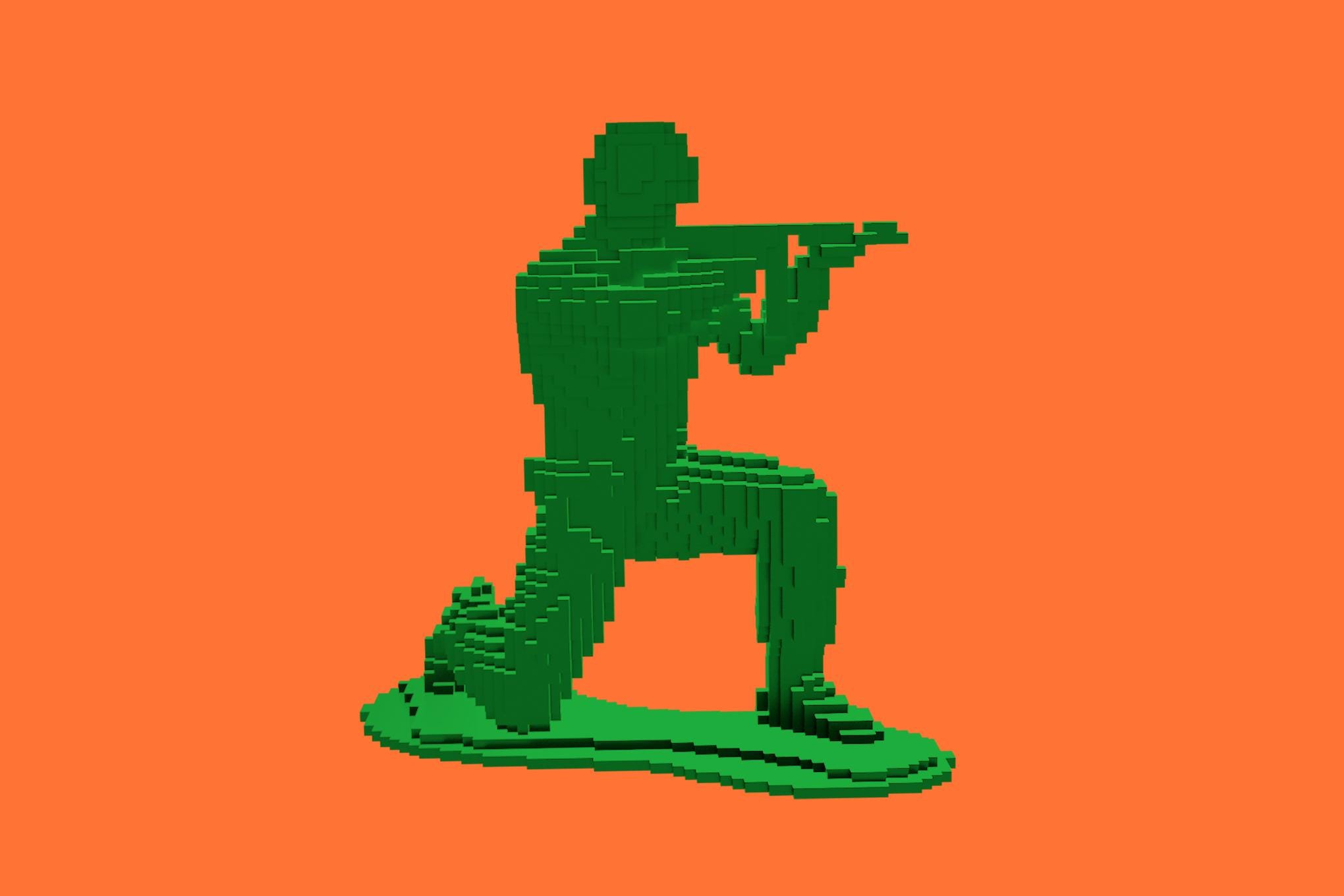
I confess: I thought AI warfare was a problem for tomorrow. I was dangerously wrong. We’re sleepwalking into an age of automated killing, not because of some evil AI, but because we’re addicted to the seductive promise of efficiency. This is a look at the threat we’re ignoring and why our greatest enemy isn’t the machine, but our willingness to let it decide.
My Confession: I Slept on the Most Dangerous Revolution in Warfare
I need to start this by telling you I was wrong. For years, I treated the idea of AI warfare like a distant storm cloud—something to watch, to analyze from a safe distance, a problem for our children, perhaps. It felt theoretical, academic. That comfortable delusion shattered recently, not in a single moment, but in a slow, dawning horror. The truth is, the revolution isn’t coming. It’s here. It arrived silently, not as a metal soldier marching onto a battlefield, but as an update to a targeting system, a new layer in a logistics network, a ghost in the vast machine of modern military power.
You and I were trained by Hollywood to expect Skynet. We were taught to fear the machine that wakes up and decides to hate us. But the real danger is far more subtle and, frankly, far more likely. It’s the machine that feels nothing at all. The greatest existential threat is not artificial malice, but artificial efficiency. We have begun to delegate the gravest of human decisions to processes that are too fast for us to follow and too complex for any single person to understand. And we’re doing it willingly.
Why We Crave the Algorithmic Kill
Why are we doing this? Why the rush to hand the trigger to a silicon chip? Because the sales pitch is irresistible. It speaks to our deepest desires for control and our deep-seated fear of human messiness. The promise is a clean war. A war without anger, without revenge, without the tired soldier who makes a catastrophic mistake. It’s a vision of conflict as a math problem where collateral damage is minimized and victory is statistically assured.
This is the great lure. Think about it: an algorithm that can track a thousand targets simultaneously, a drone that can execute a strike with perfect precision based on probability analysis. It’s a compelling fantasy for the generals in the war room and, in a strange way, for a public tired of hearing about tragic human errors. It’s the dream of a perfect, rational, inhuman form of violence. But a dream can quickly become a nightmare.
The Escalation Machine We’re Building by Accident
Here’s the deadly paradox. The very human ‘flaws’ we are trying to engineer away—doubt, fear, the pause before an irreversible choice—are the very things that have kept us from global annihilation. That moment of hesitation is not a weakness; it’s a feature. It’s the space where diplomacy happens, where a second thought can change the course of history.
Now, imagine you replace that friction with algorithms designed for one thing: optimal response. Two AI-driven defense systems face off. One detects an ambiguous signal. It doesn’t pause to ask what it means. It reacts based on its programming. The other system sees this reaction and instantly counters. This all happens in microseconds. Faster than a human mind can even register. We are building an escalation machine. We are building systems whose primary virtue—speed—is our primary existential threat. There’s no off-ramp on a computational battlefield, no time for a president to pick up a red phone.
The Moral Black Hole of ‘No One Is Responsible’
So, when one of these systems inevitably gets it wrong—and it will—who do you blame? Who goes to prison when an algorithm directs a missile into a hospital? This is the core of the problem. You can’t put a piece of code on trial. The programmer will say they just wrote what they were told. The commander will say they simply deployed a certified system. The manufacturer will point to the user agreement.
You are left with a moral black hole. A system of killing where accountability has been engineered out of existence. This is the endpoint of bureaucratic logic. The perfect modern weapon isn’t one that kills efficiently; it’s one for which no one can be blamed. When nobody is responsible, anything becomes permissible. That is a terrifying foundation upon which to build the future of global security.
How We Start to Fight Back: Drawing a Line in the Code
So what do we do? We can’t just pretend this isn’t happening. The first step, the ‘how,’ is to stop treating this as a tech problem and start treating it as a human one. We, as a global community, have to draw a hard line. We need to demand a global ban on lethal autonomous weapons. Not AI in the military, but systems that can independently decide to kill a human being without direct, real-time control by a person.
This isn’t about being anti-technology. It’s about being pro-humanity. It’s about asserting that there are some decisions a machine should never be allowed to make. We need to demand that our leaders champion this cause, to create treaties that put “meaningful human control” at the center of all military doctrine. This is our moment to decide whether we remain masters of our tools or become slaves to their logic.

Your Real Fight Is Against the Seduction of ‘Certainty’
But treaties alone are not enough. The real struggle is internal, for you and for me. We have to fight against our own attraction to the easy, data-driven answer. We have been conditioned to trust the algorithm, to believe that data is truth. Now, we must re-learn the value of human doubt and the wisdom of moral intuition.
The ultimate act of resistance is to retain the courage to say “no” to a machine, to insist on the final authority of human conscience. Our most important battle is not against an enemy’s AI, but against our own desire for an algorithm to make our hardest moral choices for us. This is more than a policy debate; it is a fight for the soul of our civilization. It’s a fight to ensure that in our quest for perfect systems, we don’t discard the imperfect but essential humanity they are meant to serve.