

How Your Employer Quietly Decided Whether You Get a Future
Ivan Illich warned that when one tool monopolizes a need, it doesn’t just serve you — it disables every other way of meeting that need.

Somewhere right now, a woman with eleven years of experience, three professional certifications, and a résumé formatted precisely according to LinkedIn’s recommended template is being rejected by a machine she will never see, for a job she was never actually considered for.
She won’t get an email explaining why. She’ll get silence, or a form letter that arrives four minutes after she hit submit — too fast for any human to have read a single line. Somewhere in an Applicant Tracking System, a parsing algorithm scanned her file for keyword density, found her job title listed as “Marketing Lead” instead of the “Marketing Manager” the posting specified, and quietly moved her file into a folder that no recruiter will ever open.
She did nothing wrong. She simply failed to speak the machine’s dialect, and the machine, not a person, held the only door.
This happens roughly 75% of the time, according to multiple workforce studies of large-company hiring pipelines — résumés filtered out by software before any human reviews them. It happens to the overqualified and the underqualified alike, to the career-changer and the loyal veteran of an industry now consolidating. It is not incompetence. It is not bad luck. It is the visible symptom of something much older and much stranger than any algorithm: a monopoly that has quietly redefined what it means to be employable, credentialed, and legible as a human being who deserves a future.
Ivan Illich saw this coming fifty years before the first ATS was ever coded.

The Priest Who Became a Prophet of Machines
Illich was not an economist or a technologist. He was a defrocked Catholic priest, an Austrian-born polymath who spent the 1960s and 70s dismantling the sacred assumptions of the industrial age — that more schooling meant more education, that more medicine meant more health, that more institutional mediation of human need meant more human flourishing.
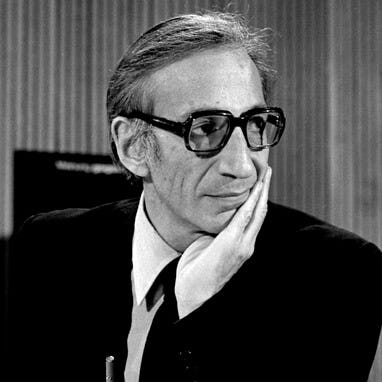
His most dangerous idea was the concept of the radical monopoly: not merely a company that dominates a market, but a single mode of production that eliminates every other way of satisfying a fundamental human need, until people can no longer even imagine an alternative.
A car company having market share is an ordinary monopoly. But when an entire society reshapes its cities so that walking becomes dangerous, transit becomes impractical, and distances between home and work stretch beyond any human-powered range — that is a radical monopoly. The car hasn’t just won the market. It has redefined mobility itself, so thoroughly that “getting somewhere” now means “having a car” by default, not by choice.
Illich saw this pattern everywhere: hospitals had monopolized health, schools had monopolized learning, and professionalized experts had monopolized the authority to say who counted as competent. In every case, the tool that promised liberation became the toll booth that everyone had to pass through — and the toll booth operators grew steadily less accountable to the people paying the toll.
