


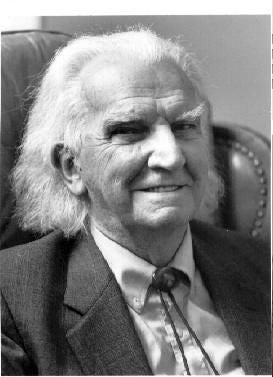
The concept of “The Treason of the Image” examines the profound impact of imagery and narratives on societal and economic dynamics, drawing heavily on the insights of economist and philosopher Kenneth Boulding. Boulding contends that the dominant images and representations within public consciousness can create environments where individuals become subservient to the very structures they have helped establish.
This subservience leads to a potential enslavement to algorithmic realities. His critique highlights the interplay between self-interest and ethical considerations in economic decision-making, suggesting that traditional economic models often overlook the moral dimensions that shape human interactions and societal values.
The simulacrum is never that which conceals the truth—it is the truth that conceals that there is none. The simulacrum is true.
Jean Baudrillard
The Dual Role of Imagery
A central theme of Boulding’s work is the dual role of powerful images in shaping collective beliefs and behaviors. He argues that these images convey deeper values while simultaneously reflecting a desire for material outcomes, thus complicating our understanding of economic behavior.
As societies increasingly rely on algorithm-driven technologies, Boulding’s warnings about the ethical implications of these tools resonate more than ever. He urges a critical examination of how they influence perceptions of reality and, consequently, human decision-making.
Background: The Evolution of Knowledge and Control
The evolution of society’s relationship with knowledge and education has been characterized by significant shifts in thought and practice, particularly with the advent of the Internet. The concept that “society” holds precedence over the “individual” has been criticized for promoting a model of education that seeks to mold individuals into productive members of society, often at the expense of personal and philosophical inquiry.
This perspective is rooted in a historical context that can be traced back to the establishment of significant institutional structures, such as the Bank of England in 1694, which marked the transition to modern economic systems characterized by unequal power dynamics.
The Dichotomy of Thought
Philosophers and economists have long grappled with the dichotomy between individual thought and collective ideology. It has been suggested that consciousness encompasses a broad spectrum of dualities, allowing for multiple legitimate perspectives to coexist. This multiplicity highlights the complexity inherent in societal structures and the necessity for individuals to seek a unifying understanding that transcends mere opinion.
The Treason of the Image: Economic Representation and Ethics
Kenneth Boulding’s exploration provides critical insight into how images influence human behavior within economic frameworks. He posits that the very structures of society are shaped by the narratives that dominate public consciousness.
The tension between self-interest and ethical considerations in economics forms a
