


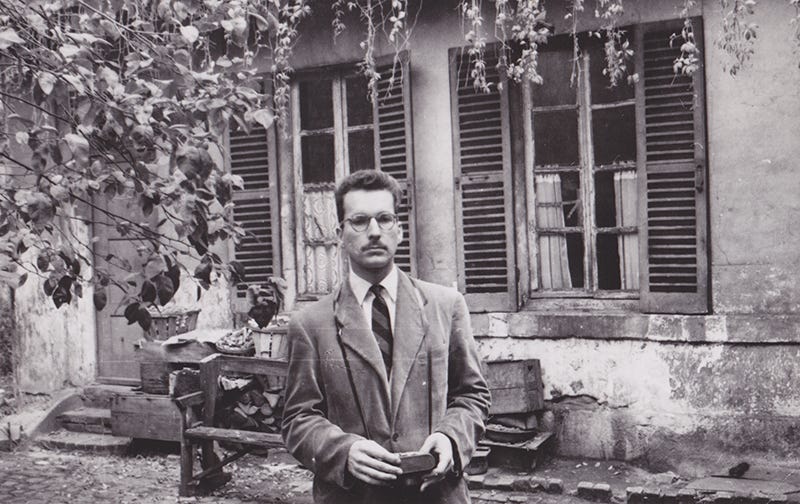
The concept of Ernst Becker’s exploration of the “pathological need to go viral” addresses the deep-seated existential anxieties that influence contemporary human behavior, particularly in the context of social media. Becker, an influential cultural anthropologist and author of the Pulitzer Prize-winning The Denial of Death, posited that the fear of mortality significantly shapes individual motivations and societal structures.
His theories suggest that in an increasingly connected yet isolating world, the urge to gain validation and achieve virality becomes a coping mechanism for existential dread. This anxiety was notably exacerbated by global crises such as the COVID-19 pandemic, which brought mortality to the forefront of the collective consciousness.
All of humanity’s problems stem from man’s inability to sit quietly in a room alone.
Blaise Pascal
The Man Behind the Theory: Ernst Becker
Born on September 27, 1924, in Springfield, Massachusetts, Ernest Becker grew up in a Jewish household during a time of significant social and political upheaval. His intellectual development was profoundly influenced by his service in the U.S. Army during World War II, where he witnessed the complexities of human behavior under extreme conditions.
