


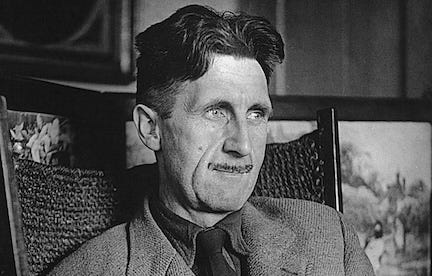
George Orwell’s critique of language, particularly his warning against lazy and clichéd expressions, posits that such language can be more insidious to truth than overt authoritarian control. In his influential works, notably the essay “Politics and the English Language,” Orwell contends that the reliance on clichés and vague language not only reflects a lack of original thought but also fosters a culture of imprecision that can obscure meaning and mislead the public. He argues that the deterioration of language leads to a degradation of thought, ultimately enabling manipulation by those in power and undermining democratic ideals.
Clichéd language, which includes tired expressions and euphemisms, dulls communication, making it less engaging and less capable of conveying complex ideas. Orwell highlights how this linguistic laziness can mask the reality of political actions, leading to the normalization of falsehoods and the trivialization of serious issues. By using simplistic and imprecise language, leaders can obscure their true intentions, making it difficult for the public to discern fact from rhetoric. This phenomenon is particularly troubling in contemporary political discourse, where such language can contribute to public disengagement and acceptance of misinformation.
Political language... is designed to make lies sound truthful and murder respectable, and to give an appearance of solidity to pure wind.
George Orwell
The relationship between language and power is further exemplified in Orwell’s depiction of Newspeak in his dystopian novel 1984. Here, a totalitarian regime systematically alters language to limit thought and maintain control, illustrating how the manipulation of language can serve as a form of subtle oppression. Orwell’s insights reveal that the dangers of clichéd language extend beyond mere style; they hold profound implications for society’s ability to engage critically with political narratives and uphold democratic values.
As modern political contexts continue to evolve, Orwell’s warnings remain relevant. His advocacy for clear and precise language serves as a call to action against the complacency fostered by clichéd expressions, urging writers and speakers to reclaim the power of words in the fight for truth and accountability in governance. By recognizing the potency of language and striving for clarity, society can better navigate the complexities of political discourse and safeguard against the threats posed by both overt authoritarianism and linguistic manipulation.
The Concept of Clichéd Language
Clichéd language refers to expressions or ideas that have become overused to the extent that they lose their original meaning and effectiveness, often resulting in triteness or irritation for the audience. Writers and speakers who rely on clichés may appear unimaginative and lazy, as such phrases often reflect a lack of original thought. This repetition can dull language, making it less engaging and reducing the potential for deeper communication.
Historical Context and Definition
The term ‘cliché’ originated in the late 19th century, derived from the French word mimicking the sound made by a printing plate, which reflects the concept of a ready-made expression. Initially, many clichés began as fresh metaphors or insightful phrases; however, their frequent use has stripped them of the uniqueness and specificity that once made them impactful. As George Orwell articulated in his influential essay “Politics and the English Language,” the reliance on clichéd language can hinder clear thought and communication, making avoidance of such phrases a crucial aspect of effective writing.
The Dangers of Clichéd Language
The use of clichés can have significant consequences on the clarity and originality of communication. They can obscure the nuances of language, which are vital in various contexts, including political discourse. As noted by Ben Yagoda, clichés often serve as an “understandable refuge” for writers under pressure but ultimately weaken prose and diminish the reader’s engagement. Orwell emphasizes this concern, arguing that clichés represent “paint-by-numbers communication” that fails to inspire critical thinking or innovation in writing.
The limits of my language mean the limits of my world.
Ludwig Wittgenstein
The Role of Context in Cliché Usage
Despite the general disdain for clichés, it is essential to recognize that they can be employed deliberately and strategically within specific contexts. Writers may use clichés to evoke familiarity or to convey irony, demonstrating that their deployment is not always indicative of
