


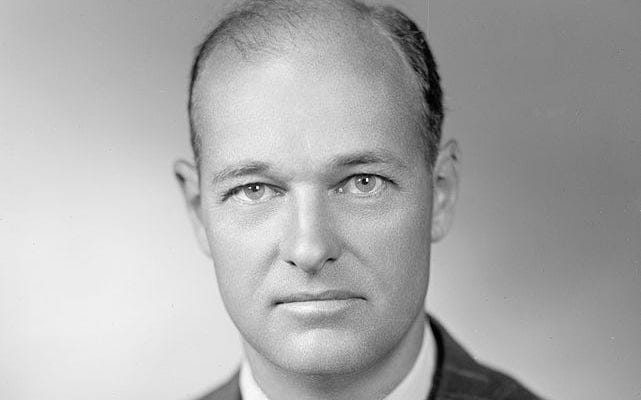
George F. Kennan’s doctrine of realism fundamentally reshaped the landscape of U.S. foreign policy in the mid-20th century, advocating for a pragmatic and historically informed approach to international relations. Emerging from the geopolitical tensions following World War II, Kennan’s ideas sought to address the complexities of the Soviet-American relationship, emphasizing the need to prioritize national interests and power dynamics over ideological aspirations.
His seminal work, particularly the formulation of the containment strategy articulated in the “Long Telegram,” positioned realism as a critical counterbalance to the moralistic tendencies that have often driven American foreign policy failures, which critics argue can lead to misguided interventions and escalating conflicts.
Central to Kennan’s realism is the assertion that foreign policy must reflect a nation’s interests while navigating the intricate interplay of power among states. He warned against the dangers of moral vanity—where lofty ideals overshadow practical considerations—arguing that such an approach could exacerbate tensions and provoke distrust among nations. His nuanced understanding of international relations recognized that while ethical considerations are vital, they must be carefully balanced with the harsh realities of power politics, as highlighted by historical examples of U.S. foreign policy failures such as the Vietnam War.
Politics is the art of the possible, the attainable—the art of the next best.
Otto von Bismarck
Kennan’s influence extended beyond Europe, as his insights into containment offered a broader strategic framework applicable to various global contexts. He championed a diplomatic and economic response to communism rather than a purely militaristic stance, cautioning against policies that risked unnecessary escalation and conflict. His call for a more measured and historically aware foreign policy reflects an enduring relevance in contemporary discussions about the role of morality and power in international relations, challenging policymakers to navigate the complexities of global politics with humility and pragmatism.
Historical Context
George F. Kennan’s doctrine of realism emerged in a period marked by profound geopolitical tensions and a reevaluation of U.S. foreign policy following World War II. His observations on the complex Soviet-American relationship were shaped by his early diplomatic experiences, particularly during the tumultuous years of 1917 and 1918, which highlighted the tragic consequences of international entanglements, such as the escalation of conflicts in Europe due to Russia’s ties with France. Kennan’s insights reflected a deep understanding of the dynamics of power, emphasizing the need for a pragmatic approach to international relations.
In his seminal work, Kennan articulated the importance of recognizing historical forces that shape international behavior, famously stating,
We must be gardeners and not mechanics in our approach to world affairs,
George F. Kennan
thus underscoring the need to work with existing realities rather than attempting to impose ideological solutions. His belief that international tensions were not inevitable but rather influenced by historical and social interactions positioned him as a critical thinker in foreign policy debates.
