


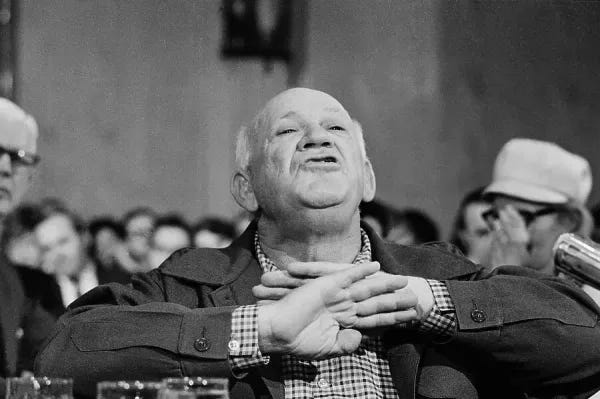
Eric Hoffer’s exploration of the “true believer” in his seminal work provides a critical framework for understanding the psychological underpinnings of online mobs and digital fanaticism. Hoffer characterizes true believers as individuals who, disillusioned and seeking purpose, surrender their individuality to powerful ideologies or leaders, fostering a collective identity that often disregards contrary evidence.
This phenomenon, once confined to traditional mass movements, has taken on new dimensions in the digital age, where social media platforms facilitate rapid organization and extreme behaviors among like-minded individuals.
The rise of online mobs is marked by their ability to mobilize swiftly in response to perceived injustices, leveraging anonymity to amplify their actions and diminish personal accountability. These mobs often operate within echo chambers created by social media algorithms, reinforcing group identity and escalating behaviors such as shaming and harassment. Hoffer’s theories elucidate how feelings of collective frustration and a longing for change can drive individuals to join these digital communities, seeking belonging and purpose amid societal discontent.
However, the dynamics of digital fanaticism also raise significant concerns. Critics argue that Hoffer’s framework, while insightful, may oversimplify the complex motivations of participants in modern online movements, neglecting the role of socio-economic factors and the unique influences of contemporary technology on group behavior. The interplay of anonymity and rapid communication can distort traditional understandings of mob mentality, leading to extreme actions that challenge Hoffer’s original assertions about the psychology of true believers. This discourse highlights the need for a nuanced approach to understanding how digital environments shape collective behavior and identity in today’s interconnected world.
The True Believer: Key Concepts
Definition of the True Believer
In his influential work, Eric Hoffer characterizes the “true believer“ as a discontented individual who seeks to transfer their sense of control to a powerful leader or ideology. This transfer of control results in a process of “self-renunciation,” where personal beliefs are subsumed into a collective identity. Hoffer argues that true believers develop such a strong identification with their movement that they often ignore or dismiss contrary evidence, instead intensifying their belief system in the face of challenges.
Psychological Profile
Hoffer outlines several key psychological traits commonly found among true believers:
Desire for Certainty and Simplicity: True believers are typically attracted to movements that offer clear, straightforward answers to complex issues. This craving for certainty often leads to an intolerance for ambiguity or nuance, resulting in dogmatic thinking.
Willingness to Sacrifice Individuality: True believers frequently subordinate their individuality to the collective identity of the movement. This alignment fosters a sense of belonging and purpose but can also lead to fanaticism as they become deeply entrenched in group norms.
The individual has always had to struggle to keep from being overwhelmed by the tribe. If you try it, you will be lonely often, and sometimes frightened. But no price is too high to pay for the privilege of owning yourself.
Friedrich Nietzsche
Frustration and Resentment: Many true believers harbor feelings of frustration and resentment towards societal structures, elites, or perceived oppressors. This emotional state propels their commitment to the movement and fuels their readiness to advocate for its goals.
The Role of Discontent
Hoffer emphasizes that discontent alone does not guarantee participation in mass movements. Instead, discontent is most potent when accompanied by a sense of hope—specifically, the belief that change is attainable. Hoffer contends that individuals who are merely enduring suffering may not feel compelled to seek change, as they lack the perception of better possibilities. In this context, discontent becomes a catalyst for action only when it is intertwined with aspirations for improvement.
Group Dynamics and Deindividuation
Hoffer’s exploration of group dynamics reveals how individuals within mass movements can experience deindividuation, a state where personal identity and accountability are submerged in the collective ethos of the group. This phenomenon can lead to aggressive behavior, as individuals often feel a diminished sense of personal responsibility when acting in accordance with group norms. The loss of self-awareness and the diffusion of responsibility in large groups serve to amplify this effect, making members more susceptible to radical ideologies and actions.
The crowd is not merely a collection of individuals; it is a new entity, with its own characteristics and its own laws.
Gustave Le Bon
The Rise of Online Mobs
Online mobs have emerged as a significant phenomenon in the digital age, characterized by their rapid organization and collective behavior, often driven by a shared social identity. The speed at which these virtual mobs can mobilize is a distinctive advantage over traditional forms of mob activity, allowing for swift reactions to perceived injustices or events that resonate with their beliefs. The presence of anonymity online further amplifies this effect, as individuals feel less accountable for their actions, which can lead to a suppression of social norms that typically guide behavior in physical spaces.
Characteristics of Online Mobs
The dynamics of online mobs can be understood through the lens of crowd psychology, particularly the Elaborated Social Identity Model. This theory posits that individuals retain their personal identities within a group but act collectively based on a shared social identity. As a result, members of an online mob experience heightened psychological empowerment and a sense of support, which can lead to escalated behaviors such as shaming, name-calling, and threats against perceived adversaries. The removal of personal accountability facilitates a herd mentality where individuals may try to outdo each other’s behaviors in a reactive manner, further escalating the mob’s actions.
Anonymity and its Implications
Anonymity plays a crucial role in the behavior of online mobs. Historically, the ability to adopt roles and remain unnamed has encouraged people to express views and behaviors they might suppress in real life. This lack of identifiable accountability has resulted in the emergence of toxic behaviors, including cyberbullying and harassment, particularly against vulnerable
