

Diagnosis: Society is Suffering from a Collapse of the Public Square

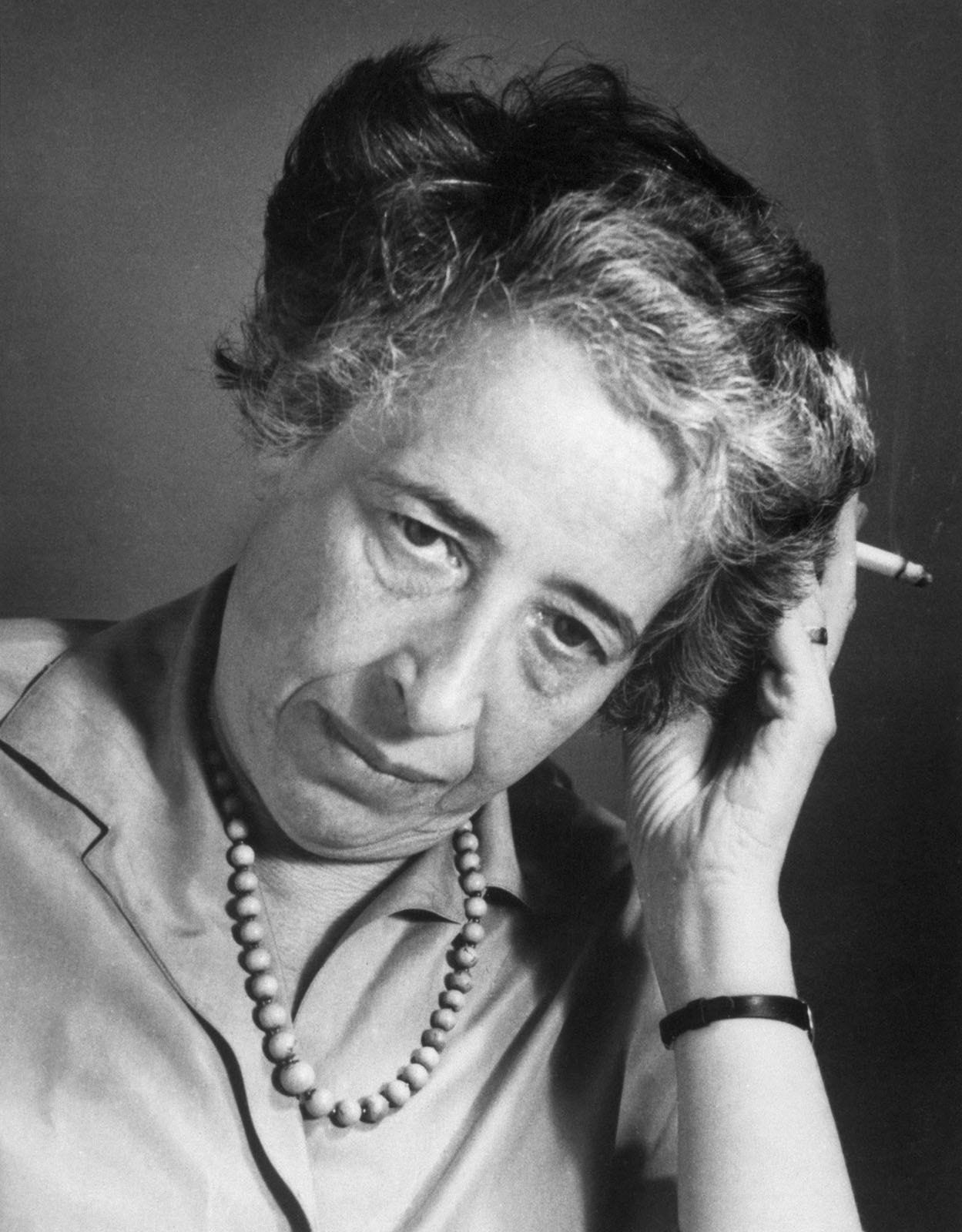
The glow is unmistakable. Walk past any café, any bus stop, any living room window after dusk. You’ll see it. That pale, bluish light illuminating a face, the thumb scrolling, the eyes fixed on a private universe held in the palm of a hand. Notice the silence in places that once buzzed with argument and laughter. The train car is a library of the damned, each patron locked into a solitary screen, headphones sealing the perimeter. We are more connected than ever, yet we have never been more alone. This is not a lament about technology; it is a diagnosis of a society that has retreated from the shared world, a mass migration from the public square into the private chambers of the algorithm. We feel it in our bones—a political numbness, a social atrophy, a quiet hum of anxiety that comes from knowing we are speaking to everyone and no one at all.
The Lonely Crowd
Half a century before the first iPhone, a German-Jewish philosopher watched the embers of totalitarianism cool and saw a new danger gathering on the horizon. Hannah Arendt, a refugee from Nazi Germany who became one of the 20th century’s most formidable thinkers, was not interested in easy
answers. She was interested in the architecture of our shared reality. Her warning was not about a monstrous dictator or a single evil ideology, but something far more subtle and insidious: the disappearance of the public realm itself.
For Arendt, the “public square” was not just a physical place. It was a space of appearance, where citizens emerge from their private lives to speak, to act, and, most importantly, to be seen and heard by others who are different from them. This is where politics happens. Not the horse-trading of parties, but the messy, glorious, and difficult work of human beings negotiating a common reality. It’s where your private opinion is tested against your neighbor’s, where your deeply held belief is forced to confront another’s lived experience. Without this space, Arendt argued, we cease to be fully human. We become mere laborers and consumers, trapped in the repetitive cycles of our biological and economic needs, no different from any other animal. We lose what she called amor mundi—love of the world—because we no longer have a world to love together.
The Prophecy in the Machine
Arendt’s prophecy has materialized with a precision that would be terrifying if it weren’t so mundane. The public square has not been bulldozed; it has been digitized and privatized. The platforms we mistake for public forums—X (formerly Twitter), Facebook, Instagram, TikTok—are, in fact, privately owned, algorithmically mediated advertising machines. They are designed not for public discourse, but for private engagement.
Consider the architecture. There is no common ground. Your feed is not my feed. We are sorted into echo chambers, our biases confirmed and amplified by a machine learning model optimized for one thing: keeping our eyes on the screen. The “town square” of 2026 is a hall of mirrors, where we only ever encounter distorted reflections of ourselves. The viral tweet, the trending hashtag—these are not acts of public speech. They are fleeting bursts of emotional contagion, devoid of the context, accountability, and permanence that genuine public action requires. The figure of the “citizen” has been replaced by the “user,” an entity defined not by their capacity for action, but by their data profile.
Look at our institutions. Political debate has devolved into a performance art for cable news and social media. Politicians no longer speak to the public; they broadcast to their base. Universities, once bastions of open inquiry, are increasingly fractured by ideological siloes, where the discomfort of encountering a truly opposing viewpoint is branded as a form of violence. Even our local communities, the bedrock of Arendt’s public realm, have withered. The bowling alley, the union hall, the town meeting—these have been supplanted by the curated, frictionless “community” of the neighborhood Facebook group, where discussions about local zoning laws quickly devolve into personal attacks and algorithm-fueled paranoia. We are performing public life, but we have forgotten how to live it.
The Architecture of Isolation
Why did this happen with such speed and totality? The mechanism is twofold: it is built into the logic of our technology and it preys upon a timeless human weakness.
First, the structural force. The digital realm is inherently anti-Arendtian. It is a space of disembodiment. In the public square, we meet as whole persons. We see the tremor in someone’s voice, the conviction in their eyes, the hesitation before they speak. This physical co-presence forces a basic level of mutual recognition and respect. Online, we are avatars, usernames, and text boxes. We are stripped of our shared humanity, making it breathtakingly easy to dismiss, to harass, to “cancel.” The platform’s design accelerates this. The algorithm rewards outrage, simplifies complexity, and flattens history. Nuance is a bug, not a feature. It is a system that cannot, by its very nature, sustain the slow, deliberate, and often frustrating work of building a common world.
Second, the human weakness. Arendt knew that participating in public life is hard. It demands courage—the courage to speak your mind and risk being misunderstood, the courage to listen to an opponent and risk having your mind changed. It is far easier, far more comfortable, to retreat into the private sphere, into the predictable comforts of family, work, and consumption. The digital platforms did not create this desire for retreat, but they have perfected a way to monetize it. They offer a simulation of public life without the risks. You can “act” politically by posting a slogan, you can “belong” to a community by joining a group, you can “speak” your truth into the void and receive instantaneous validation from your curated followers. It is the illusion of action without consequence, the illusion of community without commitment.
The Price of Silence
If we continue down this path, the cost is not merely a more polarized and unpleasant society. The stakes are far higher. For Arendt, a society without a functioning public realm is a society ripe for totalitarianism. Not necessarily the jackbooted, cinematic totalitarianism of the 20th century, but a new, softer, and perhaps more durable form.
When we lose the habit of public discourse, a new, softer, and perhaps more durable form.
When we lose the habit of public discourse, we lose the ability to distinguish truth from falsehood, reality from propaganda. When all we have are our private feelings and the algorithm’s affirmations, we become incapable of building a consensus about even the most basic facts. The world dissolves into a collection of competing narratives, and power flows to whoever can tell the most emotionally compelling story, regardless of its connection to reality. This is the breeding ground for the modern strongman, who does not need to build a coherent ideology; he merely needs to master the art of the digital spectacle.
More fundamentally, we lose our freedom. Arendt’s definition of freedom was not the modern, individualistic notion of “doing whatever you want.” Freedom was the capacity to act, to begin something new in the world, to create an unforeseen reality in concert with others. This can only happen in public. By retreating into our private worlds, we are willingly trading our freedom for comfort and security. We are becoming the passive subjects of a system we no longer control or even understand, a system that feeds us our opinions, our desires, and our very sense of self. The end state is not a boot stamping on a human face, but a society of cheerful, isolated consumers scrolling silently into oblivion.
The Citizen’s Posture
There is no easy exit. You cannot log off your way back into a functioning republic. The infrastructure of our isolation is too entrenched, the habits too deep. To speak of “solutions” is to fall into the very trap of simplistic thinking that the digital world encourages. The answer is not a plan, but a posture. It is the conscious decision to be a citizen in a world that wants you to be a user.
It means choosing the difficult, embodied reality of the local over the frictionless, disembodied fantasy of the global. It means joining the library board, attending the city council meeting, volunteering for the thing you care about in your actual, physical neighborhood. It means cultivating the discipline of speaking with those you disagree with, not to “win,” but to understand. It means reading books, not just posts. It means replacing the fleeting dopamine hit of the “like” with the slow, uncertain, and ultimately more rewarding work of building something real with other people.
How, then, do we build a private life that can sustain this difficult public work? How do we cultivate the inner resilience to stand in the public square when the winds of manufactured outrage are howling, and the comfortable glow of the private screen is calling us home?
The full framework for navigating the collapse of the public square—including Hannah Arendt’s three principles that surviving citizens have always used—is available to paid subscribers below.