


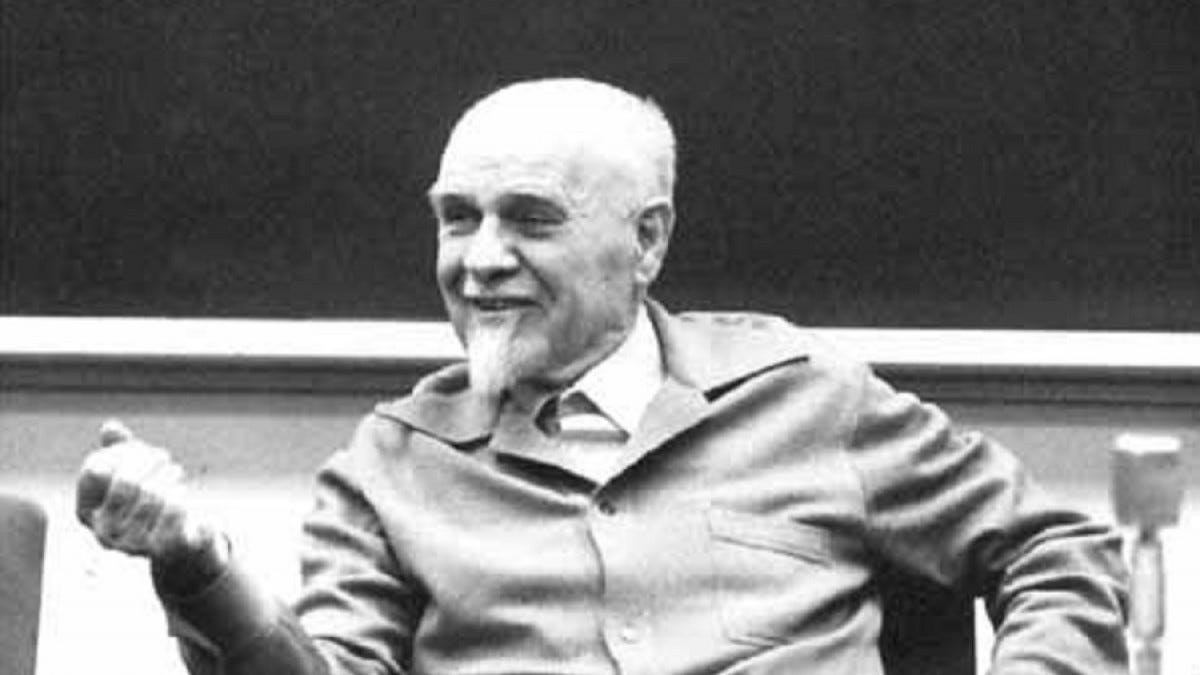
Ever felt like society tells you to “get over it” when you’re deeply struggling? This piece introduces Kazimierz Dąbrowski’s powerful idea of Positive Disintegration, revealing why our deepest emotional turmoil might not be a sickness to be cured, but a critical, painful catalyst for becoming who we are truly meant to be. Let’s explore why sometimes, falling apart is the bravest thing you can do.
When “Feeling Good” Becomes the Enemy
Have you ever felt it? That quiet, insidious pressure to always be “good”? To be happy, to be functional, to be adjusted, to be *fine*? It’s everywhere, isn’t it? From social media feeds full of curated joy to the constant stream of self-help promising a quick fix for any discomfort. We live in a world that has declared war on feeling bad. Anxiety? Fix it. Depression? Medicate it. Deep existential angst? Distract yourself from it. The message is clear: suffering is a malfunction, a bug in the system of your life, and it must be eradicated at all costs.
But what if this pervasive demand for perpetual comfort is actually holding us back? What if, in our haste to smooth over every rough edge, we’re inadvertently preventing ourselves from experiencing something profoundly human, something essential for growth? I’ve been grappling with this question a lot lately, observing how quickly we, as a society and as individuals, rush to label any emotional pain as a problem to be solved, rather than a signal to be understood. This isn’t to say that debilitating pain should be romanticized, but it does make me wonder about the line between true illness and necessary struggle.
It feels like we’re being conditioned to outsource our emotional processing, to let external solutions define our internal landscape. This isn’t just about feeling a bit down; it’s about the deep, soul-shaking moments of crisis, doubt, and despair that, historically, have often been the fertile ground for profound personal evolution. Are we, in our pursuit of an unblemished emotional state, sacrificing the very crucible in which authentic selfhood is forged?
Discovering Dąbrowski’s Radical Idea
This is where I stumbled upon the work of a brilliant, though lesser-known, Polish psychiatrist named Kazimierz Dąbrowski. His theory, called ‘Positive Disintegration,’ was a revelation. It offered a completely different lens through which to view psychological suffering. Dąbrowski dared to suggest that intense emotional and mental turmoil—things like anxiety, depression, internal conflict, and even neurosis—are often *not* signs of pathology to be merely suppressed or cured. Instead, he argued, they can be critical and necessary precursors to higher levels of personality development.
Think about that for a moment. The very things we’re taught to fear and eliminate might actually be the engines of our deepest growth. Dąbrowski believed that for a truly authentic self to emerge, the old, unreflective, often socially conditioned parts of our personality have to break down. This ‘disintegration’ is painful, messy, and uncomfortable, but it’s through this breakdown that we can reorganize ourselves at a more conscious, values-driven level.
“The individual who avoids internal conflict and painful experiences remains largely undeveloped, maintaining a primary integration that lacks the depth of an authentic personality.”
– Kazimierz Dąbrowski
This idea shattered my conventional understanding of mental health. It made me realize that perhaps my own moments of profound internal struggle weren’t just flaws to be fixed, but vital signs of a self striving to become something more real, more deeply aligned with its own truth.
The Courage to Break Down and Build Up
Dąbrowski’s theory maps out a multi-level journey. We often start at what he called ‘Primary Integration,’ functioning reasonably well in society but without much deep self-awareness or internal conflict. We simply go along to get along. But then, for some, particularly those with heightened sensitivities and capacities for deep feeling (what Dąbrowski termed ‘overexcitabilities’), something shifts. They begin to experience ‘Unilevel Disintegration’ – a period of fluctuating moods, internal tensions, and a growing dissatisfaction with the ‘as-is’ reality.
This stage can feel utterly chaotic, like your life is falling apart. But Dąbrowski argued it’s a necessary prelude to ‘Multilevel Disintegration,’ where you consciously begin to question everything – your values, your life choices, society’s expectations. This isn’t just passive suffering; it’s an active, painful process of challenging your core being. It’s where you start to choose your own values, to develop a unique ‘personality ideal’ that you strive towards. This is tough, often lonely work.
But the reward, if you have the courage to lean into it, is ‘Secondary Integration’ – a state of profound authenticity, self-awareness, and moral autonomy. It’s not about being ‘cured’ of your sensitivities; it’s about integrating them into a stronger, more consciously chosen self. It’s about becoming truly *you*, not just a reflection of what society expects. Sometimes, the most profound act of self-love is allowing ourselves to truly fall apart. This isn’t an endorsement of self-destruction, but an acknowledgment that deep transformation often requires the demolition of old structures before new ones can be built.
Why We’re So Afraid of the Dark
So, why is this idea so radical, and why do we collectively shy away from it? Because it goes against almost every grain of our comfort-obsessed culture. We want quick fixes, instant solutions. We want a pill to make the anxiety disappear, a meditation technique to banish negative thoughts, a mantra to manifest endless positivity. We’ve been conditioned to believe that any discomfort is a signal that something is wrong, requiring immediate intervention. And honestly, it’s easy to want a quick fix when you’re deeply hurting.
But Dąbrowski suggests that by prematurely ‘integrating’ ourselves back into a superficial state of calm, we bypass the very process that could lead to genuine self-actualization. We’re essentially giving a caterpillar an anxiety pill to stop its struggle in the chrysalis, preventing it from ever becoming a butterfly. This isn’t just an individual choice; it’s a societal pressure. Institutions, medical systems, and even our social circles often push us towards a ‘normalcy’ that might, in fact, be a lower level of development, a primary integration that lacks depth and genuine meaning.
“What is often labelled as mental illness may, in many cases, be the initial stage of a profound spiritual development.”
– Kazimierz Dąbrowski
It’s terrifying to sit with discomfort, to allow ourselves to truly fall apart and question everything. But what if that terror is the gateway to a deeper, more fulfilling existence? What if our culture, in its benevolent pursuit of ‘happiness,’ is inadvertently stifling the very qualities that make us authentically human?
Embracing Your Own Evolution
So, what does it mean to embrace Dąbrowski’s insights in your own life? It means cultivating a radical acceptance of your internal experiences, even the painful ones. It means pausing before reaching for the immediate fix and asking: “What is this feeling trying to tell me? What part of me is trying to break down, so something new can emerge?” It’s about recognizing that growth is often a turbulent, non-linear process, and that your deepest struggles might be your greatest teachers.
This isn’t an easy path. It requires introspection, courage, and a willingness to stand apart from the societal narrative that demands perpetual cheerfulness. It means taking responsibility for your own values, consciously choosing what kind of person you want to become, and then enduring the internal work required to bridge the gap between your ‘as-is’ self and your ‘as-ought’ self. It’s a journey of continuous self-creation, guided by your own evolving conscience and ‘personality ideal.’
I’ve found immense solace and direction in this framework, seeing my own moments of intense discomfort not as failures, but as signals that a deeper process is underway. It’s a liberation to realize that sometimes, the hardest parts of life are precisely the moments where the most profound transformation is possible. It invites us all to step off the conveyor belt of superficial wellness and embark on the challenging, yet infinitely rewarding, adventure of true self-evolution.
The Deeper Call to Authenticity
Ultimately, Dąbrowski’s work is a powerful call to authenticity. It asks us to look beyond the quick fixes and the societal pressures to be perpetually
Go Deeper
Step beyond the surface. Unlock The Third Citizen’s full library of deep guides and frameworks — now with 10% off the annual plan for new members.
The Deeper Call to Authenticity
Ultimately, Dąbrowski’s work is a powerful call to authenticity. It asks us to look beyond the quick fixes and the societal pressures to be perpetually “fine” and to instead embrace the inherent complexity and even the beautiful tragedy of being human. It challenges us to reclaim our right to struggle, to question, and to profoundly transform ourselves through the very discomfort we are so often taught to avoid. The courage to lean into our disintegration, rather than flee from it, is the courage to truly become ourselves.
What parts of your own internal landscape have you been told to “fix” or silence? What if those very parts are trying to guide you towards a deeper, more meaningful existence? I invite you to reflect on this radical idea and consider how it might change your perception of your own struggles. Let’s start a conversation in the comments about how we can cultivate more space for positive disintegration in our lives and in our culture. It’s a challenging path, but it’s the only one that truly leads to an authentic, multi-level self.
Thank you for an excellent write up. Yes, those depressing, anxiety and/or hurt producing moments should be seen as an invitation, as an opportunity to look within and see what unconscious parts of ourselves need to be made conscious and integrated in our whole being. Sadly, most societal norms leads you to quick fixes that devoid you of the opportunity to move towards becoming whole, integrated person.