

Chasing Status Off a Golden Pedestal.
The Man Who Owned Everything Except Peace

You have seen the photograph. The man in the spacesuit, strapped into a capsule designed by his own engineers, hurtling toward the edge of the atmosphere. He grins. The earth curves behind him—a blue marble, fragile and entire. He has become the hero of his own fantasy: the billionaire who touched the sky.
Now look closer. Look at his eyes. There is something there that the press releases cannot airbrush away. A flicker of hunger. A trace of the same hollow ache you recognize in the mirror after three hours of scrolling. He has conquered space, but he has not conquered the space inside his own skull. He is still checking the stock price. Still refreshing the comments. Still wondering whether the world loves him enough.
This is the billionaire’s mistake, and it is the same mistake you are making, only on a different scale. He climbed onto a pedestal of gold, but the pedestal wobbles. He built an empire of symbols—rockets, yachts, Twitter fights, philanthropic foundations carved from tax liabilities—but he forgot to build the one thing that cannot be bought: a self that is not at the mercy of fortune.
We look at the ultra-rich and assume they have escaped the human condition. We imagine that wealth is a wall against anxiety, that influence is an armor against insignificance. But the evidence of their own behavior tells a different story. The billionaire cannot stop accumulating. He cannot stop tweeting. He cannot stop buying attention. And the more he acquires, the more porous his soul becomes.
The Stoics saw this coming two thousand years ago. And one of them, a man who was born a slave, wrote the manual for what we are about to need.
Epictetus in the Corner of the Room
His name was Epictetus. He was owned by a Roman freedman, then later by a man who tortured him for sport. He walked with a limp for the rest of his life. He owned nothing. And yet, when his master once twisted his leg, Epictetus said, calmly: “You will break my leg.” And when the leg broke, he said: “I told you so.”
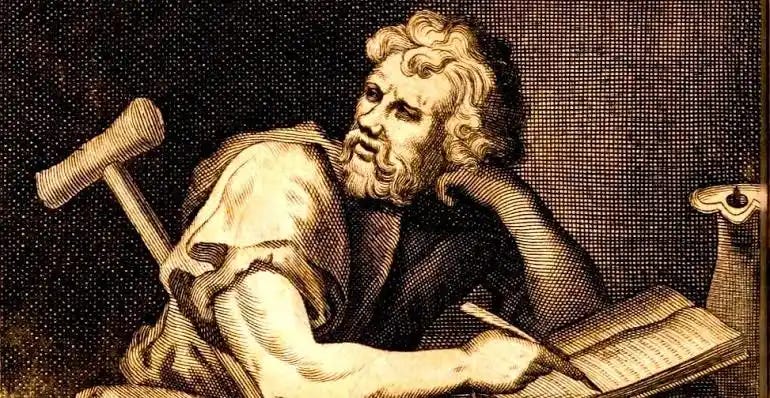
This is not a story about masochism. It is a story about the single most radical philosophical insight ever offered to human beings: the distinction between what is up to us and what is not.
Epictetus spent his life hammering this into his students. You can control your judgments, your impulses, your desires, your aversions—the inner workings of your own mind. That is all. Everything else—your health, your reputation, your wealth, your career, what other people think of you, whether the market crashes, whether the rocket launches—is outside your control. And to treat an external as if it were internal is to guarantee misery.
Here is the warning, in his own words from the Discourses:
“If you seek to be a general or a politician or a consul, you will never have your fill. But if you seek to be a human being, that is possible.”
To be a human being, in the Stoic sense, is to recognize that the only true possession is your own character. The rest is borrowed. The rest is on loan from the universe, and the universe has a habit of calling in its debts.
The billionaire mistakes a temporary arrangement for a permanent identity. He believes that because he owns the company, the island, the media narrative, he also owns himself. He does not. He is owned by the very things he believes he owns. His wealth dictates his schedule. His reputation controls his mood. His status demands constant maintenance. He is a slave in golden fetters.

The Pedestal That Moves
Now map this warning onto the institutions and behaviors of our time. The billionaire class is not a freak anomaly. It is the purest expression of a universal disease: the human compulsion to measure worth by externals. The disease is ancient; the pedestal is new.
Social media is the pedestal. The algorithm is the architect. Every like, every retweet, every mention in a news article is a brick in a structure that promises to lift you above the crowd. But the pedestal does not stay still. It rises as you rise. The moment you reach one level of visibility, the algorithm dangles the next. The billionaires are further along on the same escalator. Elon Musk does not tweet to communicate; he tweets to feel the weight of his own presence reflected in the eyes of millions. Jeff Bezos does not build rockets because humanity needs a backup planet; he builds rockets because a man who has everything must find something he does not yet own.
Look at the pattern. The tech billionaires who promised to flatten hierarchies have built the most rigid hierarchies of attention ever created. They speak of empowerment while engineering dependency. They sell freedom while manufacturing addiction. And they themselves are not immune. The richest man in the world is also among the most anxious men in the world, because he has tied his identity to something that can vanish: the approval of a crowd that loves to tear down its idols.
The warning is not merely about billionaires. It is about the structure of desire that the billionaires exemplify. Every morning, you wake up and check your phone. You are checking the status of your pedestal. How many followers? How many likes? How many replies? You are performing the same ritual as the man in the spacesuit, only your pedestal is smaller. The physics is identical. The fall will hurt just as much.
Why This Pattern Is Inevitable
You might think: surely there are billionaires who have found peace. Surely some of them have learned to see through the game. Perhaps. But the system is designed to prevent it.
The structural force at work is hyperbolic discounting of the internal. The human mind is wired to prefer immediate, visible rewards over delayed, invisible ones. Status is visible. Character is invisible. The market rewards the visible. The algorithm rewards the visible. The news cycle rewards the visible. And so the default path of any human being, especially a wealthy one, is to chase the external signal until the internal signal is drowned out entirely.
There is also a second force: comparative competition. In any hierarchy, the top is defined by scarcity. There can only be one richest man. One most influential. One most admired. The billionaire cannot win; he can only temporarily hold the lead. But the lead is always provisional, and the cost of maintaining it is the gradual erosion of everything that cannot be measured by a number.
Epictetus saw this with brutal clarity. He wrote:
“When I see a man anxious, I say: ‘What does this man want? If he did not want something that is not within his power, how could he be anxious?’”
Anxiety is the tax you pay for treating external things as internal necessities. The billionaire is anxious because he wants something that is not within his power: the permanent admiration of a world that will forget him the moment he dies. You are anxious because you want something similar: the validation of a feed that will scroll past your post in seconds. The scale differs. The tax is the same.
What You Lose When You Chase the Pedestal
If you remain unaware of this pattern, you lose the only thing that cannot be restored: your capacity for genuine life.
You lose the ability to be present. Because you are always calculating the next move. You lose the ability to love without condition. Because you are always measuring what you get in return. You lose the ability to face misfortune with dignity. Because your identity was built on a foundation of sand. You become a weathervane, spinning with every wind of public opinion, brittle, reactive, hollow.
The stakes are not abstract. A society of people who chase externals is a society incapable of resilience. When the pedestal collapses—and it always collapses, eventually—there is nothing left to stand on. The pandemic revealed this. The financial crashes revealed this. The sudden cancellation of a public figure reveals this. The pedestal is a trap disguised as a throne.
The billionaire’s mistake is not that he built wealth. It is that he built his identity on wealth. He climbed to the top of the ladder only to discover it was leaning against the wrong wall. And the rest of us, watching him, are busy building our own ladders.
The Exit: Seven Questions Before the Sun Rises
But the Stoics did not only diagnose the disease. They prescribed the cure. Epictetus taught that philosophy is not a lecture; it is a daily practice. You do not read the Discourses once and become wise. You return to them every morning, like a craftsman sharpening his tools.
