America’s Civil War of the Soul

The polling station is a converted elementary school gymnasium in Bucks County, Pennsylvania. It is November 2026, and the air smells of stale coffee and antiseptic. A woman in her late sixties, wearing a “Country Over Party” lapel pin, is screaming at a poll worker because the machine rejected her ballot. Her husband stands three feet behind her, filming everything on his phone, muttering about “election integrity.” Fifteen feet away, a man in a Patagonia vest is on a Bluetooth headset, calmly informing someone that the ACLU has been notified and that a federal observer is en route. Neither of these people see the other as an American. They see an enemy. They are not wrong.
This is not a political disagreement. This is a civil war fought with zip ties and legal briefs, with algorithms and school board agendas. By the time the 2026 midterm results are certified, we will not see a transfer of power. We will see the confirmation of a schism so deep that the word “nation” no longer applies to the same geographic reality. The pundits will call it a “wave election” or a “referendum on the administration.” They will be lying to you, and to themselves. The truth is far older, far more dangerous, and far more honest. It was diagnosed thirty years ago by a man who spent his career looking at the world not through the lens of left and right, but through the lens of us and them.
The Prophet of the Bloody Borderlands
Samuel P. Huntington was not a celebrity intellectual. He was a Harvard professor who wrote dense, uncomfortable books that made people in power squirm because he refused to lie to them. In 1993, he published an essay in Foreign Affairs titled “The Clash of Civilizations?”—a question mark that the world has since deleted. His thesis was brutal in its simplicity: the Cold War was over, but the end of history was a fantasy. The next great conflicts would not be between ideologies like communism and capitalism. They would be between civilizations—ancient, durable, blood-soaked cultural blocs defined by religion, history, and a sense of who belongs and who does not.
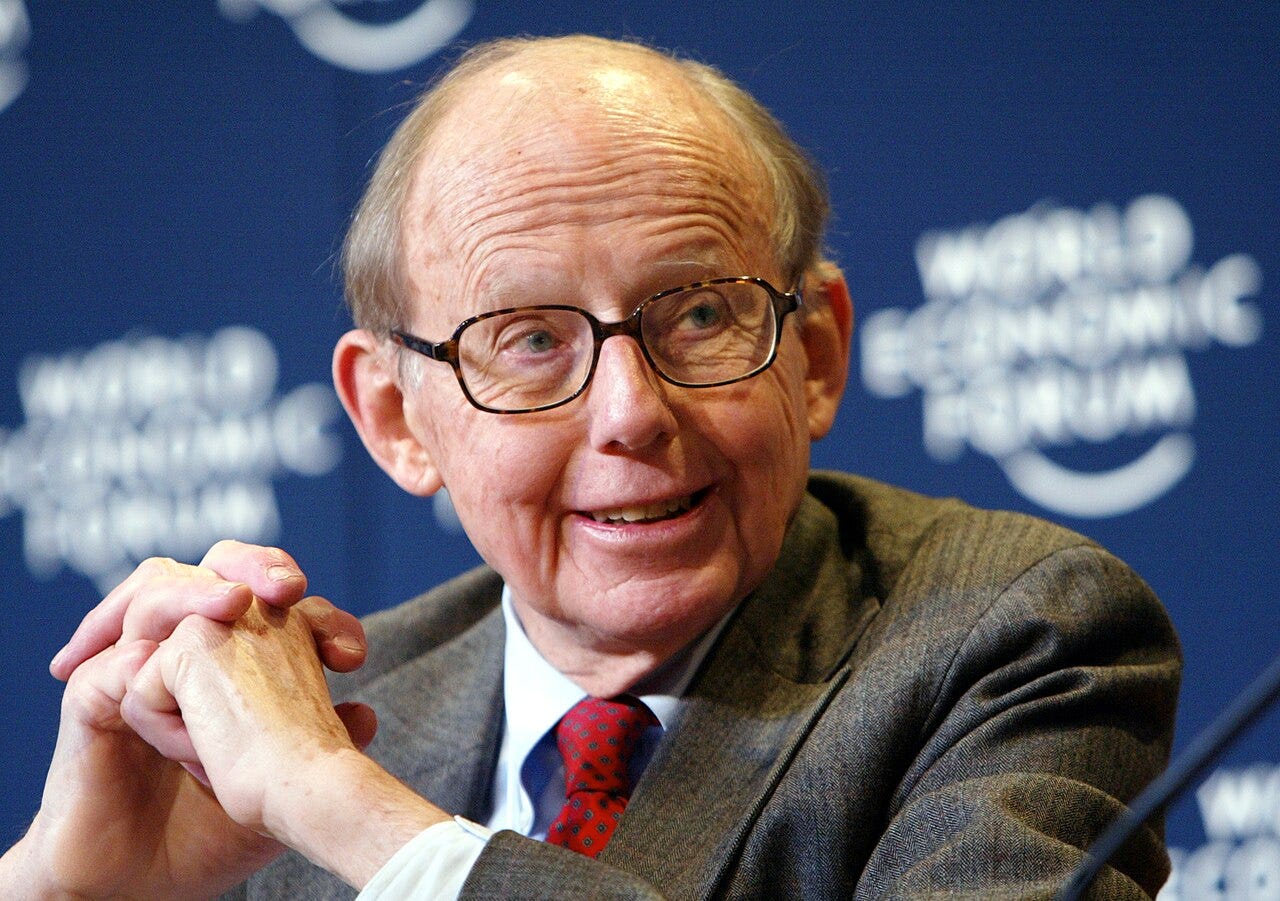
Huntington argued that the world was not becoming a global village. It was becoming a global battlefield of identity. He identified seven or eight major civilizations: Western, Confucian, Japanese, Islamic, Hindu, Slavic-Orthodox, Latin American, and “possibly” African. The fault lines between them, he warned, would be the flashpoints of the 21st century. He was dismissed as a pessimist, a racist, a relic of Cold War thinking. He was correct.
But Huntington made a second, quieter argument that is rarely cited but absolutely essential for understanding 2026. He argued that the United States itself was a “cleft country”—a nation straddling a civilizational fault line. He was referring specifically to the cultural and demographic divide between the Anglo-Protestant core of American identity and the growing influence of Hispanic, Catholic, and Latin American civilization in the Southwest. He saw this not as a blessing of diversity, but as a structural tension that could tear the country apart if the core identity was not actively maintained. He was talking about a civil war of the soul, fought not with muskets but with birth rates, language laws, and the question of who gets to call themselves an American.
The Great Fracture, Made Flesh
Now look at the 2026 midterms. Do not look at the candidates. Look at the map. Look at the counties. Look at the churches, the gun stores, the Planned Parenthood clinics, the megachurches, the food deserts, the gated communities, and the urban cores. What you are seeing is not a political map. It is a civilizational map of a single, fractured nation.
The Democratic coalition of 2026 is not a political party. It is a coalition of post-national, post-religious, credential-based urban professionals, combined with a multi-ethnic, multi-racial working class that has been promised a future that the economy cannot deliver. The Republican coalition is not a political party. It is a coalition of remnant Anglo-Protestant traditionalists, Catholic integralists, Mormon expansionists, and a growing number of secular nationalists who have abandoned religion but not the need for a tribe. These two coalitions do not share a moral vocabulary. They do not share a historical narrative. They do not share a definition of what a human being is.
Huntington warned that civilizational conflicts are “total” in a way that ideological conflicts are not. You can convert from communism to capitalism. You cannot convert from being a Westerner to being an Islamic fundamentalist. The identity is the conflict. In 2026, this is playing out in every arena of American life. The fight over critical race theory is not about history. It is about whether the American story is a Western story or a global story. The fight over immigration is not about economics. It is about whether the United States remains an Anglo-Protestant nation or becomes a “universal nation” with no defining cultural core. The fight over abortion is not about life. It is about whether the individual or the community has ultimate authority over the body—a question that civilizations answer differently.
The mechanism of this fracture is not TikTok or Fox News or Russian bots. Those are accelerants, not causes. The cause is the collapse of a shared civilizational identity. For 200 years, the United States was held together by a dominant Anglo-Protestant culture that was willing to absorb and assimilate outsiders—but only on its own terms. That culture has been deliberately dismantled by its own elites, beginning with the cultural revolutions of the 1960s and accelerating through the globalist consensus of the 1990s and 2000s. The elites believed that a post-national, multi-cultural, transactional society could replace the old identity. They were wrong.
The Architecture of the Inevitable
Why is this pattern inevitable? Because human beings are not rational actors in the way that economists imagine. We are tribal creatures who need a “we” to define ourselves against a “they.” This is not a character flaw. It is a survival mechanism that has been hardwired into our species for 300,000 years. When you remove one tribal identity—say, “American”—you do not create a universal human. You create a vacuum that will be filled by smaller, more intense, more dangerous identities: race, religion, region, ideology.
The American elite made a catastrophic miscalculation. They believed that the market and the constitution were sufficient to hold the country together. They believed that if you taught everyone to be tolerant, no one would need to belong. They were wrong. Tolerance is not a bond. It is a ceasefire. And ceasefires do not last when the resources run out.
The 2026 midterms are happening at a moment of resource scarcity. Real wages have been stagnant for decades. The cost of housing, healthcare, and education has exploded. The American Dream—the promise that if you work hard, you will do better than your parents—has been revoked for the majority of the population. When people cannot get what they were promised, they do not become more rational. They become more tribal. They look for someone to blame. And in a cleft country, the easiest target is the other civilization living next door.
The structural force that makes this pattern inevitable is the mismatch between the nation-state and the civilization. The United States is a nation-state pretending to be a civilization. But a civilization is a family of cultures that share a deep, often unconscious, sense of right and wrong. A nation-state is a legal fiction. When the legal fiction is no longer backed by a shared civilization, it becomes a hollow shell. And hollow shells collapse.
The Cost of Not Seeing
If you refuse to understand this, you will spend the next decade screaming at the television, wondering why your neighbors have become monsters. You will blame “disinformation” and “propaganda” and “the algorithm.” You will call for more education, more civility, more dialogue. You will be wasting your breath.
The cost of ignorance is not just political dysfunction. It is the slow, grinding death of a nation. The United States will not collapse in a single day. It will rot from the inside. The 2026 midterms will be more violent than 2020, not because of any specific policy, but because the two sides no longer recognize each other’s legitimacy. A government that is not seen as legitimate cannot govern. It can only coerce. And coercion breeds resistance.
We are already past the point of political solutions. The 2026 midterms will not be decided by policy platforms. They will be decided by which side can mobilize its civilizational base more effectively. The Democrats will win by turning out the post-national, multi-ethnic, urban coalition. The Republicans will win by turning out the remnant Anglo-Protestant and nationalist coalition. Both sides will claim a mandate. Neither side will accept the other’s victory. The result will not be a functioning government. It will be a cold civil war fought through the courts, the bureaucracy, the media, and eventually, the streets.
Huntington was not optimistic. He believed that the best we could hope for was a “renewal” of the Western civilizational core—a conscious, deliberate effort to reassert the primacy of Anglo-Protestant culture as the binding agent of the nation. He did not believe that multiculturalism could hold. He did not believe that a universal, post-national identity was possible. He believed that civilizations are real, that they matter, and that you cannot wish them away.
What the Clear-Eyed Citizen Does
The thinking citizen does not try to “fix” the 2026 midterms. The thinking citizen recognizes that the election is a symptom, not a cause. The thinking citizen stops listening to politicians and starts listening to historians, anthropologists, and the old, uncomfortable voices that told us this was coming.
The posture is not hope. The posture is clarity. You do not need to believe that the situation is solvable to act as if it matters. You need to understand that the civil war is already here, and that the only question is whether you will fight it with understanding or with rage.
The first principle of the surviving citizen is to stop lying to yourself. The second is to choose your tribe consciously, not by accident. The third is to understand that civilizations are not political parties. They are families. And families do not negotiate their existence.